
Arizona Flag Status — Is the Flag at Half-Staff Today?
The current status could not be loaded just now. The national status is on the main flag page.
Who lowers the flag in Arizona
In Arizona, flags are lowered by the Governor, and the state maintains a dedicated half-staff notices page at az.gov listing current and recent orders. Arizona is among the states whose flag page states effective dates and scope plainly. Note that Arizona does not observe daylight saving time, so the sunrise and sunset times that govern when a flag goes up and comes down shift relative to neighbouring states for much of the year.
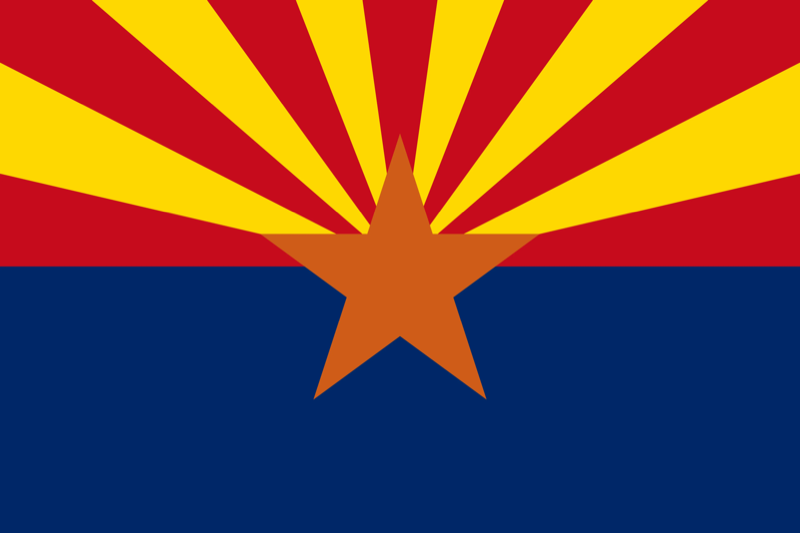
The flag of Arizona
A copper-colored star (copper mining’s symbol) sits centered on red and yellow rays — recalling Arizona’s sunset and the colors of the Spanish empire — over a navy field representing freedom.
Arizona on the American flag
Arizona’s star joined the national flag on July 4, 1912 — the Fourth of July after admission, as the Flag Act of 1818 provides.
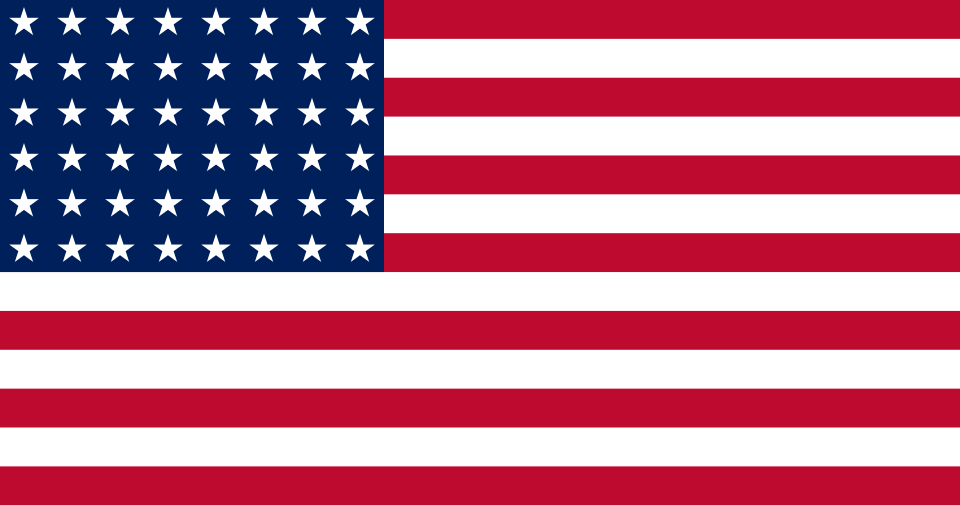
Adopted July 4, 1912, after the admission of New Mexico and Arizona, this was the longest-serving U.S. flag of its time — it flew for forty-seven years, through both World Wars, the Great Depression, and the early Cold War.
Sunrise and sunset in Phoenix
The flag is raised at sunrise and lowered at sunset. Today at the state capital:
How Arizona became a state
Acquired from Mexico in 1848 and via the 1854 Gadsden Purchase, Arizona Territory waited decades for statehood. Admitted on February 14, 1912 as the 48th — and final contiguous — state, Arizona’s post-air-conditioning growth turned Phoenix into one of the nation’s largest cities.
Admitted February 14, 1912 — the 48th state.
Arizona at a glance
Did you know
- The Grand Canyon is up to a mile deep and 18 miles wide.
- Arizona doesn’t observe Daylight Saving Time (except on the Navajo Nation).
- The state flower, the saguaro cactus blossom, blooms only at night.
- London Bridge — the actual 1830s structure — was relocated to Lake Havasu City, a move begun in 1968 and completed in 1971.
Born or raised here: Geronimo (Apache leader; Arizona-Mexico borderlands) · Cesar Chavez (labor leader; Yuma) · Sandra Day O’Connor (Supreme Court justice; raised on a ranch near Duncan) · Stevie Nicks (singer; Phoenix) · Frank Lloyd Wright (architect; longtime resident, Taliesin West) · Linda Ronstadt (singer; Tucson)
Arizona in the American Record
Moments from the daily edition that happened in Arizona.
Official source
Orders are announced by the Governor’s office.
Common questions.
Is the flag at half-staff in Arizona today?+
The status above answers that for today. A national half-staff order applies in Arizona as it does everywhere else; the Governor can also lower flags within the state independently.
Who orders flags to half-staff in Arizona?+
In Arizona, flags are lowered by the Governor, and the state maintains a dedicated half-staff notices page at az.gov listing current and recent orders. Arizona is among the states whose flag page states effective dates and scope plainly. Note that Arizona does not observe daylight saving time, so the sunrise and sunset times that govern when a flag goes up and comes down shift relative to neighbouring states for much of the year.
Does a county order mean the whole of Arizona lowers its flags?+
No. A county or single-facility order (the State Capitol, for instance) applies only where it says it does. This page shows those separately from the statewide status precisely so the two are never confused — if the status above reads full-staff, Arizona has no statewide order in effect regardless of any local one.
When should the flag be raised and lowered in Arizona?+
The flag flies from sunrise to sunset. Today at the state capital, Phoenix, those times are shown above. On the final day of a half-staff order that runs "until sunset", the flag returns to full height at the local sunset — which is why the West Coast stays lowered a few hours after the East.
Flag status for every state, and the day in American history — one page, every morning.
See the full board →