Reading 3 of 16 free1776 Club · all 16 storiesTuesday, June 9
From the desk
Dive into Joseph Welch's historic rebuke of Joseph McCarthy in 1954 — a moment that marked the beginning of McCarthy's political downfall. It's a powerful reminder of the importance of decency and integrity in public life. Also, don't miss the dramatic story of the burning of HMS Gaspee in 1772, a pivotal act of colonial defiance against British authority.
— The Patriot Compass desk
1772Featured · This day in history
Rhode Island Colonists Burn HMS Gaspee, Defying the Navigation Acts
By 1772, the Navigation Acts had long rankled American colonists, but nowhere more acutely than in Rhode Island, where the rum and molasses trades formed the backbone of the colonial economy. On June 9, HMS Gaspee — a Royal Navy revenue schooner enforcing customs laws in Narragansett Bay — ran aground off Warwick while chasing the packet boat Hannah. That night, 18 boatloads of Providence men armed with pistols, guns, and clubs, led by Abraham Whipple and merchant John Brown, rowed out, boarded the grounded ship, shot and wounded Lieutenant William Duddingston, and burned Gaspee to the waterline. The Crown launched a Royal Commission of Inquiry to identify and extradite the raiders for trial in England — a prospect that alarmed colonial Whigs from Boston to Virginia and helped forge the inter-colonial committees of correspondence that would become the nervous system of the coming revolution.
The Gaspee affair was the first act of violent armed resistance against Crown authority in British North America — more than a year before the Boston Tea Party. The Crown's attempt to extradite the raiders to England for trial unified colonial opinion across all thirteen colonies, directly spurring the formation of inter-colonial committees of correspondence in Massachusetts and Virginia that became the organizational infrastructure of the Revolution.
Did you know
QWhat exchange of letters between Abraham Whipple and a British naval captain became one of the most quoted lines of the pre-Revolutionary period?
After Whipple led the burning of the Gaspee, Captain James Wallace of HMS Rose wrote him directly: 'You Abraham Whipple on June 10, 1772, burned his majesty's vessel the Gaspee and I will hang you at the yard arm.' Whipple wrote back six words: 'Always catch a man before you hang him.' The Crown never did catch him. Three years later, Whipple was commissioned a captain in the Continental Navy, and in 1779 he cut eleven prizes out of a British convoy in the fog off Newfoundland, a haul valued at over one million dollars — easily one of the richest captures of the entire war.
QWhy did Rhode Island Governor Joseph Wanton refuse to hand over the men accused of burning the Gaspee, even after being given names?
Rear Admiral John Montagu identified five Rhode Islanders by name — including John and Joseph Brown and Simeon Potter — and demanded Wanton bring them to justice. Wanton investigated the Crown's key witness, an indentured servant named Aaron Briggs, and found him thoroughly discredited: two farm proprietors and two fellow servants all testified that Briggs had been at work on Prudence Island throughout the night in question. Wanton concluded Briggs was an imposter and declined to act. Montagu disputed this, but the Royal Commission of Inquiry, staffed by supreme court chiefs from Massachusetts, New York, and New Jersey, ultimately found it could not obtain sufficient evidence and declared itself unable to proceed.
QHow did the Gaspee affair help create the organizational structure that coordinated the American Revolution across all thirteen colonies?
The Crown's plan to extradite the Gaspee raiders to England for trial — under the Dockyard Act of 1772 — alarmed colonial Whig leaders not just in Rhode Island but throughout the continent. The prospect of Americans being tried in England, far from sympathetic juries, was treated as a constitutional threat. A committee of correspondence convened in Boston to consult on the crisis, and Virginia's House of Burgesses was alarmed enough to form its own inter-colonial committee of correspondence to coordinate with similar bodies in all thirteen colonies. Reverend John Allen's sermon on the affair, warning of corrupt judges and conspiratorial London governance, was reprinted seven times in four colonial cities. The affair forged the communication network that, two years later, would coordinate the colonial response to the Intolerable Acts.
The Daily Record · free by email
Tomorrow's edition in your inbox — one story, one quote, the flag.
1863military
Battle of Brandy Station: The Cavalry War Changes Hands
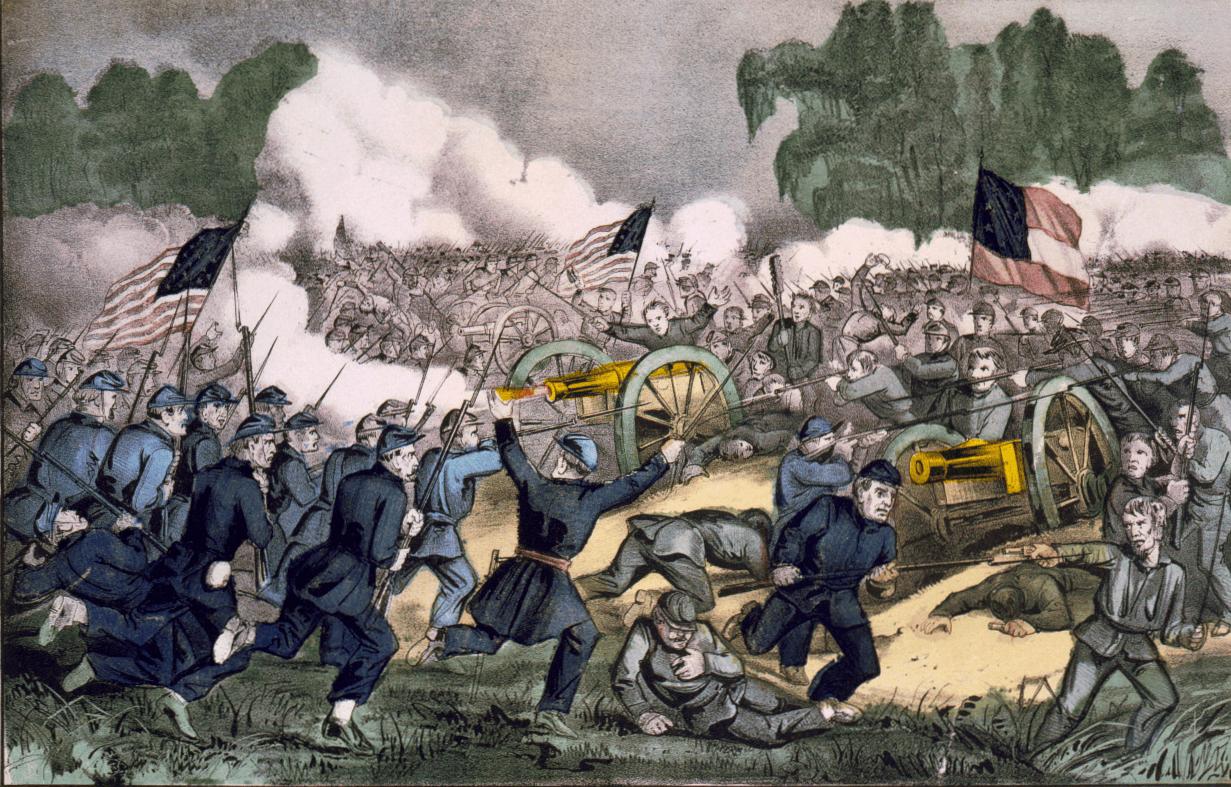
Three weeks after his army's triumph at Chancellorsville, J.E.B. Stuart had just staged a grand review of nearly 9,000 Confederate horsemen near Brandy Station, Virginia — an ego-fed spectacle that exhausted the horses and drew mockery from the Southern press. At 4:30 a.m. on June 9, 1863, Maj. Gen. Alfred Pleasonton's 11,000 Union troopers crossed the Rappahannock in a dense fog and hit Stuart's camps from two directions at once. The all-day mounted fight that followed — surging back and forth across Fleetwood Hill — ended with the Federals withdrawing, but the Confederate cavalry's aura of easy dominance over their Union counterparts did not survive the day.
Fleetwood Hill, Brandy Station, VirginiaStory page →
The American Throughline
Brandy Station marked the moment the Union cavalry stopped being the poor relation of the Army of the Potomac. The Federal horsemen who rode away that evening were a different force than the one that had crossed the Rappahannock at dawn — steadier, more confident, and capable of the sustained mounted combat that would matter enormously in the weeks ahead at Gettysburg. The Southern press sensed it immediately: the Richmond Enquirer wrote that Stuart had "suffered no little in public estimation."
Did you know
QWhat single artillery piece — with almost no ammunition — delayed the Union capture of Fleetwood Hill?
When Col. Percy Wyndham's Union brigade arrived at Brandy Station around 11 a.m. and began moving toward Fleetwood Hill, the only Confederate force on the high ground was a single howitzer that had been left behind because it lacked adequate ammunition. Stuart's adjutant, Maj. Henry B. McClellan, ordered Lt. John W. Carter and his gun crew — from Capt. Robert P. Chew's battery — to ascend the crest and fire whatever shells they had. Carter's few rounds were enough to make the Union advance cautious, buying McClellan time to send an urgent dispatch to Stuart calling for reinforcements. Those minutes mattered: Jones's brigade arrived just as Wyndham's men crested the hill.
QWhy did J.E.B. Stuart hold his grand cavalry review twice in four days — and what did his own men think of it?
Stuart staged a full-dress review of nearly 9,000 mounted troopers and four batteries of horse artillery on June 5, 1863, at Inlet Station near Brandy Station. Robert E. Lee was unable to attend, so Stuart repeated the entire performance on June 8 — the day before the battle — in Lee's presence, though this time as a simple parade without battle simulations. The repeat was not universally admired. Some of Stuart's own cavalrymen and the newspaper reporters on the scene complained that Stuart was feeding his ego and exhausting the horses. Lee then ordered the tired troopers back into bivouac and directed Stuart to cross the Rappahannock the very next morning.
QHow did Rooney Lee's wounding at Brandy Station lead to his capture by Union forces two weeks later?
W.H.F. 'Rooney' Lee — Robert E. Lee's son and a Confederate brigadier general — was seriously wounded in the thigh during the fighting at Brandy Station on June 9, 1863. Because of the severity of the wound he could not remain with the army during the opening of the Gettysburg campaign. He was sent to recover at Hickory Hill, an estate near Hanover Court House in Virginia. Union forces located him there and captured him on June 26, 1863 — while his father's army was already deep into Pennsylvania and heading toward its fateful collision at Gettysburg.
1968tragedy
Johnson Declares National Mourning After Robert Kennedy's Assassination
The spring of 1968 had already broken the Democratic Party. Martin Luther King Jr. was dead, cities were burning, and Johnson himself had announced he would not seek re-election. Then, in the early hours of June 6, Robert F. Kennedy — who had just won the California primary — died at Good Samaritan Hospital in Los Angeles, nearly 25 hours after Sirhan Sirhan shot him in the kitchen corridor of the Ambassador Hotel. Johnson sent the plane that carried Kennedy's casket to New York, where thousands filed past it at St. Patrick's Cathedral, and declared a national day of mourning for a man he had spent much of his presidency despising.
Kennedy's assassination that June, coming just two months after King's murder, pushed Congress to finally extend Secret Service protection to major presidential candidates — a structural gap in American democracy that had been exposed in the most brutal way possible. The killings of 1968 closed a chapter of postwar American political optimism that has never quite reopened.
Did you know
QWhy did Robert Kennedy have no Secret Service protection on the night he was shot?
At the time of Kennedy's assassination, federal law did not require the government to provide Secret Service protection to presidential candidates — only to the sitting president and vice president. Kennedy's entire security detail that night consisted of a former FBI agent named William Barry and two unofficial bodyguards: Rafer Johnson, the 1960 Olympic decathlon gold medalist, and former NFL player Rosey Grier. The gap had simply never been legislated closed. Congress moved quickly after the shooting, and the resulting law extending Secret Service protection to major candidates was one of the direct institutional consequences of June 5, 1968.
QWhat did Johnson do with the plane that carried Kennedy's casket — and why does it matter?
Johnson sent a jet emblazoned with 'United States of America' — a presidential aircraft — to transport Kennedy's casket from Los Angeles to New York City, where thousands viewed it at St. Patrick's Cathedral before the funeral mass on June 8. The gesture carried real weight given that Johnson and Kennedy had hated each other for years, and historian Jeff Shesol has noted that Johnson's handling of the mourning period was notably warmer toward John Kennedy's memory than toward Robert's. Sending the plane was an act of office rather than affection — a distinction Johnson's contemporaries understood clearly.
QWhat was written in Sirhan Sirhan's diary before the assassination?
During a search of Sirhan's home, investigators found a diary containing an entry dated May 18 that read: 'Robert Kennedy must be assassinated ... My determination to eliminate RFK is becoming more and more of an unshakable obsession. RFK must die. RFK must be killed.' When Sirhan was booked by police on the night of the shooting, they found in his pocket a newspaper article discussing Kennedy's support for Israel. At trial in 1969, Sirhan testified that he had killed Kennedy 'with 20 years of malice aforethought.' As of 2023, he had been denied parole 17 times.