Reading 3 of 14 free1776 Club · all 14 storiesTuesday, July 7
From the desk
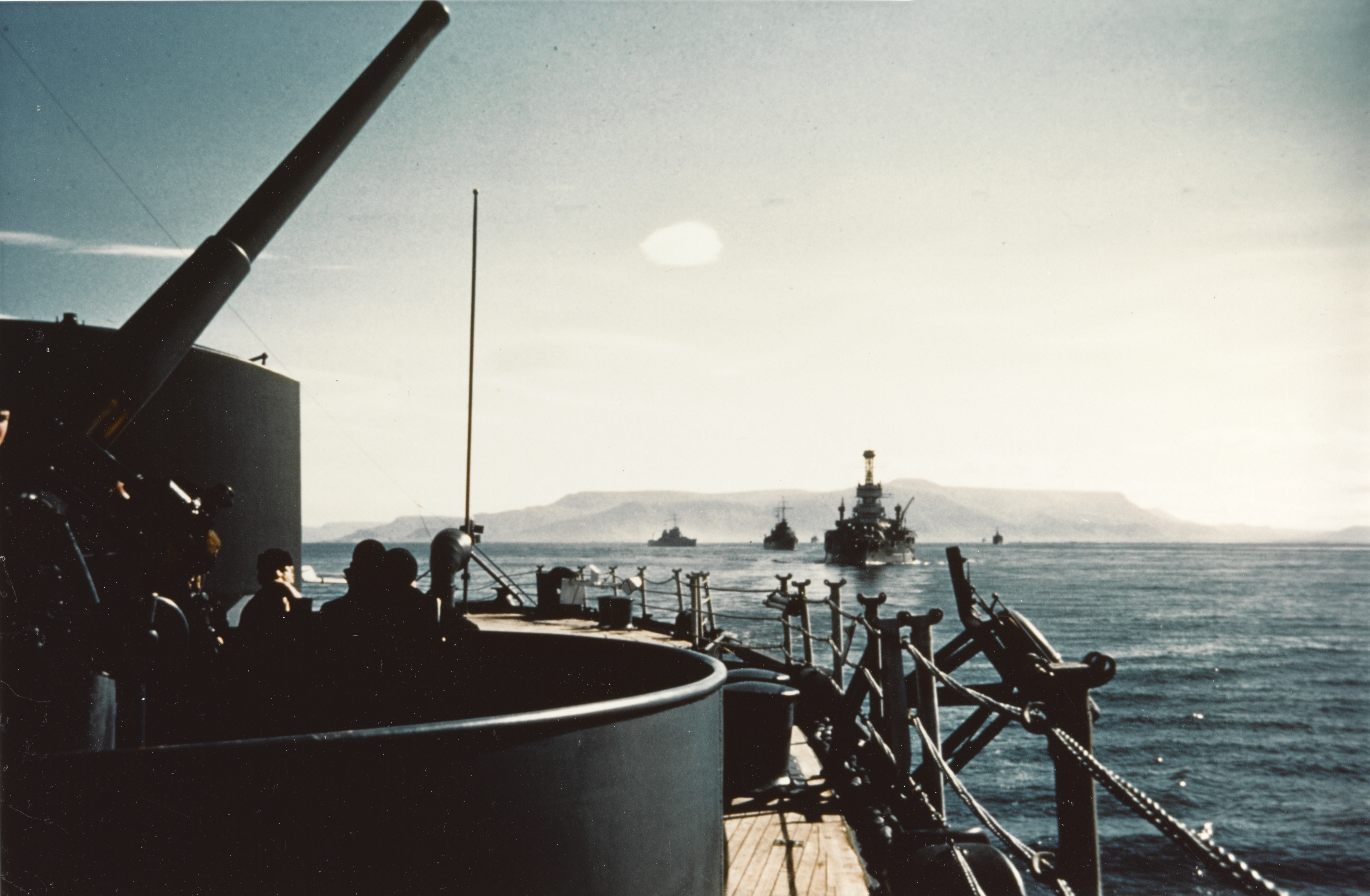
Today features the American flag being raised over new territories - start in 1846, when the U.S. flag was raised over California during the Mexican-American War. In 1898, Hawaii was formally annexed and in 1958 Alaska formally became a U.S. state. Check out a forgotten piece of WW2 history in 1941 - when the U.S. briefly occupied Iceland. And in 2003, America extended its reach once again - with a rocket launch to Mars.
— The Patriot Compass desk
1846Featured · This day in history
Conquest of California: U.S. Flag Raises over Monterey
By July 1846, word of war with Mexico had taken almost three months to reach the Pacific coast. Commodore John D. Sloat, already anchored at Monterey aboard the USS Savannah, sent sailors and marines ashore from the Savannah, Cyane, and Levant on July 7. The garrison offered no resistance, and Sloat raised the American flag over the Monterey Custom House, ending both Mexican rule and the short-lived California Republic declared weeks earlier at Sonoma.
Monterey's capture gave the United States a functioning capital on the Pacific before the war with Mexico was even decided, and the town governed California until 1849, hosting its first Constitutional Convention. A flag raised without a shot fired became the paperwork foundation for California statehood four years later.
Did you know
QWhat job did a Navy chaplain take on in occupied Monterey?
Walter Colton, a Navy chaplain, became Monterey's first American alcalde, a Spanish-derived title for a town magistrate who handled both civil disputes and criminal cases. Colton had no legal training and inherited a Mexican-era legal system he barely understood, yet he stayed in the post as Monterey transitioned from Mexican tariff town to American territorial capital. He later wrote about the experience, giving one of the few firsthand civilian accounts of how the occupation actually functioned day to day, well beyond the flag-raising ceremony itself.
QWhy was Sloat sitting in Monterey harbor for days before he acted?
Sloat's Pacific Squadron had already been reinforced and stationed near California before the war even started, but he refused to attack without solid confirmation that Congress had formally declared hostilities. News traveled by ship around Cape Horn or overland, so official word took nearly three months to reach him after the May 13 declaration. His caution meant American settlers at Sonoma acted on their own weeks earlier, staging the Bear Flag Revolt without any Navy backup at all.
QWhat had Mexican officials been collecting at the Custom House before Sloat arrived?
The building where Sloat raised the flag was not a fort or government palace but a customs house, where Mexican authorities taxed hides, tallow, and other goods moving through Monterey's port, then the main trading hub of Alta California. Its ordinary function as a tax office makes its later fame almost accidental. That same structure is preserved today inside a California state park, still standing on the spot where a single afternoon converted a Mexican tariff post into the seat of an American territorial government.
The Daily Record · free by email
Tomorrow's edition in your inbox — one story, one quote, the flag.
1898government
McKinley Signs the Newlands Resolution, Annexing Hawaii
By the summer of 1898, the Spanish-American War had made the Pacific look different to Washington: whoever held Hawaii held the coaling station and naval anchorage that connected California to Asia. On July 7, 1898, President William McKinley signed the Newlands Resolution, which had passed the House 209 to 91 and the Senate 42 to 21, annexing Hawaii, which became an organized U.S. territory two years later, and absorbing $4 million of Hawaiian government debt. Sovereignty formally transferred five weeks later, on August 12, at ʻIolani Palace in Honolulu, where the Hawaiian flag came down and the American flag went up. Hawaii became an organized U.S. territory in 1900.
McKinley told his secretary annexation was "manifest destiny," the same phrase used to justify the continental expansion a half-century earlier, now aimed across open ocean. The Newlands Resolution set the template for the acquisitions that followed within months, Puerto Rico, Guam, the Philippines, marking the moment American expansion stopped being about contiguous land and became a debate about overseas empire that Congress is still litigating in different forms today.
Did you know
QWhy did Congress use a joint resolution instead of a treaty to annex Hawaii?
A formal annexation treaty needed a two-thirds Senate vote, and pro-annexation forces had tried that route in 1897 without enough support to clear it. Nevada Representative Francis Newlands found the workaround: a joint resolution, a joint resolution requires only simple majorities in both chambers, unlike the two-thirds vote needed for a treaty. It passed the House 209 to 91 and the Senate 42 to 21, comfortable margins that never would have cleared the treaty threshold. The maneuver was legally contested then and remains a central argument for native Hawaiian sovereignty advocates now, who note that annexing a foreign nation through a simple legislative resolution rather than a treaty was a significant and legally contested departure from normal practice.
QHow many Native Hawaiians signed the petition against annexation?
Between September 11 and October 2, 1897, organizers gathered 21,269 signatures on a formal Petition Against Annexation, organized by the Hui Aloha 'Aina and Hui Kulai'aina groups. That figure represented more than half of the entire native Hawaiian population alive at the time, an extraordinary mobilization given the era's limited transportation and communication across the islands. The petition drive is understood to have contributed to the failure of the 1897 annexation treaty, which lacked the two-thirds Senate support needed to pass. They did not stop the 1898 joint resolution, but they survive today as one of the most complete records of organized Hawaiian opposition to annexation.
QWho did the U.S. send to write Hawaii's new territorial laws?
McKinley appointed a five-member commission to draft the legal framework for the incoming territory: Sanford B. Dole, the former Republic of Hawaii president who would become the first territorial governor; Senators Shelby M. Cullom of Illinois and John T. Morgan of Alabama; Representative Robert R. Hitt of Illinois; and Chief Justice Walter F. Frear. Dole, who had led the Republic of Hawaii government being replaced, served on the commission and then became the first territorial governor. The commission's report formed the basis for congressional debate that led to the 1900 Hawaiian Organic Act, which governed the territory until statehood in 1959.
1958government
Eisenhower Signs the Alaska Statehood Act
For nearly forty years, Alaska had been a territory in waiting, its statehood bids dying quietly in Congress since James Wickersham first introduced one in 1916. On July 7, 1958, President Dwight D. Eisenhower signed the Alaska Statehood Act into law, after the House passed it 210-166 and the Senate 64-20 in the preceding months. The act cleared the way for Alaska to become the 49th state. Six months later, on January 3, 1959, Eisenhower made it official.
QWho tried to get Alaska statehood passed more than forty years before Eisenhower signed it?
A territorial delegate named James Wickersham introduced the first Alaska Statehood Act back in 1916, decades before the idea gained any real traction. The bill went nowhere, partly because Alaskans themselves showed little interest in the idea at the time, still a scattered territory with a tiny population and no organized push for self-governance. Alaskans had sought statehood since as early as the 1920s, though the vision was not realized until the decade after World War II. Wickersham never lived to see his idea succeed.
QWhat did Alaskans do in 1956 to prove they deserved a seat in Congress before Congress agreed to give them one?
Under a strategy called the Tennessee Plan, Alaskans held an election in 1956 and chose Ernest Gruening, Bill Egan, and Ralph Rivers as an unofficial congressional delegation, even though Congress had never agreed to seat them. The plan borrowed its name from Tennessee's own 19th-century strategy of electing shadow representatives to press a statehood claim. Egan, Gruening, and Rivers traveled to Washington anyway and lobbied as if they already held the offices. Two of the three, Gruening and Rivers, went on to hold real seats once statehood passed in 1959.
QHow did Alaska's statehood bid get past Senators who wanted to block it?
Southern Democrats in the Senate worried that a new state would upset the existing political balance, and their opposition stalled the bill for years. Advocates found a workaround by tying Alaska's statehood bid to Hawaii's, making it harder for any one bloc of senators to oppose both without looking selective. The pairing shifted enough votes that the Senate ultimately passed the Alaska bill 64 to 20 in 1958, shortly before Eisenhower signed the Act into law on July 7, 1958. Hawaii followed Alaska into the Union less than eight months later.