Reading 3 of 9 free1776 Club · all 9 storiesWednesday, July 8
From the desk
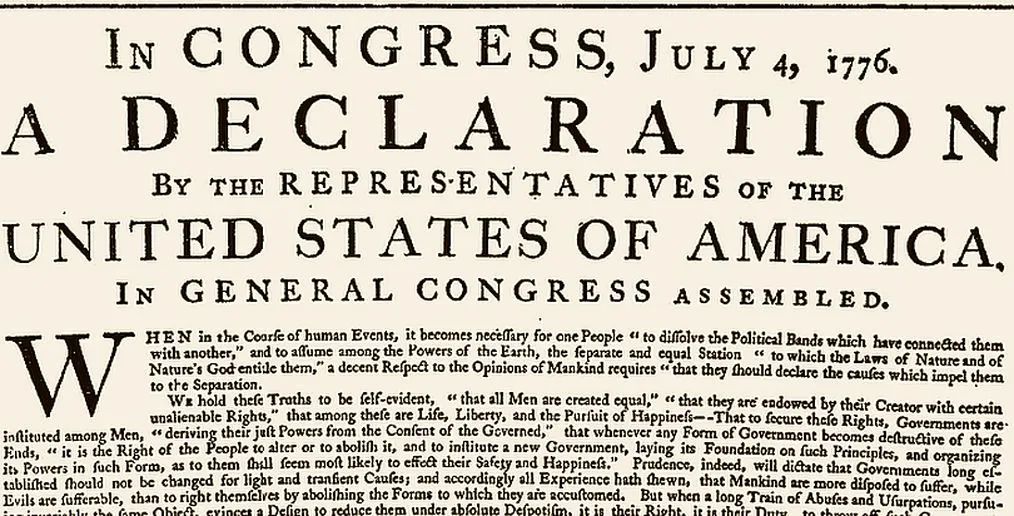
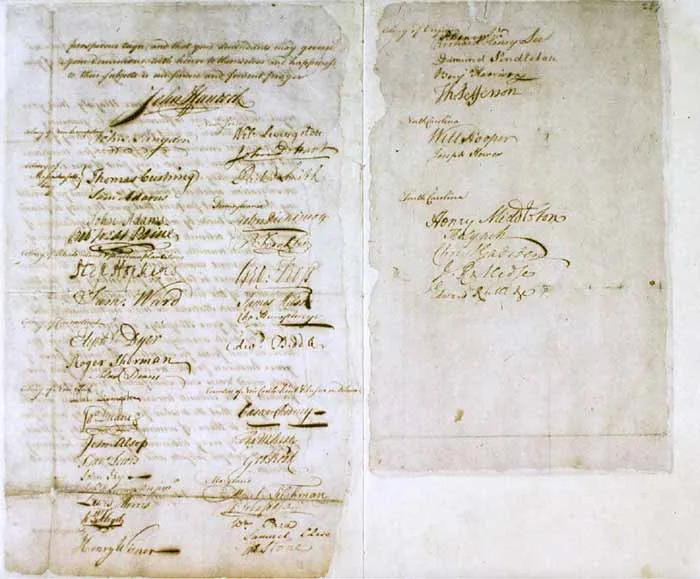
Start with 2011: Atlantis lifted off, the 135th and final shuttle mission after thirty years and 207 people flown on that orbiter alone. Worth a longer look: 1776, when John Nixon finally read the Declaration aloud in Philadelphia four days after Congress adopted it; the Olive Branch Petition, signed the same date a year earlier, makes a sharp companion piece. These items were covered in previous days, but were not read nor signed, respectively, until July 7, illustrating how slow things moved in the 1700s. One good day for closing chapters, and one for opening them.
— The Patriot Compass desk
2011Featured · This day in history
Final Launch of the Space Shuttle Program
Thirty years after the shuttle program began, NASA had one flight left. On July 8, 2011, Atlantis lifted off from Launch Complex 39A at 11:29 a.m. with Commander Christopher Ferguson, Pilot Douglas Hurley, and Mission Specialists Sandra Magnus and Rex Walheim aboard, carrying more than 9,400 pounds of supplies to the International Space Station. Thirteen days later, Atlantis landed at Kennedy Space Center for the last time, closing out the Space Shuttle program's 135 missions, with 207 individuals having flown aboard Atlantis alone over its 33 missions. The shuttle era was over.
Launch Complex 39A, Kennedy Space Center, FloridaStory page →
The American Throughline
STS-135 ended America's ability to launch its own astronauts, a gap that lasted until SpaceX's Crew Dragon flew in May 2020. In the meantime, the United States paid Russia for seats on Soyuz rockets to reach a station built largely with shuttle flights. The most capable spacecraft America ever built retired to a museum while its successor was still years from the pad.
Did you know
QWhy did NASA end up flying a mission it hadn't originally planned?
STS-135 existed only because NASA had built a safety net for the previous flight. STS-134's crew aboard Endeavour needed a rescue option in case they got stranded on the ISS, so NASA readied a contingency mission called STS-335 with hardware and a crew already assigned. When Endeavour landed safely and no rescue was needed, NASA authorized that standing plan as an actual flight in October 2010. Funding wasn't locked in until a continuing resolution and the April 2011 federal budget came through, months after Congress had already approved the mission on paper. The last shuttle flight in history began as an insurance policy nobody expected to use.
QWhat nickname did shuttle workers give Atlantis, and why?
Ground crews at Kennedy Space Center called Atlantis "Britney," a joke about its reputation for pre-launch drama. Compared to its fleet-mates, Atlantis was known for throwing more problems that needed fixing during processing, the kind of last-minute glitches that kept technicians scrambling before a launch. The nickname stuck among the workforce even as Atlantis went on to fly some of the program's most significant missions, including seven straight trips to the Russian station Mir and the final Hubble servicing flight. A spacecraft with a reputation for high-maintenance quirks ended up closing out the entire 30-year program.
QWhat saved Atlantis during its most damaging flight in 1988?
During the launch of STS-27, insulation shed from a solid rocket booster and struck Atlantis's underside, tearing into more than 700 tiles and ripping one away completely. That missing tile sat directly over a steel L-band antenna plate, which took the brunt of the reentry heat that the tile would normally have absorbed. The crew survived what became the single worst tile damage any shuttle sustained and still landed successfully. Investigators later pointed to a similar kind of debris strike, unaddressed, as a cause of the Columbia disaster in 2003.
The Daily Record · free by email
Tomorrow's edition in your inbox — one story, one quote, the flag.
1932general
The Dow Bottoms Out at 41.22
By the summer of 1932, three years into the Great Depression, unemployment was climbing toward its eventual peak of roughly 25 percent, reached in early 1933. On July 8, the Dow Jones Industrial Average closed at 41.22, its lowest point of the entire Depression, after touching an intraday low of 40.56. The index had lost almost 90 percent of its value since peaking at 381.17 on September 3, 1929. The Dow would not climb back to that pre-crash number until 1954, more than two decades later.
New York Stock Exchange, New York CityStory page →
The 41.22 close became the era's clearest evidence that Herbert Hoover's faith in self-correcting markets had failed, handing Franklin Roosevelt both an election and a mandate. Roosevelt's New Deal, and the regulatory apparatus built around the SEC and federal deposit insurance, grew directly out of the conviction that a market this broken required Washington's hand, not just patience.
Did you know
QHow much trading volume had actually dried up by July 1932?
Almost none, which was part of what made the bottom so eerie. After the panic selling of 1929 through 1931, there simply weren't many buyers or sellers left willing to trade at all. Fortunes had already been wiped out, brokerage accounts liquidated, and margin calls settled years earlier, so the market that hit 41.22 wasn't crashing so much as sitting nearly frozen. The dramatic collapse everyone remembers happened in 1929. The actual bottom, three years later, was closer to a whisper than a crash.
QWhy did unemployment in Germany matter to an American stock index?
It didn't move the Dow directly, but it shows how synchronized the global collapse was. As the American market bottomed out in mid-1932, German unemployment was climbing toward 30 percent, conditions that fed directly into the Nazi Party's rise later that year. British unemployment had already more than doubled since 1930, with exports cut in half. The Dow's 41.22 was an American number, but it landed inside a worldwide deflationary spiral hitting Berlin and London on the same calendar as Wall Street.
QWho actually coined the term "Hooverville"?
The name was a jab, not an official label. Homeless Americans built shantytowns out of scrap wood, tin, and cardboard in vacant lots and parks across the country, and the public pinned Herbert Hoover's name to them as blame for a crisis many felt he'd failed to answer. By the time the Dow hit its low that July, these settlements had spread from Seattle to New York, visible symbols of the Great Depression.
1663civil-rights
The Rhode Island Royal Charter Guarantees Religious Liberty
Twelve years after Massachusetts jailed him for preaching as a Baptist, John Clarke petitioned King Charles II's court, arguing in writing that a colony could thrive without a state church. On July 8, 1663, that argument won. Charles II approved the Rhode Island Royal Charter, a document Clarke had spent roughly two years and at least ten petitions and letters building, and it became a charter offering religious freedom without precedent among English colonial charters. Captain George Baxter carried it across the Atlantic to a colony that had been operating on a shakier 1643 patent for two decades.
Clarke's charter language, "no person... shall be any wise molested... for any differences in opinion in matters of religion," predates the First Amendment by over a century. Rhode Island became the proving ground for an idea the founders would later write into the Constitution: that government and church could be kept separate without the state collapsing.
Did you know
QWhat happened to Clarke's fellow preacher who wouldn't pay his fine in 1651?
When John Clarke, Obadiah Holmes, and John Crandall were arrested in Massachusetts Bay for unlawful Baptist preaching, Clarke and Crandall had their fines paid by supporters and were released. Holmes refused to let anyone pay his fine on principle and was publicly whipped instead. The punishment did not quiet him. Holmes went on to become an elder of Newport's Baptist church, and the episode became one of the defining grievances Clarke carried with him a decade later when he sat down to draft petitions to the Crown for a charter that would make such punishments illegal in Rhode Island for good.
QWhy did Rhode Island's charter mention Native American land rights at all?
Buried in the charter's boundary language is a clause forbidding colonies from invading lands of natives within their bounds without the knowledge and consent of the other colonies. It reflected the messy three-way land disputes Rhode Island was navigating with Connecticut and its neighbors as much as any settled Native policy, but it set a documented precedent: colonial charters could acknowledge that land claims required consent rather than simple assertion. Few other 17th-century English colonial charters bothered to include such language at all.
QHow specific was Rhode Island's charter about who ran the government?
The 1663 charter did not just grant vague self-rule, it spelled out an entire government structure: a governor, a deputy governor, ten assistants, and deputies sent from each town to the General Assembly. Benedict Arnold took the governor's seat first, with William Brenton as his deputy. That level of structural detail, combined with corporate powers unusual for a colony its size, is part of why historian Thomas Bicknell later called it the grandest instrument of human liberty ever constructed.