Reading 3 of 8 free1776 Club · all 8 storiesThursday, July 9
From the desk
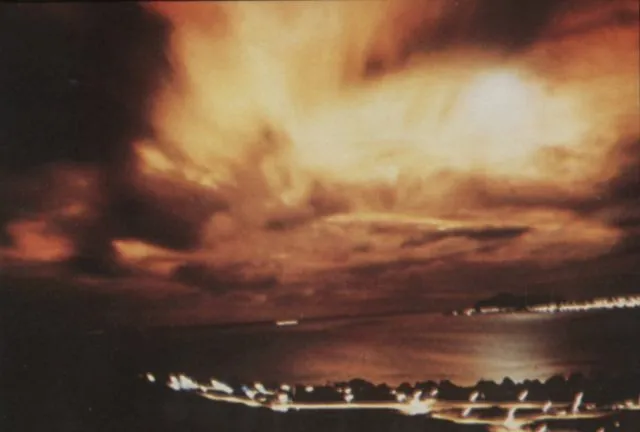
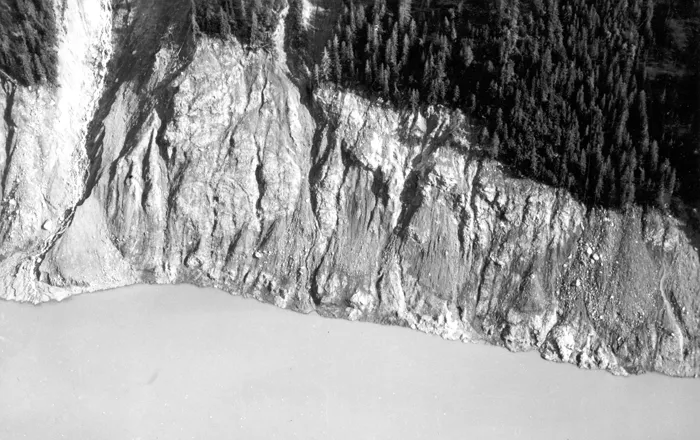
Start with Saipan, 1944. 30,000 Japanese dead, 3,100 Americans killed, and Japan's home islands suddenly within range of American bombers. Worth a longer look: 1958's Lituya Bay, where an earthquake threw a wave 1,720 feet up a mountainside and somehow left a father and son alive in their boat. Also worth a glance: Starfish Prime in 1962, a bomb detonated 250 miles up that lit Honolulu's sky while hotel guests watched from rooftops, not knowing what they were seeing.
— The Patriot Compass desk
1944Featured · This day in history
The Fall of Saipan Opens the Skies to Japan
By June 1944, the Marianas sat inside Japan's "Absolute National Defense Zone," the last shield protecting the home islands from long-range bombers. On June 15, the U.S. 2nd and 4th Marine Divisions, joined by the Army's 27th Infantry Division under Lieutenant General Holland Smith, waded ashore at Saipan against Lieutenant General Yoshitsugu Saitō's dug-in 43rd Division. Twenty-four days of fighting through caves, cane fields, and the slopes of Mount Tapotchau ended on July 9 with the island in American hands. The cost was staggering: roughly 30,000 Japanese dead against 3,100 American killed and 13,000 wounded.
Saipan's airfields put Tokyo within range of the B-29 for the first time, turning a Pacific island battle into the opening move of the strategic bombing campaign that would end the war. The battle also convinced American planners that Japan would fight to near-total annihilation rather than surrender, a lesson that shaped the casualty projections behind the decision to use the atomic bomb a year later.
Did you know
QWhat did American soldiers call the tanks that burned out Japanese cave defenses?
Marines and soldiers converted M3 Stuart light tanks into flame-throwing vehicles they nicknamed "Satans." Saipan's volcanic terrain was riddled with limestone caves that riflemen alone could not clear, so these modified tanks pumped burning fuel directly into cave mouths and bunkers dug into the slopes of Mount Tapotchau. The nickname stuck for the rest of the Pacific campaign, and similar flame tanks became standard equipment for every major island assault that followed, from Peleliu to Okinawa.
QDid Hideki Tōjō try to take his own life after Japan's surrender?
Yes. When American forces came to arrest him in September 1945, Tōjō shot himself but survived. He was quoted afterward saying he was sorry it was taking him so long to die, that he still believed the war had been righteous, and that he awaited the judgment of history. American doctors saved him, and he stood trial before the International Military Tribunal for the Far East, where he was convicted and executed in 1948.
QHow many civilians lived on Saipan before the invasion, and what were they doing there?
Saipan held roughly 26,000 to 28,000 civilians, most of them tied to the island's sugar industry in towns like Garapan, Charan Kanoa, and Tanapag. They were not military personnel but ordinary residents of a Japanese-administered island who found themselves in the middle of one of the war's bloodiest battles. An estimated 8,000 to 10,000 of them died, and around 1,000 committed suicide in the final days, many jumping off cliffs near Marpi Point after Japanese propaganda convinced them that capture meant torture.
The Daily Record · free by email
Tomorrow's edition in your inbox — one story, one quote, the flag.
1863military
Port Hudson Surrenders, Sealing Union Control of the Mississippi
For 48 days, Confederate General Franklin Gardner had held an 80-foot bluff above the Mississippi, telling Union commander Nathaniel Banks he would not surrender his position. By July 9, 1863, half his garrison was sick or hospitalized, food was nearly gone, and Vicksburg had already fallen five days earlier. Gardner gave up Port Hudson that day, ending the longest siege in U.S. military history and handing the Union the entire river.
Lincoln called the result plainly: the Mississippi now ran unvexed to the sea, cutting the Confederacy in two and choking its western supply lines for good. The siege also carried a domestic argument forward. Union officers reported the Louisiana Native Guards fighting superbly in the assaults, evidence cited in the North's push to recruit more Black soldiers.
Did you know
QWhy did Indiana's governor call the Mississippi campaign a matter of survival for his own state?
Oliver P. Morton warned that the fate of the North-West was trembling in the balance, and he meant it literally. Midwestern farmers depended on the Mississippi to move grain and goods to market, and the political pressure from states like Indiana, Ohio, and Illinois after the November 1862 elections pushed Lincoln's administration to prioritize the river campaign above nearly everything else. Losing it risked losing the loyalty of the region entirely.
QHow thin was Port Hudson before the Confederacy turned it into a fortress?
Before the war, Port Hudson was barely a town at all, home to a few buildings and about 200 people scattered along the Mississippi bluffs. Confederate engineers picked it precisely because the terrain around it was rough enough to make a siege miserable for any attacker, and the 80-foot elevation let its batteries command the river below. A place with almost no peacetime footprint became one of the two keys to the entire Confederate supply system.
QWhat happened to the Confederate garrison's health in the final weeks before surrender?
By the end of June 1863, roughly half of Franklin Gardner's garrison was sick or already in hospital beds, worn down by disease and dwindling food supplies rather than Union bullets alone. Desertion climbed alongside the illness. The 48-day siege, the longest in U.S. military history to that point, was decided as much by starvation and fever inside the walls as by the shells landing outside them.
1868government
The Fourteenth Amendment Is Ratified
Three years after Appomattox, the Constitution still had no answer for who counted as a citizen. Dred Scott's ruling that Black Americans could never be citizens remained unreversed by the document itself. On July 9, 1868, the twenty-eighth state ratified the Fourteenth Amendment, guaranteeing citizenship and equal protection to anyone born on American soil. Secretary of State William Seward officially proclaimed it adopted on July 27, after previously certifying it conditionally on July 20.
Every American born on U.S. soil owes their citizenship to this amendment, not the original Constitution, which never defined the term. Its Equal Protection Clause later became the legal foundation for Brown v. Board, Loving v. Virginia, and Obergefell v. Hodges, making it the most frequently litigated part of the Constitution.