Reading 2 of 5 free1776 Club · all 5 storiesMonday, July 13
From the desk
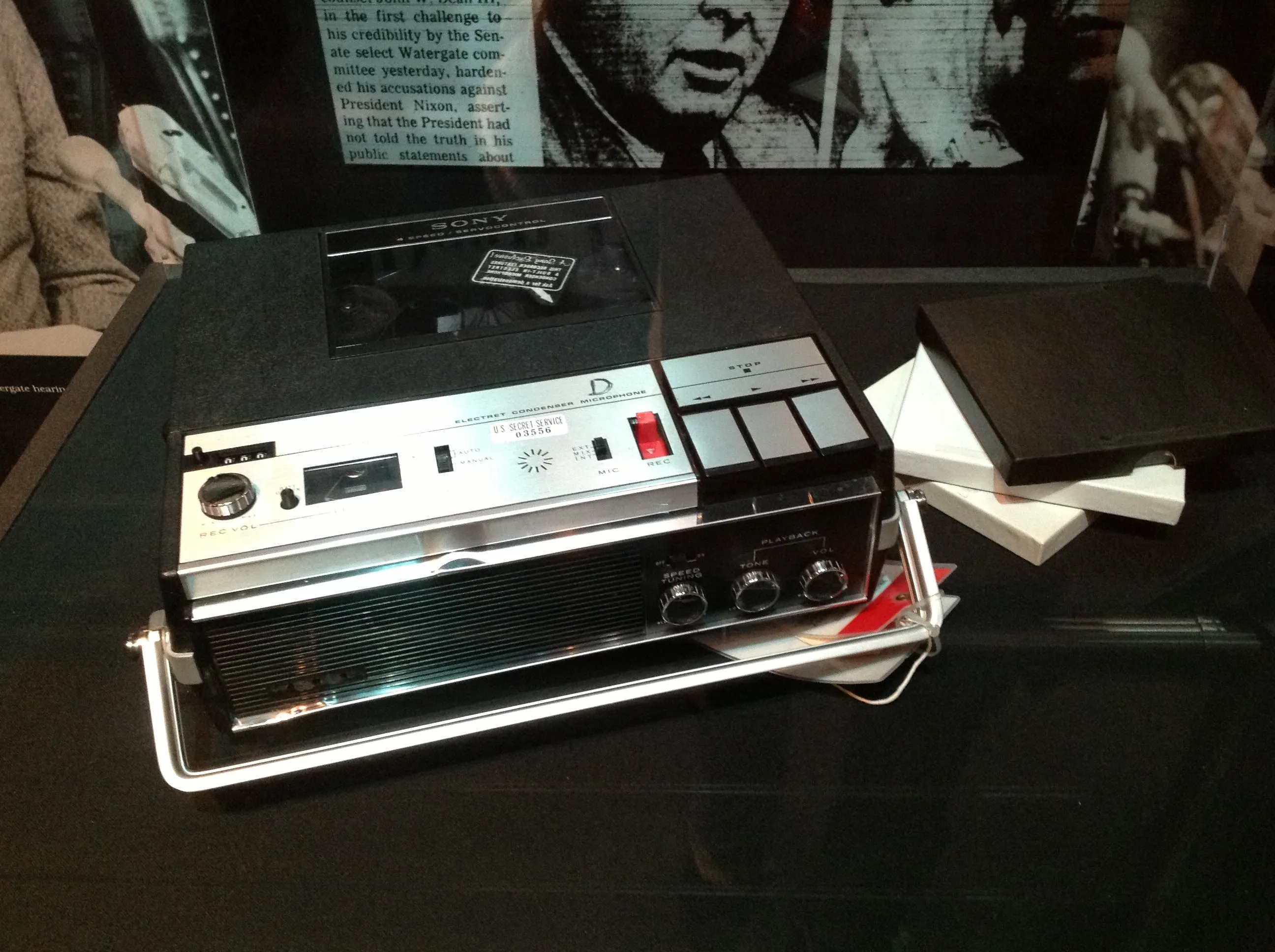
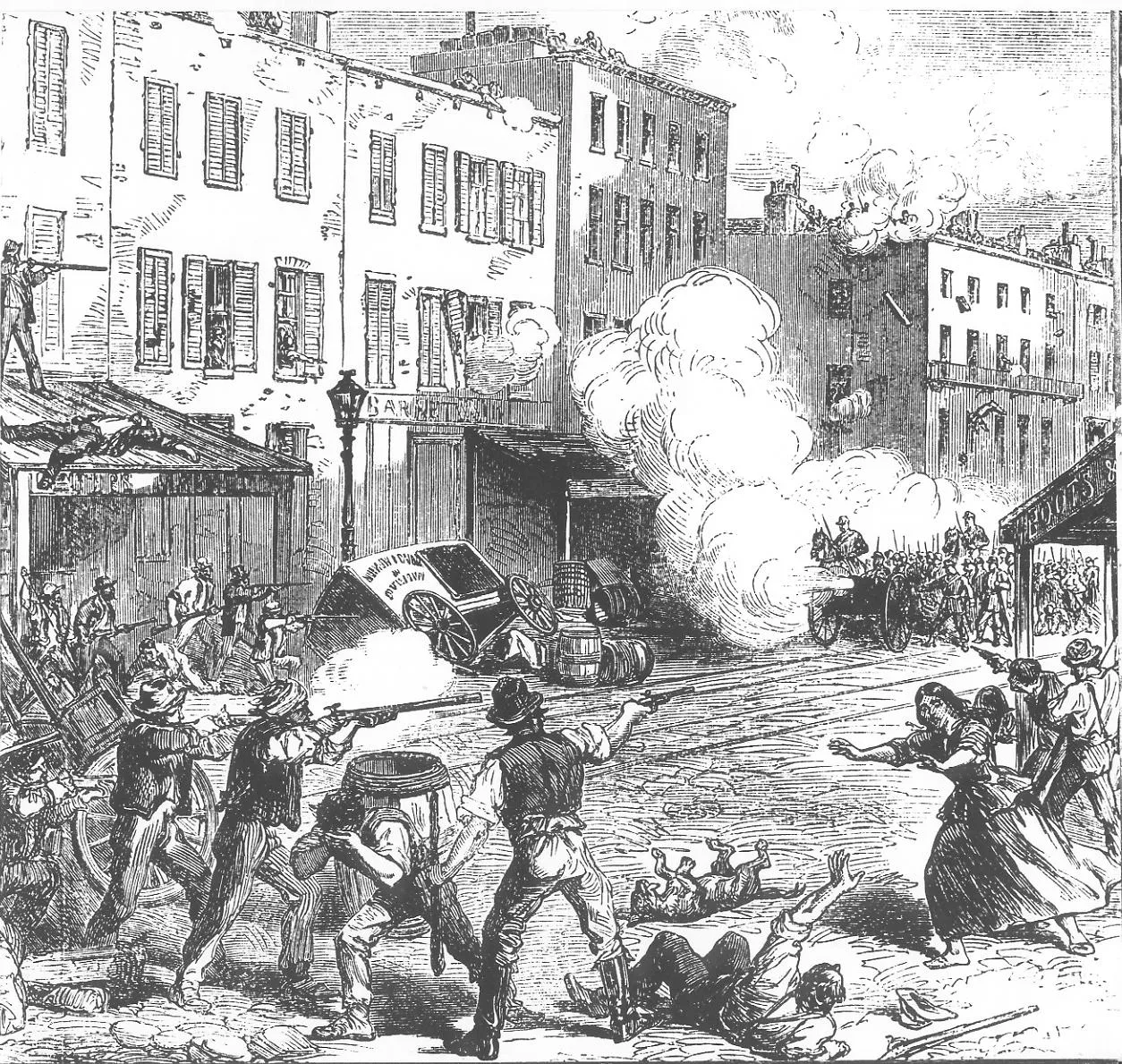
Start with 1787. Congress had one piece of unfinished business before the Constitution even existed: what to do with the land north of the Ohio. The Northwest Ordinance answered it, barring slavery there, reserving land for schools, and setting the terms by which territories became states, terms that outlived the Congress that wrote them. Also worth your time: Butterfield's 1973 admission that Nixon had wired his own office, a quiet answer that turned a break-in into a constitutional fight. The draft riots of 1863 round out the day, proof that a $300 exemption could burn a city.
— The Patriot Compass desk
1787Featured · This day in history
The 1787 Law That Secretly Shaped Modern America
In the summer of 1787, while delegates in Philadelphia argued over a new Constitution, the old Congress of the Confederation still had one piece of unfinished business: what to do with the vast territory Britain had ceded north of the Ohio River. On July 13, 1787, that Congress passed the Northwest Ordinance, creating the Northwest Territory, laying out a path from territory to statehood, and banning slavery within its bounds. It also set aside land in every township for public schools. The document would outlast the government that wrote it.
The ordinance drew the line the Union would fight over eighty years later: the Ohio River, slave states to the south, free states to the north. It also set the template for how America would grow, not as a permanent empire ruling colonies, but as new states joining as full equals. Both ideas outlived the Confederation Congress that wrote them and were folded into the Constitution's logic.
Did you know
QWhy did four separate states have to give up their land claims before Congress could even pass the ordinance?
Colonial-era charters from Virginia, Massachusetts, Connecticut, and New York all claimed overlapping strips of territory stretching west, some in theory reaching all the way to the Mississippi or beyond. Under the Articles of Confederation, the national government owned no land of its own, so before Congress could organize the Northwest Territory, it had to convince these four states to formally cede their competing claims. The cessions, completed piecemeal in the years before 1787, created the first land the United States held collectively rather than through any single state, and made the ordinance possible in the first place.
QWhat specific population number triggered a territory's right to statehood under the ordinance?
The ordinance set 60,000 free inhabitants as the threshold for full statehood on equal footing with the original thirteen states, a much lower bar than it might sound today. Before that, a territory needed only 5,000 free adult males to earn an elected legislature, governing itself under a congressionally appointed governor, secretary, and three judges in the meantime. The staged formula meant a raw frontier population could go from federal ward to full political equal in a single generation, a structure the United States would reuse for every territory that followed.
QWhat did the ordinance's bill of rights guarantee to settlers before the territory was even a state?
Article of the ordinance extended trial by jury, habeas corpus, and freedom of religion to anyone living in the Northwest Territory, years before those residents had any vote in Congress or any state government of their own. It also promised support for education, declaring that schools and the means of education should forever be encouraged because religion, morality, and knowledge were necessary to good government. Settlers on land with no legislature yet in session were still guaranteed rights normally associated with established statehood.
The Daily Record · free by email
Tomorrow's edition in your inbox — one story, one quote, the flag.
1995exploration
Delayed by Woodpeckers, Space Shuttle Discovery Finally Launches
About six weeks before launch, woodpeckers had drilled roughly 71 holes into Discovery's external tank insulation, forcing a rollback to the Vehicle Assembly Building on June 8 for repairs. On July 13, 1995, Discovery finally lifted off from Kennedy Space Center, holding briefly at T-minus 31 seconds when engineer Tod Gracom flagged a signal fluctuation in the tank's safety receiver. Six hours into the flight, the crew deployed TDRS-G, the last first-generation Tracking and Data Relay Satellite, which was later raised to geostationary orbit by the Inertial Upper Stage. Discovery landed about nine days later, having launched just six days after sister ship Atlantis landed, the fastest turnaround in shuttle program history.
TDRS-G was the sixth operational satellite added to NASA's relay network, a system designed to let Mission Control communicate with orbiting spacecraft without relying solely on scattered ground stations worldwide. STS-70 also marked the first flight run entirely from the newly opened Mission Control room at Johnson Space Center in Houston, a facility that would direct every subsequent shuttle and station mission.
Did you know
QWhat souvenir did the STS-70 crew carry into orbit?
Tucked among the mission's flown items was a membership patch from the Coney Island Polar Bear Club, the well-known Coney Island group famous for its winter ocean swims. NASA crews have a long tradition of flying small personal or novelty items in their limited personal preference kits, and the patch made the trip from Kennedy Space Center to orbit and back aboard Discovery. It is a small, odd detail buried in the mission manifest, the kind of thing that never makes a highlight reel but shows up in the flight records all the same.
QWhy did only one of Discovery's three main engines matter for engineers watching this launch?
STS-70 flew with a mismatched set of engines on purpose. The new Block I engine, serial number 2036, sat in the number one position, featuring a redesigned high-pressure liquid oxygen turbopump, a two-duct powerhead, a baffleless main injector, and a single-coil heat exchanger. The other two engines were the older Phase II design already in service. Flying one new engine alongside two proven ones let engineers gather real flight data on the redesign without betting the entire mission on unproven hardware in all three positions.
QHow close did NASA cut it between Atlantis landing and Discovery launching?
Six days. Atlantis landed, and less than a week later Discovery was sitting on the pad ready to fly its own mission, the fastest turnaround between two shuttle flights in the program's history. Processing a returned orbiter for the next flight normally took weeks, involving inspections, payload swaps, and fuel system checks. That six-day gap remains recorded as the fastest turnaround between flights in the history of the shuttle program.