Reading 3 of 6 free1776 Club · all 6 storiesFriday, July 17
From the desk
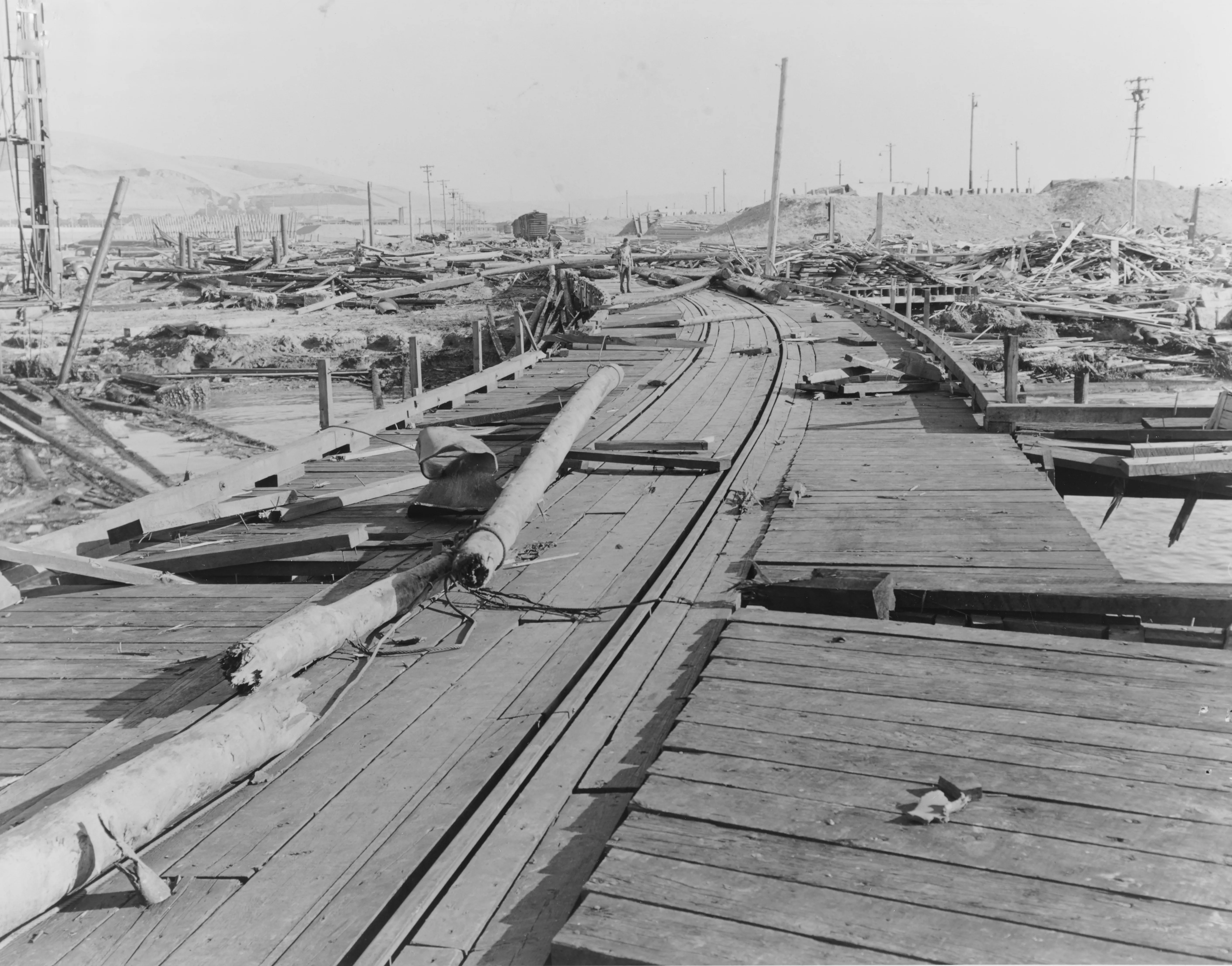
Start with 1975. Two nations that had spent thirty years aiming missiles at each other spent two days chasing each other in orbit instead, and at 16:19 UTC Thomas Stafford and Alexei Leonov shook hands through an open hatch, the last flight a Saturn rocket ever made. Worth a longer look: Potsdam, 1945, where Truman, three months into the job, mentioned a new weapon to Stalin almost in passing, and Stalin already knew. Port Chicago's 320 dead deserve a slower read too, if you have the stomach for it.
— The Patriot Compass desk
1975Featured · This day in history
Apollo-Soyuz: American and Soviet Spacecraft Dock in Orbit
By the summer of 1975, the United States and the Soviet Union had spent thirty years pointing weapons at each other, but détente had opened a strange new possibility: cooperation in orbit. On July 15, Soyuz 19 launched from Baikonur carrying Alexei Leonov and Valery Kubasov; six and a half hours later, Thomas Stafford, Vance Brand, and Deke Slayton followed aboard the final Apollo spacecraft ever built. Two days later, on July 17, the two craft docked at 16:19 UTC, and Stafford and Leonov shook hands through an open hatch. It was the last flight of both Apollo and the Saturn rocket family, closing out an era by opening another.
Apollo-Soyuz was America's last Apollo flight, and NASA chose to end that program not with another moon landing but with a handshake in orbit, betting that cooperation photographed better than competition. The docking hardware and procedures worked out here became the direct ancestor of Shuttle-Mir and the International Space Station, the framework America still uses to fly with Russia.
Did you know
QWhat drink did the astronauts request be waiting for them after splashdown?
The Apollo crew radioed down a request: "Tell Joe we want it up here," referring to the Link-Up cocktail, a drink created specially for the mission by Joe Gilmore, head bartender at The Savoy Hotel's American Bar in London. The cocktail had been designed to mark the joint flight before the astronauts had even left Earth, and the crew apparently didn't want to wait to try it. It's a small detail, but it captures how thoroughly the mission had already become a cultural event on both sides of the Atlantic before it even splashed down.
QHow long were the two spacecraft actually locked together?
Precisely 1 day, 23 hours, seven minutes, and three seconds, though the crews spent 44 hours together across two separate dockings. After the first undocking, Apollo repositioned to block the sun, creating an artificial eclipse so the Soyuz crew could photograph the solar corona, an experiment that required a second brief docking before the spacecraft finally separated for good. The precision of that timestamp says something about how meticulously both space agencies tracked every second of the joint mission.
QWhat went wrong during Apollo's final descent to Earth?
Unignited reaction control system propellant, specifically toxic monomethylhydrazine and nitrogen tetroxide, vented from the spacecraft and got sucked into a cabin air intake during reentry. Vance Brand briefly lost consciousness from the fumes. Thomas Stafford, still functioning, retrieved emergency oxygen masks, fitted one onto Brand, and handed another to Deke Slayton. It was the one serious mishap in an otherwise smooth mission, and it happened after the hard part, the actual docking in orbit, was already behind them.
The Daily Record · free by email
Tomorrow's edition in your inbox — one story, one quote, the flag.
1945military
The Potsdam Conference Opens
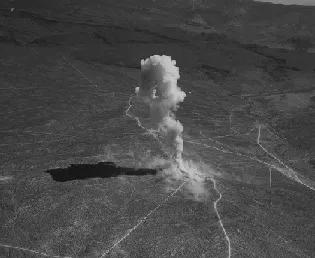
Germany surrendered in May 1945, and the men who beat it now had to decide what to do with it. On July 17, Winston Churchill, Joseph Stalin, and Harry S. Truman, president for barely three months after Franklin Roosevelt's death, convened at Cecilienhof Palace outside Berlin. They argued over occupation zones, Poland's new government, and where Germany's eastern border would fall. Before the conference closed, Truman quietly told Stalin the United States had tested a weapon of unusual destructive force. Stalin, briefed by his own spies, barely blinked.
Truman arrived at Potsdam as an untested president carrying the news from Alamogordo, and his handling of both, agreeing to occupation terms while withholding the bomb's full weight, set the tone for four decades of American nuclear diplomacy. The conference also produced the Potsdam Declaration, issued by Truman, Churchill, and Chiang Kai-shek, giving Japan an ultimatum to surrender unconditionally or face destruction.
Did you know
QWhy did Britain's own prime minister vanish from the conference midway through?
Churchill left Potsdam on July 25 to fly home for the results of Britain's general election, an election held weeks earlier but whose count took time to tally across a country still mobilized for war. He expected to return as prime minister. Instead, voters had turned him out in a landslide for Clement Attlee, his own deputy in the wartime coalition government. Attlee, a comparatively obscure figure to Stalin and Truman, flew back to Potsdam in Churchill's place and finished the negotiations that Churchill had started, a strange handoff conducted in the middle of deciding Germany's fate.
QWhat exactly did Stalin already know before Truman said a word about the bomb?
Soviet intelligence had penetrated the Manhattan Project well before Truman ever mentioned a new weapon at Potsdam. When Truman told him that America possessed a weapon of unusual destructive force, Stalin's flat, unimpressed reaction wasn't diplomatic restraint. He simply already knew, having been briefed on the atomic program through espionage channels well ahead of the Trinity test nine days earlier. Truman left the exchange believing he'd surprised Stalin. He almost certainly hadn't.
QWhat specific piece of territory did Stalin personally insist on keeping?
Stalin pushed hard at Potsdam for outright Soviet annexation of Königsberg and the surrounding East Prussian territory, rather than folding it into the general redrawing of Germany's borders. The other Allies agreed, and the city was transferred to Soviet control, becoming Soviet territory as agreed at the conference.
1821government
Spain Cedes Florida to the United States
For decades, the border between Spanish Florida and British (then American) Georgia had been a running sore, a line no one had ever properly drawn. Seminoles raided across it, runaway slaves fled into it, and after Andrew Jackson's soldiers marched into Spanish territory to chase them down, Madrid decided the whole province was more trouble than it was worth. On July 17, 1821, the United States formally took possession of Florida under the terms of the Adams-Onís Treaty, negotiated two years earlier by Secretary of State John Quincy Adams and Spanish Minister Luis de Onís. Spain walked away with $5,000,000 in settled claims; the U.S. walked away with a peninsula.
Florida's transfer removed Spain's last colonial holding on the North American mainland east of the Mississippi and gave Adams his signature diplomatic win before he ever reached the presidency. It also folded the Seminole and fugitive-slave communities of Spanish Florida into American jurisdiction, setting the stage for the far bloodier Second Seminole War a decade later.
Did you know
QWhy did Spain accept a payment structured as debt relief instead of cash?
The $5,000,000 Spain received under the Adams-Onís Treaty never touched the Spanish treasury directly. It was structured as American payment of claims that U.S. citizens held against the Spanish government, mostly for property losses and damages dating back years. Spain effectively settled its own debts using American money rather than receiving a lump sum to spend freely. For a government already stretched thin trying to hold onto colonies across the Americas, wiping out a standing liability was worth as much as cash in hand.
QWhat made Gracia Real de Santa Teresa de Mose unusual for its time?
Founded north of St. Augustine, Mose was recognized as the first settlement of free Black people in North America. Its residents had escaped British colonial plantations and accepted Spanish terms: conversion to Catholicism in exchange for freedom and land. The town stood as a functioning military outpost defending Spanish Florida's northern approach, meaning escaped people were, in effect, garrisoning the border against the very colonies they had fled.
QHow long did Florida remain a territory before statehood?
Florida spent 24 years under U.S. territorial governance after the 1821 transfer before Congress admitted it to the Union as the 27th state on March 3, 1845. That reflects how thinly settled and contested the peninsula still was even after Spain departed. The Seminole population that had built lives under Spanish protection remained a central, unresolved question for nearly that entire span.