Reading 3 of 8 free1776 Club · all 8 storiesTuesday, July 21
From the desk
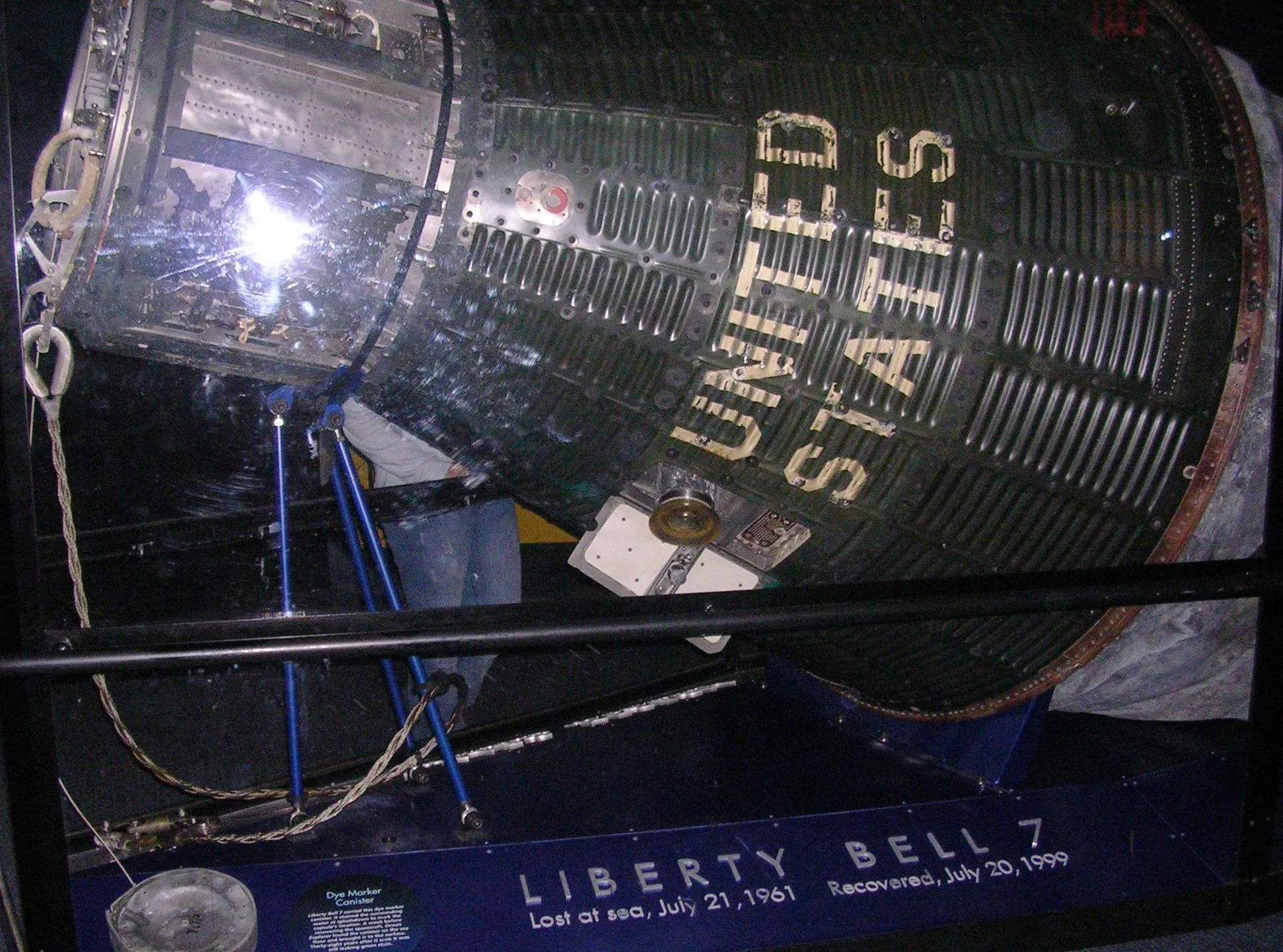
Start with 1861: Washington crowds expected a quick march on Richmond, and instead got roughly 35,000 Union troops under McDowell broken by Confederate reinforcements arriving by rail, the retreat curdling into what Southern papers called the "Great Skedaddle." Worth a longer look: Gus Grissom's 1961 flight, a fifteen-minute arc that made him the second American in space, followed by a hatch blowing off Liberty Bell 7 and nearly taking him under the Atlantic with it. Also on the page: the USS Constitution, silent under sail for 116 years, moving on her own again in 1997 for just forty minutes.
— The Patriot Compass desk
1861Featured · This day in history
Confederate Line Holds at Bull Run, Union Retreat Turns to Rout
Three months after Fort Sumter, Washington still expected a short war. Crowds in the capital pressed Lincoln to march on Richmond, and on July 21, 1861, roughly 35,000 Union troops under Irvin McDowell met a combined Confederate force of about 34,000 under P.G.T. Beauregard and Joseph E. Johnston, though only about 18,000 troops on each side were actually engaged in the fighting along a creek called Bull Run near Manassas Junction, Virginia. Confederate reinforcements arrived by rail under Joseph E. Johnston and broke the Union line. McDowell's army disintegrated into a disorderly retreat toward Washington, a stampede that the Southern press nicknamed the "Great Skedaddle."
Bull Run ended the North's ninety-day fantasy of a quick war. Lincoln replaced McDowell with George McClellan and began building the large, trained army the conflict actually required. The battle also gave Jackson the nickname "Stonewall," one that has stuck in American memory ever since.
Did you know
QWhy did congressmen bring picnic baskets to a battle?
Washington society treated the march on Manassas as a day trip. Confident of a quick Union victory that would let the army push on to Richmond, senators, congressmen, and their families rode out from the capital in carriages with baskets of food to watch the fighting from a safe distance, the way one might watch a horse race. When the Union line broke, those same carriages became part of the traffic jam clogging the road back to Washington, tangled among retreating soldiers who had thrown away their rifles to run faster.
QWhat happened to the woman killed in her own bedroom?
Judith Carter Henry was 85 years old and bedridden, unable to leave her house near Henry House Hill when the armies converged on her property. During the artillery duel that preceded the infantry assault, a Union shell crashed through the wall of her bedroom and killed her. Her death made her one of the notable civilian casualties of the battle, which was fought so close to a private home that she could not leave it in time.
QHow did Jackson actually earn the nickname Stonewall?
The name came from another general in the middle of the fighting, not from later legend. As Confederate general Barnard Bee's own troops began to waver under Union pressure, he saw Jackson's brigade holding firm on Henry House Hill and shouted to his men, "There is Jackson standing like a stone wall," to rally them back into the fight. Bee was killed shortly afterward and never lived to explain whether he meant it as praise or as a jab at Jackson's refusal to advance and help him, but the name outlived the argument.
The Daily Record · free by email
Tomorrow's edition in your inbox — one story, one quote, the flag.
1997military
USS Constitution Sails Under Her Own Power for the First Time Since 1881
For 116 years, the USS Constitution had not sailed under her own power, moving only under tow during that time. On July 21, 1997, after being towed about five nautical miles offshore from Marblehead, Massachusetts, a crew raised sails purchased through a national fundraising campaign and let the world's oldest commissioned warship still afloat sail on a south-south-east course across Massachusetts Bay under her own power. The sail lasted about 40 minutes, timed to the approach of the ship's 200th anniversary. The $12 million restoration that made it possible had begun five years earlier.
Old Ironsides survived the War of 1812 undefeated and became a symbol Americans have refused to let become static. The new sails were bought not by the Navy but by a 1990s national campaign of students and citizens pooling small donations, a grassroots echo of the 19th-century public outcry that saved the ship from being scrapped in the first place.
Did you know
QHow light did the wind need to be for the 1997 sail to even be possible?
Former Constitution commander Tyrone G. Martin laid out the exact conditions required: winds under ten knots, seas of a foot or less, a half-dozen sails at most, and only for a brief stretch close to home. That narrow window is why the sail lasted only about 40 minutes and stayed inside Massachusetts Bay rather than venturing into open ocean. The ship's timbers and rigging, however carefully restored in the $12 million overhaul, simply weren't built to take the stresses of true blue-water sailing after more than a century at rest. The 1997 sail was less a return to sea duty than a brief, carefully bounded demonstration.
QWho actually paid for the new sails Constitution wore that day?
Not the Navy's shipbuilding budget. The canvas that caught the wind off Marblehead came out of a 1990s national campaign that collected donations from ordinary citizens and students across the country specifically to outfit the ship for her bicentennial. The sails were purchased through the fundraising campaign as part of the broader restoration effort that began in 1992 and concluded with the ship emerging from dry dock in 1995, in preparation for the 1997 anniversary sail. So when Old Ironsides moved under her own power again, she wore sails the public had paid for directly.
QWhy did a TV anchor take the helm?
Walter Cronkite, the veteran television anchor, took the ceremonial helm that day, while Commander Mike Beck, who had trained the crew using an 1819 Navy sailing manual, directed the actual sailing of the ship. Cronkite's presence turned a restoration test into a broadcast-worthy event, tying the ship's 18th-century origins to 20th-century American media in a single afternoon on Massachusetts Bay.
1944military
American Forces Land on Guam to Begin Recapture
Guam had been American soil since 1898, and Japan had held it since December 8, 1941, the same day as the attack on Pearl Harbor. On July 21, 1944, Marines and Army troops landed on both sides of the Orote Peninsula under cover of naval gunfire, wading ashore against dug-in defenders and a reef that kept supply ships hundreds of yards offshore. Rain, jungle, and a network of Japanese bunkers and caves slowed the advance for weeks. Organized resistance ended August 10, clearing the way for airfields that put B-29 bombers within range of Japan itself.
Guam was one of several American territories Japan occupied during the war, including Wake Island and the Philippines, and its recapture was framed as reclaiming American land, not conquering foreign territory. Brigadier General Lemuel Shepherd said as much on the ground, framing the victory as vengeance for the garrison overcome by a numerically superior enemy three days after Pearl Harbor. The airfields built afterward, on a patch of reclaimed U.S. territory, gave American B-29s their reach into Japan's home islands and helped shorten the war.
Did you know
QWhy did the Guam invasion get delayed by five weeks?
Planners had set June 18, 1944, just three days after the Saipan landing, as the invasion date. Saipan turned out to hold a much larger Japanese garrison than expected, tying down troops and ships that Guam's invasion force needed. At the same time, the Battle of the Philippine Sea pulled away the carriers and naval support assigned to the landing. The invasion slipped to July 21, giving American battleships and cruisers extra weeks to shell the island's defenses before Marines and soldiers ever reached the beach.
QWhat made moving supplies onto Guam's beaches so difficult?
A reef ringed the landing beaches, and it kept landing ships stranded several hundred yards from shore, far too distant for normal unloading. Amphibious vehicles capable of crossing that gap were in short supply, so every crate of ammunition and every gallon of water had to move through a bottleneck under fire. The northern and southern beachheads stayed pinned down as a result, and what should have been a quick push inland turned into a slow, exposed crawl across open reef flats.
QWhat did the Japanese commander say in his final radio message before Guam fell?
Lieutenant General Hideyoshi Obata sent Imperial General Headquarters a message on August 10 stating that holding Guam had become hopeless and that he would engage the enemy in a last battle at Mount Mataguac the following day. He had written earlier that he felt deeply sympathetic toward the officers and men who had already fallen and their families. Obata did not survive the stand at Mount Mataguac he described in that final dispatch.