Reading 3 of 6 free1776 Club · all 6 storiesThursday, July 23
From the desk
Start with 1862: Lincoln brings "Old Brains" to be General-in-Chief of the Armies of the United States. Worth a longer look: 1999, when Eileen Collins commanded Columbia, a pin struck the engine, and the crew flew a shortened orbit anyway to deploy Chandra. Jackie Robinson's 1962 induction rounds out the day, a quieter kind of first.
— The Patriot Compass desk
1862Featured · This day in history
Lincoln Names Halleck General-in-Chief After McClellan's Peninsula Failure
By the summer of 1862, McClellan's Peninsula Campaign had stalled within sight of Richmond, and Lincoln needed someone to impose order across a war being fought on too many fronts at once. On July 23, 1862, he appointed Henry W. Halleck, who had built a reputation for organization in the Western Theater, as General-in-Chief of the Union Army. Halleck brought discipline to supply lines and paperwork, but not to the men holding the field. Command of actual battles stayed with generals like McClellan, a man Halleck could supply but never command.
Halleck's tenure showed the limits of running a war from a desk. Lincoln's frustration with a general he privately dismissed as "little more than a first-rate clerk" pushed him toward Grant in 1864, and toward a presidency far more willing to fire generals who would not fight. Halleck's tenure illustrated a distinction between administrative competence and battlefield command that shaped how Lincoln subsequently selected and managed his generals.
Did you know
QWhy did people call Halleck "Old Brains"?
The nickname came from his reputation as an intellectual soldier, a man who had studied warfare as a science rather than learned it on a battlefield. He had translated European military theory and written on strategy before the war, which gave him credibility as a thinker. But the same trait that earned the nickname also became the criticism against him: he was seen as a man who preferred planning to fighting, and rarely pushed for the aggressive action Lincoln wanted.
QWhat job did Halleck end up doing better than General-in-Chief?
After Grant took over as General-in-Chief in March 1864, Halleck was shifted into the newly created position of Chief of Staff. It suited him far better. Freed from the burden of directing headstrong field commanders, Halleck put his genuine skill for logistics and administration to work, keeping Grant's armies supplied and equipped through the grinding campaigns of 1864 and 1865. The two men, who started with a tense relationship, ended up working together effectively in this arrangement.
QWhat did McClellan actually think of the man now above him?
McClellan did not hide his contempt. He described Halleck as "the most helplessly stupid" of all the high-ranking officers he encountered during the war, a striking judgment given how many generals McClellan served alongside. Halleck's appointment came directly because of McClellan's own failure on the Peninsula.
The Daily Record · free by email
Tomorrow's edition in your inbox — one story, one quote, the flag.
1962civil-rights
Jackie Robinson Inducted to the Baseball Hall of Fame
Jackie Robinson retired from the Brooklyn Dodgers in 1956, a decade after breaking baseball's color line. In 1962, in his first year of eligibility, the Baseball Writers' Association announced Robinson's election to the Hall of Fame, making him the first Black American player inducted at Cooperstown. His plaque honored a career of ten seasons, six pennants, and a batting title, along with the fact that he had integrated the sport under threats no other candidate had faced. Branch Rickey, the Dodgers executive who signed him in 1945, lived to see it.
National Baseball Hall of Fame, Cooperstown, New YorkStory page →
The American Throughline
Robinson's plaque made permanent what his 1947 Dodgers debut had only begun: proof that baseball's institutions, not just its rosters, would recognize the men who integrated the game. His first-ballot election, ten years before the civil rights movement's landmark legislative victories had fully settled into American law, tied the national pastime's own memory to the country's reckoning with segregation.
Did you know
QHow long did Jackie Robinson have to wait before Hall of Fame voters could even consider him?
Baseball Hall of Fame rules required a five-year waiting period after retirement before a player became eligible for the writers' ballot. Robinson played his final season with the Brooklyn Dodgers in 1956, which meant 1962 was the earliest possible year he could appear on the ballot at all. He didn't just get elected eventually. He was elected the very first year the rules allowed anyone to vote for him, a first-ballot induction, elected outright rather than after years on the ballot.
QWhat did Leo Durocher actually mean when he said Robinson came to beat you?
Durocher, a Dodgers manager known for a combative style, praised Robinson's fierce competitiveness on the field. His quote ("he came to stuff the damn bat right up your ass") described Robinson as a player driven by pure competitive hostility toward opponents, not by a mission to prove he could take abuse quietly. Durocher's phrasing, blunt and profane even by clubhouse standards, was meant as the highest compliment he could offer a teammate: Durocher meant it as praise: Robinson played every game to win.
QWhy did Branch Rickey specifically choose Robinson to integrate the majors rather than another Negro Leagues star?
Rickey, the Dodgers general manager, was looking for a player who could handle the abuse he knew would come without retaliating in a way that would derail the entire experiment. He scouted Robinson out of the Negro Leagues in 1945 believing Robinson had the temperament to absorb hostility from fans, opposing players, and even some teammates while still performing at an elite level. The gamble worked: Robinson debuted in 1947, and Rickey lived to see him inducted into Cooperstown fifteen years later.
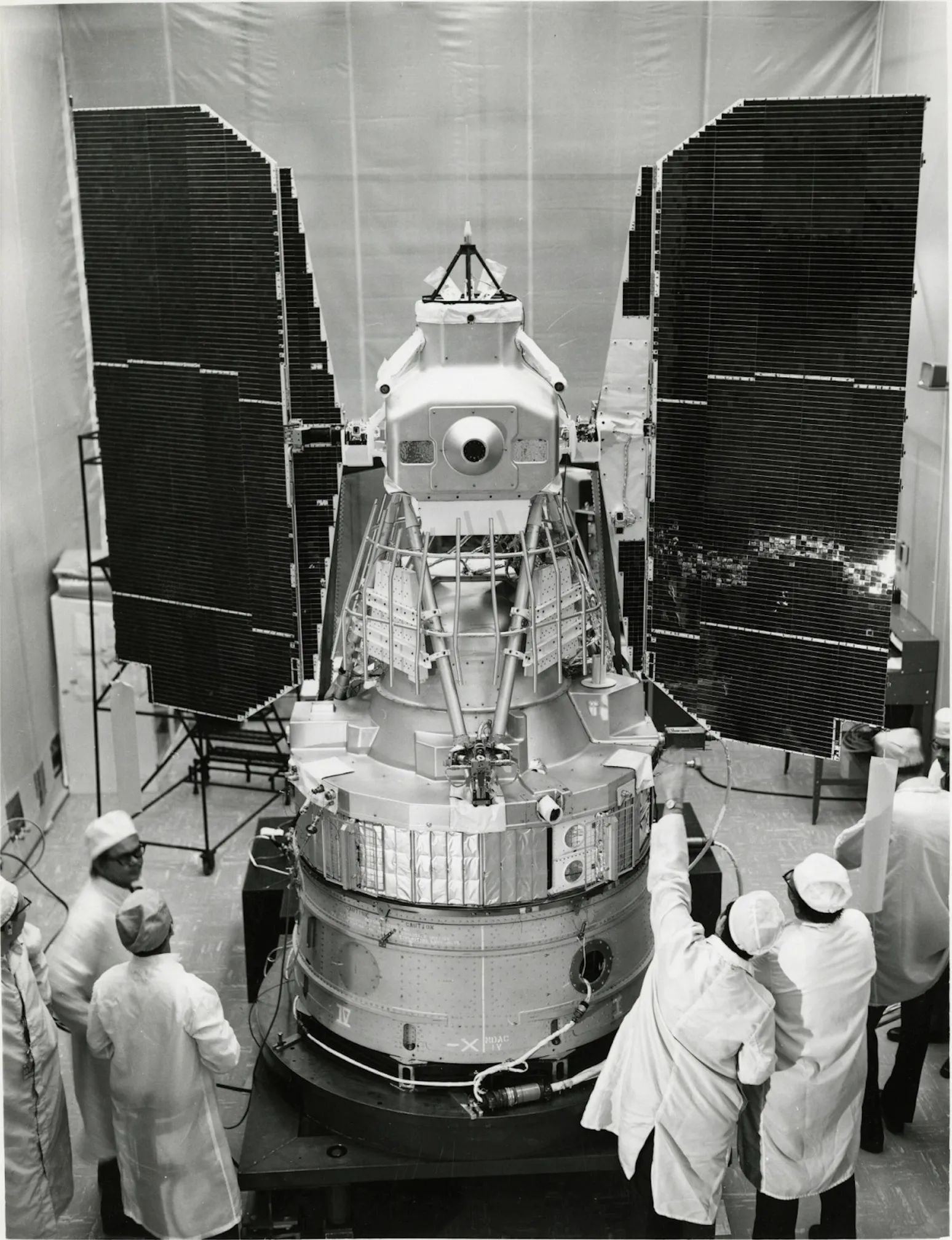
Thirty years to the day after Apollo 11 touched down, Neil Armstrong, Buzz Aldrin, and Michael Collins stood at Kennedy Space Center to watch a different kind of first. On July 23, 1999, Lt. Col. Eileen Collins commanded Space Shuttle Columbia into orbit, the first woman to hold that role on a U.S. spaceflight. Minutes into ascent, a loose pin struck an engine nozzle and ruptured three coolant tubes, cutting one engine out early and leaving Columbia seven miles short of its planned orbit. The crew pressed on anyway, deploying the roughly 50,000-pound Chandra X-ray Observatory later that day.
NASA first admitted women into the astronaut corps in 1978. Collins's command in 1999 finally answered who among them would fly first. John Young had told her as much years earlier, when she was selected as a pilot: "You will be the first woman to pilot the Space Shuttle." Chandra, meanwhile, gave American astronomers their sharpest X-ray eyes on the universe, an instrument still shaping U.S. astrophysics decades later.
Did you know
QWho else was watching from Kennedy Space Center that morning?
The launch fell on the thirtieth anniversary of the Apollo 11 landing, and NASA had a full house for it. Neil Armstrong, Buzz Aldrin, and Michael Collins, the Apollo 11 crew, were on hand at Kennedy Space Center, along with Hillary Clinton and the United States women's national soccer team. The Apollo astronauts marked thirty years since their own landing while Collins opened a new chapter in the same program.
QWhat did the crew do with the shuttle's cameras after the main objective was done?
Once Chandra was safely away, the five astronauts turned a portable instrument called the Southwest Ultraviolet Imaging System on the sky. Over the rest of the four-day, twenty-two-hour flight they used it to capture ultraviolet images of Earth, the Moon, Mercury, Venus, and Jupiter, a bonus survey of the solar system squeezed in around a mission built to deliver one very heavy telescope.
QDid the engine trouble ever get a musical tribute?
Guitarist Eric Johnson later wrote an instrumental called 'Columbia,' though not for STS-93 itself. He composed it after the orbiter's loss in 2003. He said he wanted the piece to work as 'a salute, a celebration' of the astronauts' lives rather than dwell on the tragedy, Guitarist Eric Johnson later wrote an instrumental called 'Columbia,' though not for STS-93 itself; he composed it after the orbiter's loss in 2003, saying he wanted the piece to work as 'a salute, a celebration' of the astronauts' lives rather than dwell on the tragedy.