Reading 3 of 6 free1776 Club · all 6 storiesSunday, July 26
From the desk
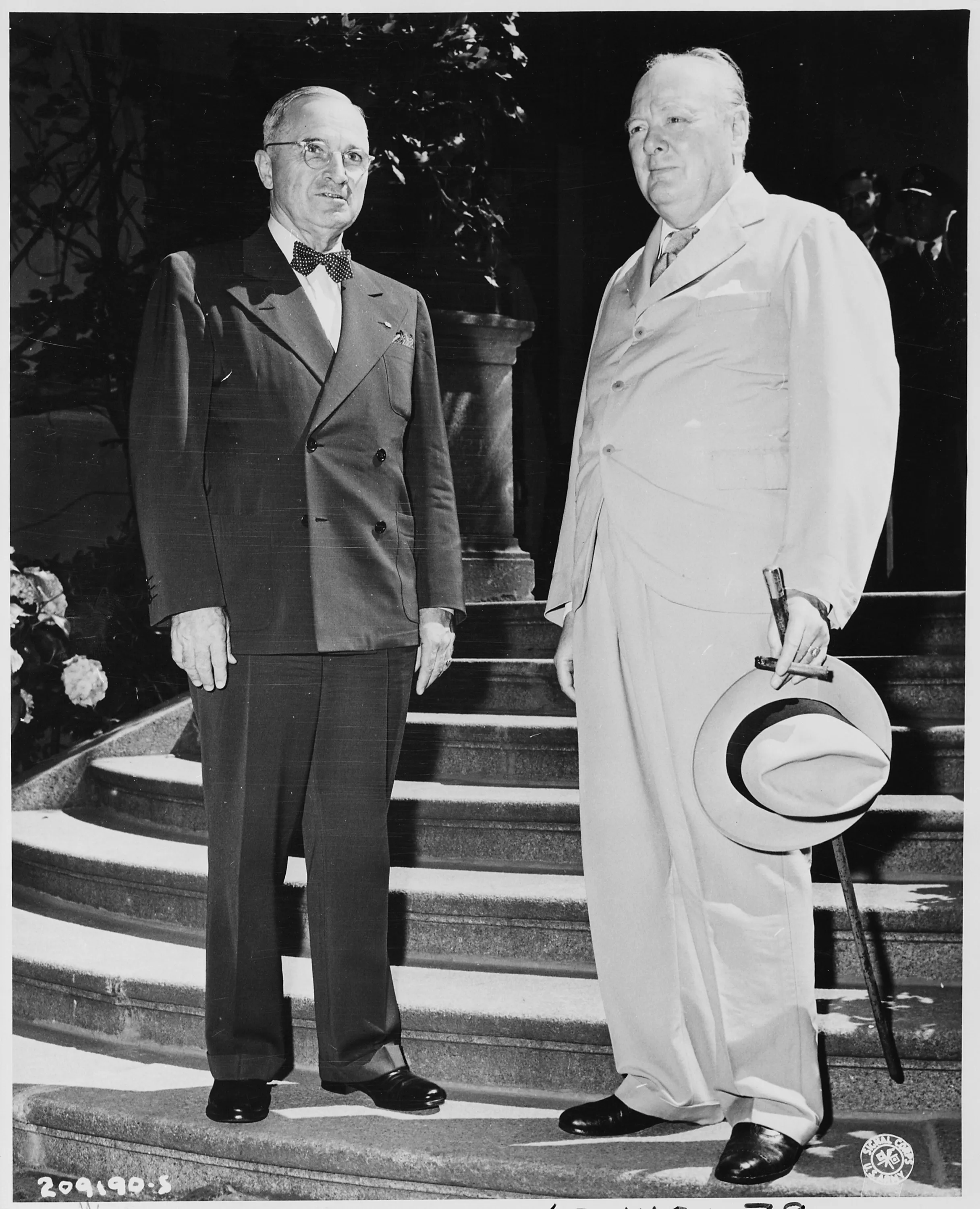
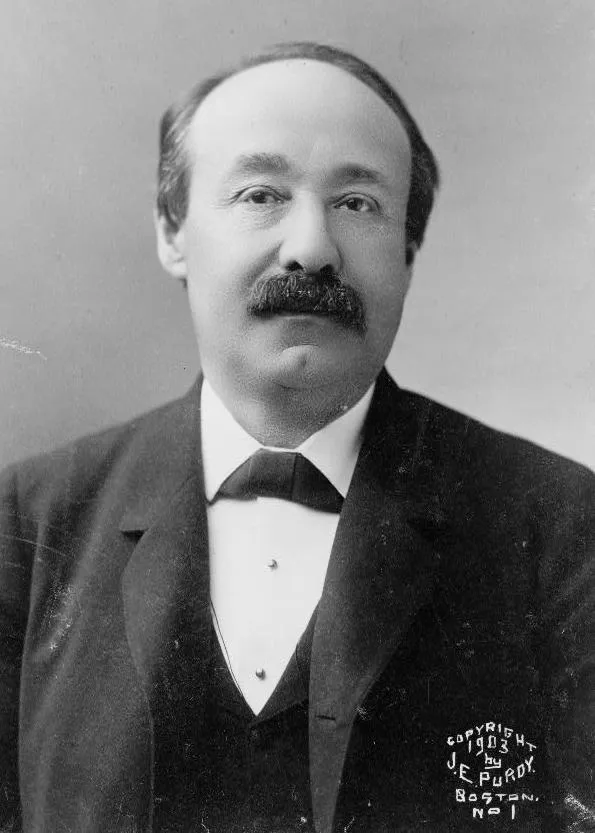
Start with 1941: Japan had leaned on Vichy France to move troops through Indochina, and Washington, London, and the Dutch answered by freezing Japanese assets and cutting off oil that supplied eighty percent of the country's needs. Tokyo called it the ABCD encirclement, and Japan's high command started planning for war against the West that same year. Worth a longer look: 1945, when Truman, Churchill, and Chiang demanded unconditional surrender at Potsdam and three million leaflets fell on Japan, which answered with silence. Bonaparte's thirty-four agents, quietly hired that same week in 1908, became the FBI.
— The Patriot Compass desk
1941Featured · This day in history
Washington cuts off Japan's oil; London and the Dutch follow within days
Japan had held basing rights in northern French Indochina since September 1940, but in 1941 Japanese forces expanded their presence throughout French Indochina under the compliant Vichy French administration, extending their reach toward the rest of Southeast Asia. The United States, Britain, and the Netherlands answered by freezing Japanese assets and halting oil shipments, an arrangement Tokyo would call the ABCD encirclement, for America, Britain, China, and the Dutch. Imported oil made up roughly eighty percent of Japan's domestic consumption. The Imperial General Headquarters began planning for war against the Western powers that same year.
American economic power became a weapon of first resort against Japan, months before a single shot was fired at Pearl Harbor. Washington's decision to cut off oil put the United States on a collision course it had chosen, betting that scarcity would restrain Tokyo rather than provoke it.
Did you know
QHow did Japan claw back oil production after the embargo hit?
By early 1943, Japan had pushed its oil supply back up to roughly eighty percent of pre-embargo levels, not through diplomacy but through brute industrial improvisation. Engineers expanded synthetic fuel production at home and aggressively exploited captured Dutch oil deposits in the East Indies, seized after Japan's southward advance. The gains were temporary: the effort consumed resources and shipping capacity Japan needed elsewhere, and Allied submarines later targeted the tankers carrying that fuel.
QWhat gave Japan its foothold in Indochina before the 1941 crisis?
Japan did not arrive in Indochina all at once. It first secured basing rights in the northern part of the colony in September 1940, nearly a year before the crisis that triggered the oil embargo. Those rights were extracted from a Vichy French administration with no real capacity to resist, already reeling from France's defeat in Europe. Japan's continued presence in Indochina through 1941 was an expansion of the position it had quietly held since September 1940, not a fresh invasion.
QWhy did Japanese officials call the sanctions the ABCD encirclement?
The acronym stood for America, Britain, China, and Dutch, the four powers Tokyo believed were coordinating to strangle its economy and block its ambitions in Asia. Japanese nationalists and military planners treated the embargoes not as a policy response but as an act of aggression in its own right, a framing that hardened the case within the Imperial General Headquarters for striking before oil reserves ran out entirely.
The Daily Record · free by email
Tomorrow's edition in your inbox — one story, one quote, the flag.
1775government
Congress cuts the cord to London's mail: Franklin named postmaster general
Before the Revolution, colonial mail mostly traveled one direction: back to counting houses and government offices in London. By 1775, Philadelphia had become the information hub of colonies at war with the Crown, and news, laws, and military orders needed to move fast between them. On July 26, the Second Continental Congress created a continental postal system and appointed Benjamin Franklin the first Postmaster General, with orders to run a line of posts from Falmouth, New England, to Savannah, Georgia. It gave the colonies a working mail system before they had a country to run it in.
This was the federal government's first working department, built before independence was even declared. Franklin's postal system helped circulate the news, laws, and military orders that a nation at war needed to coordinate, and the low-cost newspaper rate Congress later wrote into law helped seed a national press that leaned on cheap, fast distribution.
Did you know
QWhy was Franklin already the obvious pick to run the job?
Franklin had spent years working the same trade for the other side. He served as a royal deputy postmaster for the colonies under the imperial system before Britain removed him from the post in 1774, after his role surfaced in leaking a set of private letters written by Massachusetts governor Thomas Hutchinson. Congress put him in charge of rebuilding, under new management, the very network the Crown had just fired him from. Few men alive understood the colonial mail routes better than he did.
QWho actually pushed Congress to create a postal system?
Not diplomats or generals, but newspapermen. Colonial printers had spent years frustrated by an imperial post that made distributing papers slow and costly, and by 1774 and 1775 they organized to build an alternative, recruiting merchants and the emerging political leadership to their cause. Their goal was blunt and commercial: reach subscribers cheaply and trade news between papers in different colonies. The postal system that resulted was, in its origin, a press infrastructure project as much as a government one.
QHow far did Franklin's original mail route actually run?
Congress's resolution established a continental postal system running the length of the thirteen colonies, appointing Franklin as postmaster general to organize it. That span covered roughly the full length of the thirteen colonies, end to end along the Atlantic seaboard, a striking ambition for a service built with stagecoaches, riders, and no existing infrastructure to lean on. The resolution also fixed Franklin's salary directly and gave him authority to appoint his own deputies.
1861military
Five days after Bull Run, Lincoln hands his broken army to McClellan
Five days earlier, green Union troops had marched to Manassas expecting a quick fight and instead ran for Washington in a rout that shocked the North. On July 26, 1861, Maj. Gen. George B. McClellan assumed command of what would become the Army of the Potomac, replacing the shaken Irvin McDowell. McClellan set immediately to drilling and rebuilding an army that had scattered under fire at Bull Run. He would spend the coming months turning it into a disciplined force, though his caution on the field drew criticism of its own.
McClellan's appointment set an early template for how the Union organized and trained its armies: relying on organization, drill, and logistics rather than the raw enthusiasm that failed at Bull Run. His skill at building the army and his reluctance to risk it in battle defined the command debates Lincoln faced for the next year, and shaped how Americans remember the war's slow, costly turn from amateur enthusiasm to professional force.
Did you know
QWhere was McClellan before he was summoned to command the Army of the Potomac?
McClellan came to Washington fresh from a campaign in western Virginia, where he had won a string of minor but well-publicized victories against Confederate forces. Those wins were enough to make him look like the Union's most promising general in a summer when the North badly needed one. It was that western Virginia record, not any experience commanding a massive eastern army, that put him at the top of Lincoln's list days after Bull Run.
QWhat did McClellan write to his own wife about his sudden rise to power?
In a letter home, McClellan described finding himself in a position so unexpected it startled him: the President, his Cabinet, and General Winfield Scott all deferring to his judgment, as though by some strange operation of magic he had become the power of the land. The line reads less like a soldier's report than a man genuinely surprised by his own ascent.
QWho did McClellan replace as commander after Bull Run?
McClellan took over from Irvin McDowell, who had led the Army of Northeastern Virginia to defeat at First Bull Run against P.G.T. Beauregard's Confederate forces. McDowell's army was the one that broke and ran for Washington, and it was that same shattered force, reorganized and renamed, that became the Army of the Potomac under McClellan's hand just five days later.