Reading 3 of 6 free1776 Club · all 6 storiesTuesday, July 28
From the desk
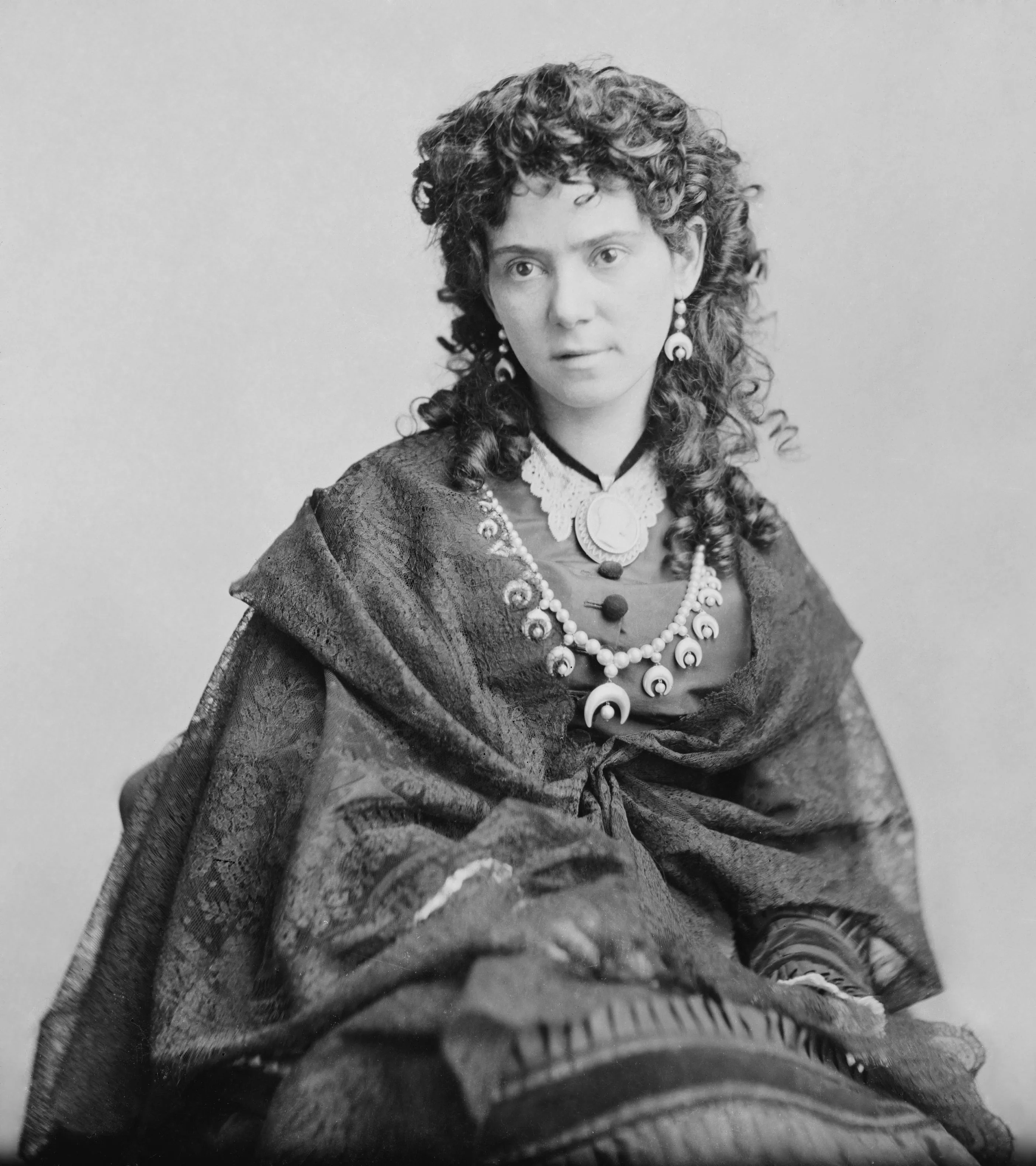
Start with 1868. Seward's certification on July 20 came with an asterisk, since it only counted if Ohio and New Jersey couldn't legally take back their ratifications. He waited a week, got Georgia, and only then proclaimed the Fourteenth Amendment law, overturning Dred Scott and settling, in the Constitution, who counted as a citizen. Also worth your time: 1945, when a B-25 lost in fog put an engine clean through the Empire State Building and the offices below reopened Monday anyway. A stranger footnote: an 18-year-old sculptor named Vinnie Ream landed the Lincoln statue commission this same day in 1866.
— The Patriot Compass desk
1868Featured · This day in history
Seward certifies it: citizenship and equal protection enter the Constitution
On July 9, 1868, South Carolina became the 28th state to ratify the Fourteenth Amendment, reaching the necessary three-fourths threshold if the earlier rescissions by Ohio and New Jersey were invalid. Secretary of State William H. Seward certified this conditional adoption on July 20, 1868, but it was not until Georgia's ratification on July 27 that he officially proclaimed the amendment adopted the following day. The amendment granted citizenship to all persons born or naturalized in the United States and guaranteed equal protection of the laws. The amendment overturned the Supreme Court's 1857 ruling in Dred Scott v. Sandford, which had denied citizenship to Americans descended from slaves. Confederate states had been required to ratify it just to regain seats in Congress.
The Fourteenth Amendment became the constitutional engine behind Brown v. Board of Education, Loving v. Virginia, and Obergefell v. Hodges, and its Section 3 resurfaced in 2024 in Trump v. Anderson. Its language has been cited in cases spanning more than 150 years, from Reconstruction to 2024.
Did you know
QWhy did Andrew Johnson's own Reconstruction plan work against the amendment he opposed?
Johnson's lenient postwar policy let former Confederate states quickly re-form governments under leaders sympathetic to the old order, and those legislatures moved to reject the amendment outright rather than ratify it. Congress responded by overriding Johnson's approach entirely: it made ratification of the Fourteenth Amendment a condition those states had to meet before their delegations would be readmitted to Congress. The president who vetoed the Civil Rights Act of 1866 ended up watching his own reconstructed statehouses get forced into the very ratification vote he wanted blocked.
QWhat earlier English document supplied the language behind the amendment's due process clause?
The due process guarantee traces back centuries before the Constitution existed, to Clause 39 of the Magna Carta in 1215, which promised that no man would be seized or imprisoned except by lawful judgment of his equals or the law of the land. That thirteenth-century clause, carried forward through English common law, is one source scholars point to for the phrase John Bingham wrote into Section 1. A charter forced on an English king by rebellious nobles ended up shaping the constitutional rights of freed American slaves six and a half centuries later.
QWhat Supreme Court precedent from decades earlier gave the amendment's clauses their legal teeth in court?
Chief Justice John Marshall's 1803 opinion in Marbury v. Madison had already established that courts, not Congress or the president, held final say over what a constitutional provision meant, calling that power "the very essence of judicial duty." That principle of judicial review, decided over sixty years before the Fourteenth Amendment existed, gave the Supreme Court the authority to later interpret its clauses in cases far removed from Reconstruction. Marshall never lived to see the amendment; his ruling still decided how it would be read.
The Daily Record · free by email
Tomorrow's edition in your inbox — one story, one quote, the flag.
1945tragedy
A bomber lost in fog tears into the Empire State Building; fourteen dead
On a foggy Saturday morning in July 1945, Lieutenant Colonel William Franklin Smith Jr. was flying a B-25 Mitchell bomber toward LaGuardia. Diverted and disoriented, he banked past the Chrysler Building, then turned the wrong way and struck the Empire State Building's north face between the 79th and 80th floors at 9:40 a.m. Fourteen people died: three crewmen and eleven civilians. One engine tore clean through the tower to land on a roof a block away. The building's frame held, and offices below reopened for business the following Monday.
Empire State Building, New York City, New YorkStory page →
Before the crash, citizens injured by government negligence had almost no way to sue. Congress answered with the Federal Tort Claims Act, signed by President Truman in August 1946, opening the government to lawsuits retroactively. The disaster also led the Civil Aeronautics Administration to set a hard 2,500-foot floor on flight altitude over Manhattan.
Did you know
QHow far did Betty Lou Oliver fall, and how did she survive it?
The elevator operator was on the 80th floor when the crash severed her car's cables with falling wreckage. She dropped 75 stories, all the way to the basement. She lived because the car itself, plunging down the shaft with her inside, compressed the air beneath it into a cushion that slowed the final impact. It remains one of the longest elevator falls ever survived.
QWhat happened to the engine that didn't stay in the building?
One of the B-25's two engines punched clean through the south side of the Empire State Building and kept going, flying a full block through the air before landing on the roof of a neighboring building. It started a fire there that burned through a penthouse art studio. The other engine took the opposite path, falling downward into an elevator shaft instead of outward into the sky.
QWho ended up owning the damaged floor after the crash?
Armand Hammer bought the wrecked 79th floor once repairs were underway and refit it as headquarters for United Distillers of America. The same floor that had taken part of the impact became a corporate address again in short order, in a building that had been left with an 18-by-20-foot hole only months before.
1965military
Johnson orders U.S. troops in Vietnam raised from 75,000 to 125,000
By mid-1965, the South Vietnamese army was buckling under Viet Cong and North Vietnamese pressure, and Washington's bombing campaign wasn't turning the tide. President Lyndon Johnson ordered U.S. troop strength raised from 75,000 to 125,000, a decision shaped by Secretary of Defense Robert McNamara's recommendations. American combat units had already begun landing in March, and by July the Army marked its official entry into direct ground combat, the same month Johnson's order took the total to 125,000. That figure kept climbing. By year's end, more than 200,000 Americans were in Vietnam.
The decision converted an advisory mission into an American ground war. Johnson acted without a declaration of war, relying on authority Congress had granted after the Gulf of Tonkin incident. U.S. troop levels kept climbing after 1965, passing 500,000 by 1969, and the decision later became a central exhibit in fights over presidential war powers, including the 1973 War Powers Act.
Did you know
QHow much did the monthly draft call actually increase that day?
Johnson doubled it, from 17,000 to 35,000 men called up per month. That single order meant tens of thousands more draft notices arriving in American mailboxes every month than had been the case just weeks earlier. The draft call was arguably the most immediate way ordinary Americans felt the July 28 announcement, since troop deployments happened an ocean away but draft boards operated in every county in the country.
QWhy did Johnson hold a midday press conference instead of a primetime address?
Johnson chose the format for a reason. A midday briefing carried far less weight than a nationally broadcast primetime speech, and Johnson used it deliberately to keep the announcement from looking like a formal declaration of war. He paired it with a broadcast address the same day, but the low-key framing let him present a major military escalation in the language of a routine update rather than a historic turning point.
QWhat specific promise did Johnson attach to the troop increase?
Even while doubling forces, Johnson stated the United States remained willing to negotiate an unconditional settlement. He attributed the buildup directly to a request from General Westmoreland rather than framing it as his own strategic choice, a phrasing that let him present escalation as a response to military necessity while keeping the door to diplomacy nominally open.