Reading 2 of 5 free1776 Club · all 5 storiesWednesday, July 29
From the desk
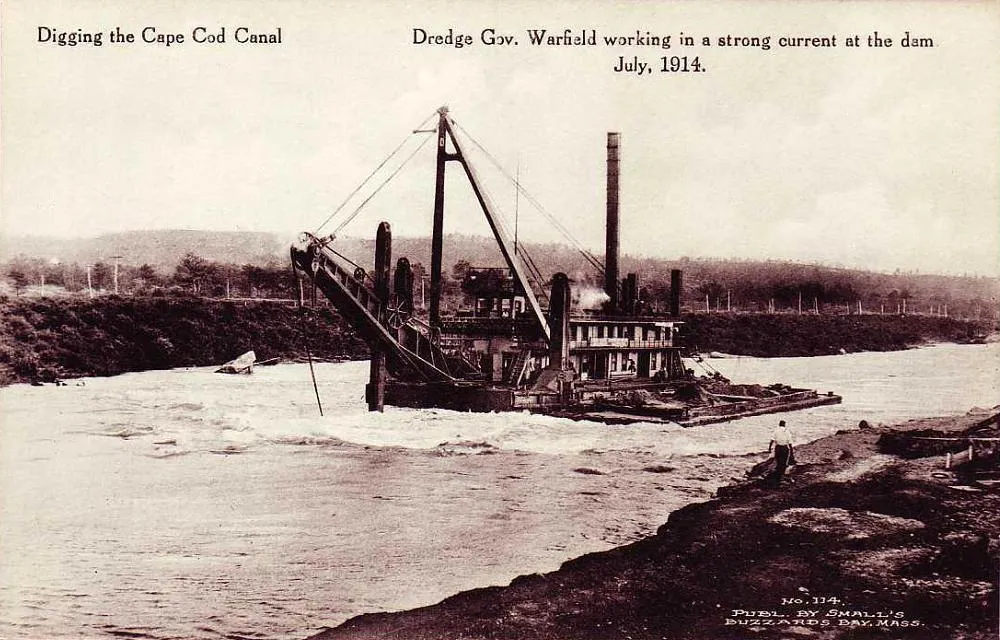
Start with 1862: Belle Boyd had spent a year running Confederate intelligence out of occupied Virginia, once dashing toward Stonewall Jackson's lines with bullet holes stitched across her skirt. Pinkerton's men finally caught her not through detective work but betrayal: her own lover turned her in on July 29, and she was in the Old Capitol Prison by morning. Also worth your time: 1958, when Eisenhower folded NACA into a new civilian agency called NASA, ten months after Sputnik left Washington without an answer. The Cape Cod Canal opened the same date in 1914, quietly reshaping the coastal shipping map.
— The Patriot Compass desk
1862Featured · This day in history
Belle Boyd is taken by Union troops, her own lover the informant
By the summer of 1862, Belle Boyd had spent a year passing Confederate intelligence out of occupied Virginia, most famously riding through Union lines in mid-May to warn Colonel Turner Ashby that General Shields was pulling out of Front Royal, then later that month running toward Stonewall Jackson's advancing men under fire that put bullet holes in her skirt. Allan Pinkerton's detectives had been building a case against her since late July. On July 29, 1862, her own lover turned her in to Union officials, and she was arrested and taken to the Old Capitol Prison in Washington, D.C. the following day. She spent a month behind bars before being exchanged at Fort Monroe.
Boyd's arrest forced the Union to decide, in practice, how to handle a female Confederate operative: an inquiry into her custody was convened while she sat in prison, and she was exchanged rather than tried. That precedent of treating captured women spies as prisoners for exchange, not criminals for trial, set the pattern the Union followed in her own later arrests.
Did you know
QWho exactly was watching Boyd before her arrest?
Allan Pinkerton, the detective who ran the Union's early intelligence and counter-espionage operation, had assigned three of his own men to Boyd's case by late July 1862. A private detective agency, rather than the Army itself, was tasked with tracking a single young Virginia woman. Pinkerton's operatives worked the case for weeks before an informant, not surveillance, finally cracked it open.
QWhat happened to Boyd the second time she was arrested?
Boyd's Old Capitol Prison stay in 1862 was not her last brush with Union custody. She was arrested again in June 1863, but this time was released not through an exchange but because she contracted typhoid fever. Union authorities released her rather than continue holding a prisoner sick with typhoid.
QWhat set Boyd on the path to espionage in the first place?
Boyd's career as a spy traces back to July 1861, more than a year before her arrest, when a Union soldier entered her family's home and cursed her mother. Boyd responded by shooting him. Rather than facing lasting consequences, she used the incident and the leniency that followed to begin cultivating relationships with Union officers, gathering the intelligence that reached Colonel Ashby and General Jackson.
The Daily Record · free by email
Tomorrow's edition in your inbox — one story, one quote, the flag.
1958government
Eisenhower signs the Space Act; a civilian agency will run America's push into orbit
Ten months after Sputnik crossed American skies, the country still had no civilian answer to the Soviet satellite. On July 29, 1958, President Dwight D. Eisenhower signed the National Aeronautics and Space Act, abolishing the National Advisory Committee for Aeronautics and folding its labs, staff, and research into a new civilian agency: NASA. The law took effect October 1, 1958, and declared that American activity in space should serve peaceful purposes for the benefit of all mankind.
The Act split American spaceflight from the Pentagon just as military agencies were making the most progress in rocketry, putting the space race in civilian hands instead. That founding language, "peaceful purposes for the benefit of all mankind," echoed on the Apollo 11 lunar plaque eleven years later, which read "We came in peace for all mankind."
Did you know
QWhy did Congress bother rewriting NASA's job description in 2012, more than fifty years after the agency was founded?
The original seven objectives Congress wrote in 1958 said nothing about manufacturing. In 2012 lawmakers added a ninth objective, committing NASA to preserving American preeminence in aeronautics and space specifically through research tied to manufacturing processes on the ground. It reflected a shift: by then, NASA's manufacturing base and supply chains mattered as much to space leadership as rocket hardware did. The addition passed quietly, a one-line update to the 1958 law.
QWhat word did Congress later swap out of its own founding declaration for NASA?
The 1958 Act declared that space activities should serve "the benefit of all mankind." Decades later that phrase was formally amended to "all humankind," a small edit to language that had stood untouched since Eisenhower's signature. The original wording is still the version etched into space history through the Apollo 11 plaque, since Armstrong and Aldrin left their marker years before the update. Two versions of the same promise now exist: one on paper in Washington, one on the lunar surface.
QWho actually wrote the bill Eisenhower signed?
The National Aeronautics and Space Act didn't originate in the White House. It was drafted by the House Select Committee on Astronautics and Space Exploration, a body Congress assembled specifically to answer Sputnik with legislation rather than a military directive. Eisenhower signed what the committee produced. The arrangement meant the decision to keep space civilian-run came out of a legislative committee room, not a presidential order, though Eisenhower's signature is what most people remember.