Reading 3 of 5 free1776 Club · all 5 storiesSunday, August 2
From the desk
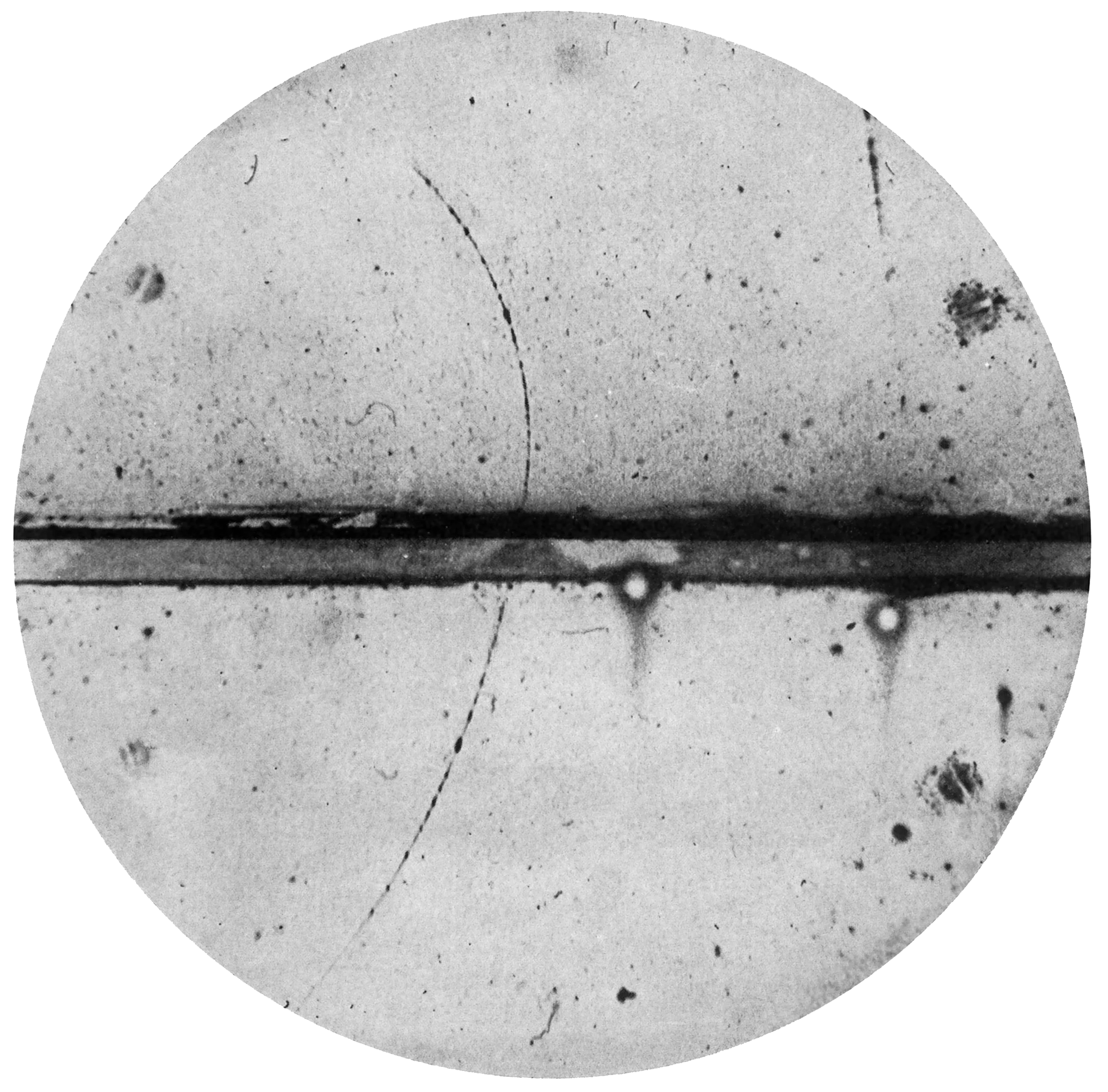
Start with 1943: PT-109 sliced in half by a Japanese destroyer in the dark, two men dead instantly, and a young lieutenant named Kennedy towing a burned crewman three miles by a strap clenched in his teeth. Worth a longer look: 1932, when Carl Anderson's cloud chamber at Caltech caught a particle curving the wrong way and physics got antimatter. The 1790 census rounds out the day, marshals on horseback counting 3.9 million Americans by hand, a number even Washington and Jefferson doubted was high enough.
— The Patriot Compass desk
1939Featured · This day in history
Sachs hands Roosevelt a letter about uranium; the president tells an aide, "this requires action"
By the fall of 1939, Leo Szilard feared German scientists were racing to weaponize a discovery physicists on both sides of the Atlantic already understood: that splitting a uranium atom released enormous energy. Szilard drafted a letter in August, Einstein signed it, and economist Alexander Sachs finally carried it into the Oval Office on October 11, 1939. Roosevelt met Sachs again the next morning, and after hearing his Napoleon-and-Fulton anecdote, turned to his aide and said, "Pa, this requires action." Eight days later he created the Advisory Committee on Uranium, the first government body devoted to the uranium question that later grew into the Manhattan Project.
White House, Washington, District of ColumbiaStory page →
The American Throughline
Roosevelt's response created the first federal body ever assembled to weigh a nuclear weapons program, a decision only Roosevelt, as president, was positioned to make. That $6,000 committee grew into the Manhattan Project, which built the bomb that ended the war with Japan.
Did you know
QWhy did Szilard's own chain reaction patent stay hidden from the world for over a decade?
Szilard filed for the neutron chain reaction patent in Britain in June 1934, and it was granted in March 1936, but almost nobody read it. Under section 30 of the UK Patents and Designs Act of 1907, he assigned it to the British Admiralty specifically to keep it classified. He later explained the reasoning bluntly: having read H.G. Wells's novel The World Set Free in 1932, he knew exactly what a chain reaction could mean for weapons and did not want the patent published where any physicist could find it. The assignment worked, keeping the patent secret until 1949, when Britain repealed the relevant part of the 1907 law.
QWhat happened to the stenographer who typed Szilard's warning about city-destroying bombs?
Janet Coatesworth, a young departmental stenographer at Columbia, took dictation from Szilard for the English version of the letter to Roosevelt. As he described bombs powerful enough to level a port city, she became convinced she was taking dictation from a madman. Szilard closed the letter with 'Yours truly, Albert Einstein,' which did nothing to change her mind, since the words were coming from Szilard's mouth, not Einstein's. She typed it anyway, and that draft, mailed to Einstein's home on Long Island for his signature, became the actual document that reached Roosevelt's desk in October 1939.
QHow far off was the 1939 estimate of how much uranium a bomb would need?
The letter Einstein signed told Roosevelt that a bomb might be 'too heavy for transportation by air,' because at the time physicists believed several tons of uranium would be required to sustain a chain reaction. That estimate held for seven months. In early 1940, a breakthrough calculation in Britain, the Frisch-Peierls memorandum, revised the necessary critical mass down to less than 10 kilograms, small enough to fit in a bomb casing an aircraft could carry. The correction helped push the British and then American programs toward treating an actual deliverable weapon as achievable within years rather than a distant theoretical possibility.
The Daily Record · free by email
Tomorrow's edition in your inbox — one story, one quote, the flag.
1790government
Marshals finish counting the nation: 3,929,214 Americans, give or take
The Constitution demanded an "actual Enumeration" to divide seats in the new House of Representatives, and no government had ever attempted a count of this scale. Federal marshals rode out across the thirteen states (with Maine enumerated as part of Massachusetts) and the Southwest Territory, visiting every household as of August 2, 1790, and posting the tallies in two of the most public places in each jurisdiction for neighbors to check. Nine months later the count stood at 3,929,214 people. Both President Washington and Secretary of State Jefferson suspected the true figure ran higher.
United States (nationwide enumeration)Story page →
The American Throughline
This was the first working proof of the Constitution's apportionment clause, the number that would decide how many seats each state got in Congress. It set the template every decennial census since has followed. It also recorded a 17.8 percent slave-to-free ratio, the highest of any census the nation would ever take.
Did you know
QWhat exactly did a marshal write down for each household in 1790?
Six pieces of information, no more. A marshal recorded the name of the head of family, then tallied free white males 16 and over, free white males under 16, free white females of any age, all other free persons, and slaves. That was the entire form. There was no question about occupation, birthplace, literacy, or income. Those categories appeared only in later censuses. The two age brackets for white males existed for a specific reason: Congress wanted a rough count of men old enough for militia duty. Everyone else in a household got sorted into just three broad buckets. Compared to the modern census, with its dozens of questions, the first count was almost skeletal, built to answer one question only: how many seats does each state get.
QWhy did Thomas Jefferson's own department end up publishing numbers he didn't trust?
As Secretary of State, Jefferson was the official who released the preliminary tables in 1791, meaning the same man who suspected an undercount was also the government's messenger for the count he doubted. His skepticism wasn't idle grumbling either; Jefferson had his own rough estimates of American population growth from correspondence and prior reasoning, and the marshals' final figure fell short of what he expected. He aired those doubts even as his department kept processing and forwarding the schedules for publication. Washington shared the suspicion but signed off on the same numbers for apportionment purposes anyway. The finished report didn't appear until 1793, two years after Jefferson's preliminary tables went out.
QHow did the 1790 census treat free Black Americans and Native Americans differently from slaves?
The form lumped free Black Americans in with a single catch-all category, 'all other free persons,' separate entirely from the slave count, meaning free people of color were tallied but never named or broken out on their own line the way slaveholders' households were. Native Americans fared differently still: those living on tribal lands outside state jurisdiction weren't enumerated at all, since the census only reached households the marshals could physically visit within organized districts. The six-question form simply had no mechanism for populations living beyond federal or state administrative reach. That gap wasn't an oversight so much as a boundary built into the law itself, one that later censuses redrew repeatedly as the country's borders and definitions of citizenship shifted.
1943military
A destroyer cuts PT-109 in half; the young skipper swims for shore towing a burned man by his life vest
In the dark waters of Blackett Strait near Guadalcanal, American PT boats hunted Japanese supply runs with Mark 8 torpedoes that too often failed to detonate. Just after 2 a.m. on August 2, 1943, the Japanese destroyer Amagiri sliced through PT-109, splitting the 80-foot boat and killing crewmen Andrew Jackson Kirksey and Harold William Marney instantly. Lieutenant John F. Kennedy, the boat's commander, gathered the eleven survivors on the floating wreckage and swam them to a small island three miles away. Kennedy towed a badly burned crewman by a strap clenched in his teeth.
Kennedy's survival on a scrap of Solomon Islands coral became the founding legend of his political career, invoked repeatedly in his campaigns as proof of grit under fire. It also exposed a real problem for the Navy: the Mark 8 torpedo's poor detonation rate, a design failure made worse by comparison to Japan's devastating Long Lance, one the American war effort had to correct at sea.
Did you know
QWhy did Kennedy bolt an Army antitank gun to PT-109's deck the day before it sank?
Kennedy bartered for a U.S. Army 37mm antitank gun and had his crew lash it to the foredeck, replacing a small two-man life raft, because he had no faith in the boat's Mark 8 torpedoes. The gun itself never fired a shot in the final battle, but the timbers used to secure it to the deck ended up saving lives anyway: after the collision, survivors used those same planks as flotation aids during the three-mile swim to Plum Pudding Island. The gun mount meant to defend the boat ended up saving lives instead, a detail that rarely makes it into the retellings focused on Kennedy's swim itself.
QWhat happened the last time PT-109's own weaponry nearly killed its crew before the fatal ramming?
Weeks before the Amagiri struck, PT-109 nearly destroyed itself. With squadron commander Alvin Cluster at the wheel in storm conditions, an inadvertent launch sent the port forward torpedo only half out of its tube, knocking a depth charge through the foredeck. The torpedo's propellers kept spinning on a live hot run until executive officer Leonard Thom managed to deactivate it by hand. The boat had to return to Tulagi for repairs and a replacement depth charge before it could resume patrols. Cluster had asked for the wheel because he was used to older 77-foot Elco boats, not PT-109's newer design, a mismatch that nearly wrecked the boat weeks before Blackett Strait.
QHow many torpedoes did the fifteen American PT boats actually land on the Japanese destroyers that night?
Zero. Of the roughly 24 torpedoes fired by eight of the fifteen PT boats sent into Blackett Strait on August 1, not a single one struck the four advancing Japanese destroyers, despite a Navy report initially claiming five or six explosions reached the targets. Commander Thomas Warfield had been directing the operation by radio from 40 miles away with no view of the battle, and several boats without radar cruised blindly in fog and darkness. PT-109 itself never got a radio warning before the Amagiri appeared, because the four radar-equipped boats had already fired and been ordered home, leaving the rest of the fleet effectively deaf and blind.