Reading 3 of 7 free1776 Club · all 7 storiesMonday, August 3
From the desk
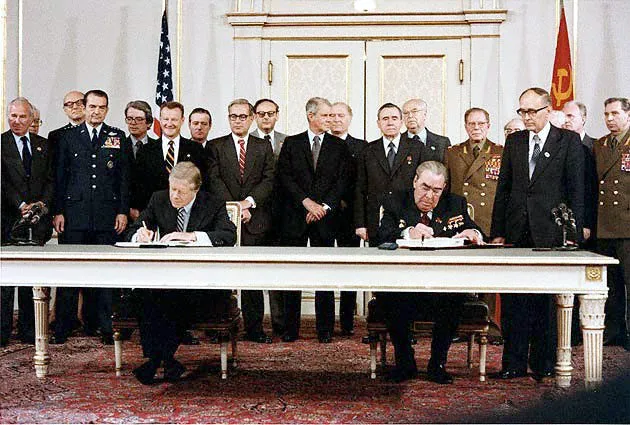
Start with 1936. Hitler built the Berlin Olympics to prove Aryan supremacy, and Jesse Owens, a sprinter from Oakville, Alabama, answered on August 3 with 10.3 seconds and Olympic gold, the first of four he'd take home to a country still segregated by law. Worth a longer look: Coolidge sworn in by kerosene lamp at 2:30 a.m. in a Vermont farmhouse, his own father administering the oath. For sheer stakes, don't skip the Senate's 1972 ratification of the ABM Treaty, a ceiling on the arms race that held for thirty years.
— The Patriot Compass desk
1936Featured · This day in history
Owens takes 100-meter gold in Hitler's stadium, 10.3 seconds
Nazi Germany had built the 1936 Berlin Olympics as a stage for Aryan supremacy, with Adolf Hitler watching from his box. On August 3, Jesse Owens, a Black American sprinter from Oakville, Alabama, crossed the 100-meter line in 10.3 seconds for his first gold medal of the Games. He would win three more before the Olympics ended, in the long jump, the 200-meter dash, and the 4x100-meter relay. Owens left Berlin with four gold medals, more than any other athlete at the Games, and returned home to an America that still would not let him through the front door.
Owens's medals became a rallying image for the civil rights movement, but the reception at home told the rest of the story: a ticker-tape parade down Broadway, a $10,000 cash gift, a freight elevator at the Waldorf Astoria, and jobs later racing horses for money. The gap between his Berlin welcome and his American one became evidence civil rights advocates cited against Jim Crow.
Did you know
QWhy was Jesse Owens not actually named Jesse?
He was born James Cleveland Owens and went by the initials J.C. within his family in Oakville, Alabama. When the Owens family moved north to Cleveland, Ohio as part of the Great Migration, a new schoolteacher asked the young boy his name. He answered in his thick Alabama accent, "J.C.," and the teacher heard "Jesse." The name stuck for the rest of his life, appearing on record books, medal ceremonies, and eventually a Presidential Medal of Freedom citation. He was the youngest of ten children born to a sharecropper and a woman who was herself the granddaughter of an enslaved person, two generations removed from slavery.
QHow much faster was Owens' wind-aided 100-meter qualifying time than the recognized Olympic record?
Owens tied the existing Olympic and world record in his first qualifying heat, then broke it outright in the second round of qualifying, days before the final most fans remember. Officials disallowed the mark because a tailwind exceeded the legal limit for record purposes, so it never entered the books despite happening on an Olympic track in front of Olympic judges. It meant Owens had effectively run the fastest 100 meters in Olympic history twice before the medal race even started, a detail buried in the qualifying round results. The gold-medal 10.3 was not his fastest 100 meters that week, technically speaking.
QWhat made Owens' 1935 Big Ten performance get called sport's greatest 45 minutes?
A year before Berlin, competing for Ohio State at the 1935 Big Ten Championships in Ann Arbor, Owens set or tied four world records in a span of roughly 45 minutes, all while nursing a sore back from a fall down stairs days earlier. He tied the 100-yard dash record, then broke world records in the long jump, 220-yard dash, and 220-yard low hurdles, the long jump mark alone standing for 25 years. Sportswriters later labeled the stretch "the greatest 45 minutes ever in sport," a phrase still used in track and field lore today. It happened not on an Olympic stage but on an ordinary Big Ten afternoon in Michigan.
The Daily Record · free by email
Tomorrow's edition in your inbox — one story, one quote, the flag.
1923government
A father administers the presidential oath by lamplight in a Vermont farmhouse
Warren Harding died of a heart attack in San Francisco on August 2, 1923, midway through a Western tour, The presidency was vacant, and no federal official was nearby to swear in his successor. Calvin Coolidge was visiting his family's farmhouse in Plymouth Notch, Vermont, a village of fewer than 300 people, when the news arrived after midnight. At about 2:30 a.m. on August 3, his father, John Calvin Coolidge Sr., a 72-year-old notary and justice of the peace, administered the oath of office by lamplight with only Grace Coolidge and their two sons looking on. Coolidge repeated the oath before a federal judge in Washington three weeks later, to settle any doubt.
The scene stuck in the public memory: a president sworn in not by a chief justice but by his own father, a rural notary, using authority granted by nothing grander than state law. The moment became a small, enduring piece of the Coolidge story, a reminder that the office could pass hands in a farmhouse parlor as legally as in the Capitol.
Did you know
QHow old was the family Bible used in the oath ceremony?
The Bible on the Coolidge parlor table had been in the family for more than a century, predating the Civil War by decades. It was not a ceremonial prop brought in for the occasion, just the household Bible that had sat in the Plymouth Notch farmhouse through generations of Coolidges. The Bible was simply what the family had on hand, not something chosen for the occasion. The family used what was already at hand. At 2:30 in the morning, it was simply the nearest Bible in the house.
QWhy did Coolidge's father have to hold his son's arm during the oath?
The kerosene lamp cast weak, uneven light across the parlor table, and in the dimness Calvin Coolidge could not easily judge the distance to the Bible resting in front of him. His father, John Calvin Coolidge Sr., steadied him by the arm as he reached to complete the oath, a small physical assist due to the poor lighting. No aide adjusted the lamp or fetched another light source. The moment passed unremarked at the time, noted only afterward by family members recalling the scene, since no one had planned for a presidential oath to happen there.
QHad anyone anticipated this exact scenario before Harding's death?
John Calvin Coolidge Sr. had already written out the presidential oath by hand and kept it ready throughout his son's vice presidency, anticipating that he might someday be called on to administer it. As a longtime notary public and justice of the peace in Plymouth Notch, he held the kind of local authority that made such a role plausible even if untested for a federal office. When the messenger arrived after midnight with news from San Francisco, he did not need to draft or locate the oath text; it was already prepared. That preparation meant his father did not need to draft or locate the oath text when the messenger arrived.
1948government
Chambers names Hiss a communist under oath before Congress
By the summer of 1948, the House Un-American Activities Committee was hunting for communists inside the federal government, and the country was primed to believe they were there. On August 3, Whittaker Chambers, a senior editor at Time who had once carried Soviet intelligence, testified that Alger Hiss, a respected former State Department official, had belonged to a clandestine communist cell in Washington. Hiss denied it flatly and sued Chambers for slander. The accusation unraveled into one of the defining scandals of the early Cold War.
The Hiss case gave Richard Nixon, then a junior HUAC member, the national platform that launched his political career, and it hardened Washington's turn toward loyalty boards and anticommunist investigation. Truman dismissed it as a "red herring," but the case outlasted his presidency, feeding the climate that fueled McCarthyism for the next decade.
Did you know
QWhich prominent Democrats vouched for Hiss's character at his first trial?
Hiss's defense assembled a roster of establishment heavyweights as character witnesses, including future Democratic presidential nominee Adlai Stevenson, Supreme Court Justices Felix Frankfurter and Stanley Reed, and former presidential candidate John W. Davis. Their willingness to vouch for him reflected how thoroughly Hiss had climbed into the respectable core of the American foreign policy establishment before Chambers ever named him. It also meant the case did not split cleanly along party lines, but instead ran through the heart of the Democratic elite itself. Their testimony did not save him from conviction.
QHow did Hiss's own account of his childhood come up during the hearings?
During testimony, Hiss described a childhood marked by his father's suicide and the financial strain it left on his family, details that had nothing to do with the espionage charges but surfaced as the committee probed his background and character. It was an unusual moment of personal disclosure inside a hearing built around denials and alibis, and it gave the press a rare glimpse behind Hiss's polished resume of Dumbarton Oaks and the United Nations founding conference. Whether it swayed anyone's judgment of his guilt is unrecorded.
QHow did later declassified material change the case decades on?
The Pumpkin Papers themselves were finally released to the public in 1975, confirming much of what Chambers had alleged, though some of the recovered documents turned out to be fairly innocuous. Then in the 1990s, the Venona papers, decrypted Soviet cables, surfaced further evidence pointing toward Hiss having been a Soviet asset. Even with that weight of evidence, argument over his guilt has never fully closed, though for much of the public, the argument never really ended.