Reading 3 of 7 free1776 Club · all 7 storiesFriday, August 7
From the desk
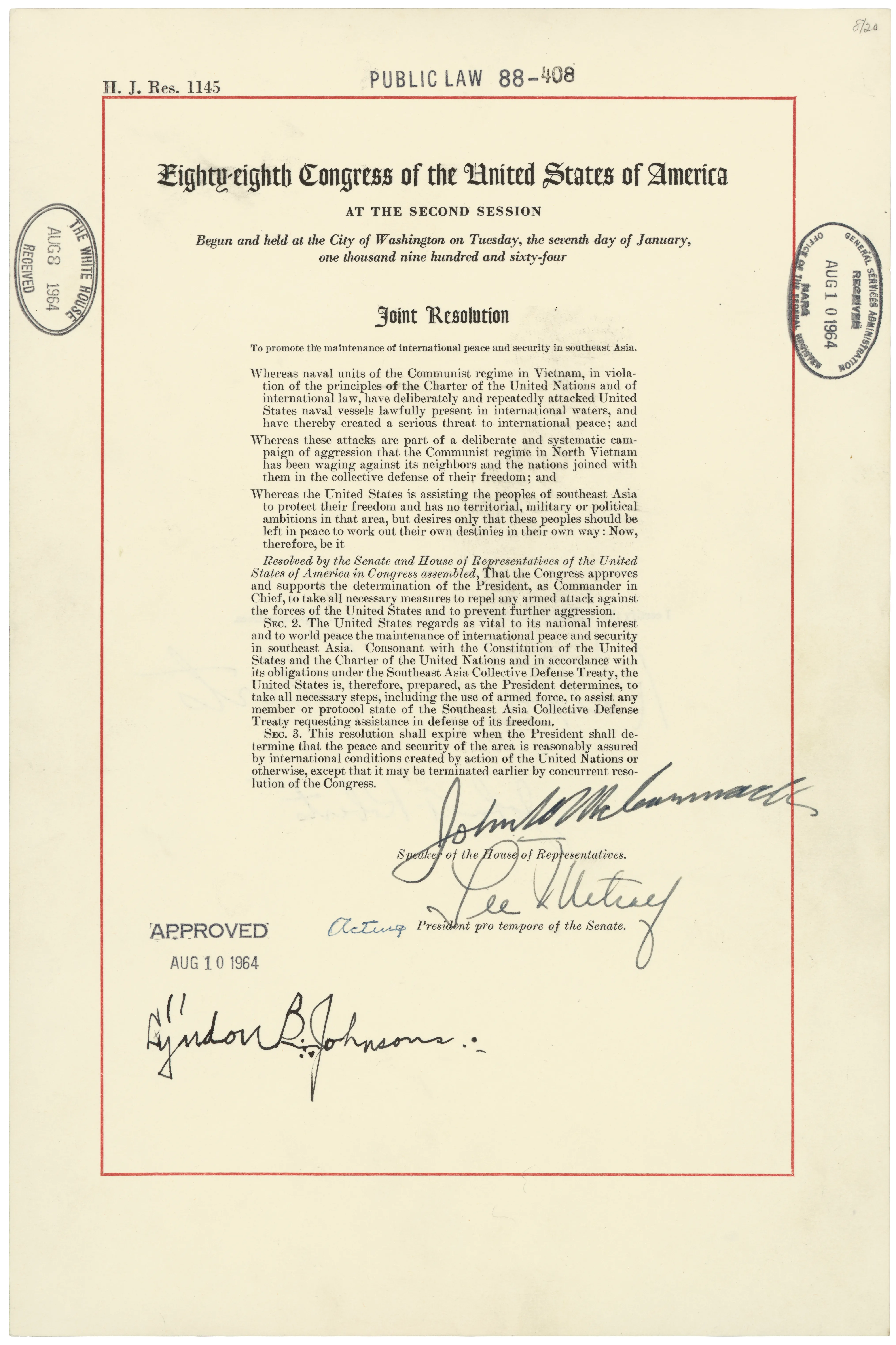
Start with 1794. Whiskey-tax farmers in western Pennsylvania had burned a tax inspector's house down, and Washington answered by calling out 13,000 militiamen while quietly sending peace commissioners behind them, the first real test of whether the federal government could enforce its own laws. By November the army found nothing left to fight. Also worth your time: 1964, when the Senate passed the Gulf of Tonkin Resolution 98-2, with only two senators voting no, handing Johnson the legal cover for a war still fought mainly by South Vietnamese troops. Knox's War Department, five staffers strong, fills out the day.
— The Patriot Compass desk
1794Featured · This day in history
Washington proclaims: pay the whiskey tax, or face 13,000 militiamen
By the summer of 1794, western Pennsylvania farmers had been fighting the federal whiskey tax for three years, and in July a mob burned tax inspector John Neville's house to the ground after a shootout at Bower Hill. On August 7, President Washington invoked the Militia Acts of 1792 and called out 13,000 militiamen while also sending peace commissioners to negotiate. It was the first time the new federal government had to prove it could enforce its own laws. By November, General "Light Horse Harry" Lee's force reached western Pennsylvania to find the rebellion had largely evaporated.
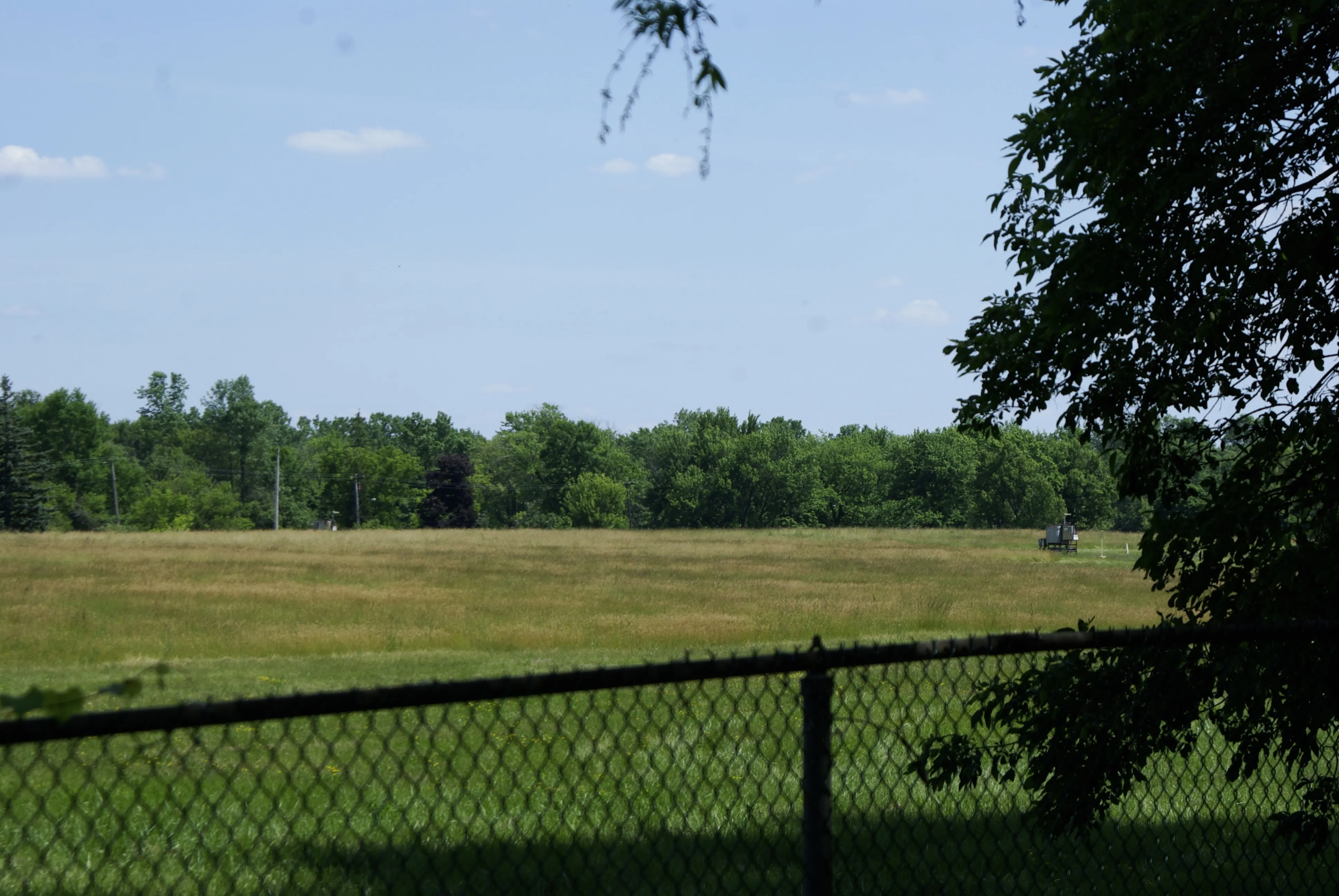
Bower Hill, near Pittsburgh, PennsylvaniaStory page →
The American Throughline
This was the young republic's first real test of whether federal law meant anything past the Atlantic coast. Washington rode with the army himself, the only sitting president ever to command troops in the field, establishing that Congress's taxes would be enforced even on the frontier. The standoff also hardened the divide between Hamilton's Federalists and Jefferson's opposition, feeding the two-party system that followed.
Did you know
QWhy did a Morgantown tax collector disguise himself as a slave to escape a mob?
William McCleery, the tax collector in Morgantown, Virginia, faced a mob of 30 men surrounding his house on August 9, 1794, as retaliation for the whiskey taxes. Fearing for his life, McCleery disguised himself as a slave, fled his home, and swam across the river to safety. The town then endured a three-day siege by outsiders and townspeople, alarming state authorities who worried the unrest would spread and inspire other frontier counties to join the anti-tax movement. The episode shows the rebellion was never confined to Pennsylvania alone; pockets of resistance ran through the western counties of Maryland, Virginia, North Carolina, South Carolina, and Georgia, with the tax going entirely uncollected in Kentucky.
QHow did large distillers legally pay less tax per gallon than small frontier farmers?
Under Hamilton's excise law, distillers could pay either a flat per-still fee or a per-gallon rate. Big eastern operations ran their stills at full capacity year-round, so the flat fee worked out to as little as 6 cents a gallon. Small frontier farmers lacked the time or surplus grain to run their stills constantly, so they were pushed onto the per-gallon rate, paying 9 cents a gallon instead. Because whiskey also sold for less on the cash-poor western frontier than in the wealthier East, small distillers ended up surrendering a much larger share of their product's value than large distillers did, even before accounting for the rate difference itself. Some historians call this design a deliberate favor to big business; others call it coincidence.
QWhat kept a Vermont militia from being recalled during the War of 1812?
The 1795 Militia Act never settled whether states or the federal government actually controlled militia units once called up. During the War of 1812, the governor of Vermont tried to pull his state's militia back from defending Plattsburgh, arguing it was illegal for them to serve outside Vermont's borders, but the recall failed. New York militiamen made a similar argument, refusing to cross into Canada on the grounds that their duty was only to defend their home state. The confusion left Washington unable to count on militias for national defense, and after 1812 the federal government started raising separate 'volunteer' units instead, a workaround used again in the Mexican War and the Civil War.
The Daily Record · free by email
Tomorrow's edition in your inbox — one story, one quote, the flag.
1789government
Congress hands the new army to a civilian department; Washington signs it into law
In the summer of 1789, the new federal government had a Constitution but almost no machinery to run it. On August 7, President George Washington signed the act creating the Department of War, built on committees and boards that had managed the Continental Army since 1775. He nominated Henry Knox, his old artillery commander, as the first secretary at war. The department opened with a staff of five and, until 1798, quietly ran naval affairs too.
This was the first American answer to a hard question: who controls the army in a republic that just fought off a king. Washington's choice, a civilian secretary answering to the president, set the pattern the Pentagon still follows, and the office outlasted thirteen presidents before splitting into the Army and Air Force departments in 1947.
Did you know
QWhy did the War Department lose its records from the 1770s and 1780s?
On November 8, 1800, fire consumed the War Department building along with its records and files. The department had only just relocated to Washington that year after a decade in Philadelphia, so many of its earliest papers, potentially including material from the Revolutionary War boards that preceded it, burned before they could be archived elsewhere. Researchers today piecing together the department's founding years rely heavily on surviving congressional records and correspondence held outside the building rather than the department's own files, precisely because of this loss. The fire is a footnote next to the department's later history, but it erased a chunk of the paper trail from the agency's infancy.
QWhat happened to the Bureau of Indian Affairs after the War Department created it?
Secretary of War John C. Calhoun established the Bureau of Indian Affairs in 1824 as the department's main office for managing relations with Native nations. It stayed under War Department control for 25 years, handling treaties, trade, and land issues, until Congress transferred it to the newly founded Department of the Interior in 1849. That move separated Native American affairs from military administration for the first time since the department's creation, when Indian affairs had been listed among its original assigned duties. The bureau's quarter-century run inside the War Department shows how much civilian administrative work the agency absorbed beyond simply running the Army.
QHow much smaller was the U.S. Army than France's in 1890?
In 1890 the United States Army numbered just 39,000 men, making it the smallest and least powerful army of any major power at the time. France, by comparison, fielded 542,000 troops, nearly fourteen times the American total. The gap became glaring during the Spanish-American War of 1898, which the U.S. fought mostly with temporary volunteers and state militia rather than the tiny regular force. That mismatch pushed Secretary of War Elihu Root to push for a chief of staff system and a modern general staff modeled on European militaries, reforms that General Nelson A. Miles initially blocked before they eventually took hold.
1959exploration
A tumbling satellite over Mexico snaps the first picture of Earth from orbit
Two years after Sputnik, the United States was still racing to prove its satellites could do more than beep. On August 7, 1959, NASA's Goddard Space Flight Center launched Explorer 6, a spinning 60-centimeter sphere, atop a Thor-Able rocket from the Atlantic Missile Range in Cape Canaveral. A week later, on August 14, its onboard television scanner captured the first photographs of Earth ever taken from space, images built line by line from a spacecraft tumbling nearly three times a second over Mexico and the Pacific.
Explorer 6 was the first satellite run entirely under NASA's brand-new Goddard Space Flight Center, proof the agency created after Sputnik could direct its own missions rather than borrow the Army's. Its Earth photographs gave American engineers the first working blueprint for satellite reconnaissance and weather imaging, a capability the country built entire agencies around within a decade.
Did you know
QWhy did Explorer 6's radio signal vanish and reappear during a Hawaii tracking pass?
The Beacon experiment, meant to measure electron density using twin transmitters at 108 and 378 MHz, ran into severe fading and a strong magnetic storm while ground receivers in Hawaii listened during eight separate passes over 11 days. Engineers were already struggling to interpret the Doppler shifts and Faraday rotation data when the 378 MHz transmitter failed outright, ending the experiment for good. The magnetic storm that scrambled the signal was not an isolated nuisance either; several more storms hit during the satellite's active life, complicating the Proportional Counter Telescope's radiation readings as well. Explorer 6 was gathering data on the very kind of space weather that was actively interfering with its ability to transmit that data home.
QWhat happened to Explorer 6's micrometeorite detector, the instrument built to catch space dust?
The micrometeorite momentum spectrometer used piezoelectric crystal microphones to register the tiny impacts of space dust hitting the spacecraft, and it did detect pulses throughout the mission. But those pulses never resolved into anything scientists could actually use. NASA's own post-mission assessment calls the results scientifically worthless, a rare admission for an instrument that functioned exactly as designed, mechanically speaking, while still failing its purpose. It is a reminder that of Explorer 6's roughly half-dozen onboard experiments, not every one produced a clean success story, even when the hardware itself never broke.
QHow far below the horizon did Explorer 6's VLF radio experiment keep working after launch?
The Very Low Frequency receiver, tuned to a 15.5 kHz Navy transmitter broadcasting from Annapolis, Maryland, was designed to study whistler-mode radio propagation and ionospheric noise as the satellite climbed away from Earth. Because its antenna launched in a folded position, the receiver operated at roughly 30 decibels below its full sensitivity from the start, and by 67 kilometers up the signal had dropped into the noise floor entirely. Engineers still managed to salvage usable readings all the way to 160 kilometers using special extraction techniques, squeezing science out of a signal that by rights should have already been unreadable.