Reading 3 of 7 free1776 Club · all 7 storiesWednesday, August 12
From the desk
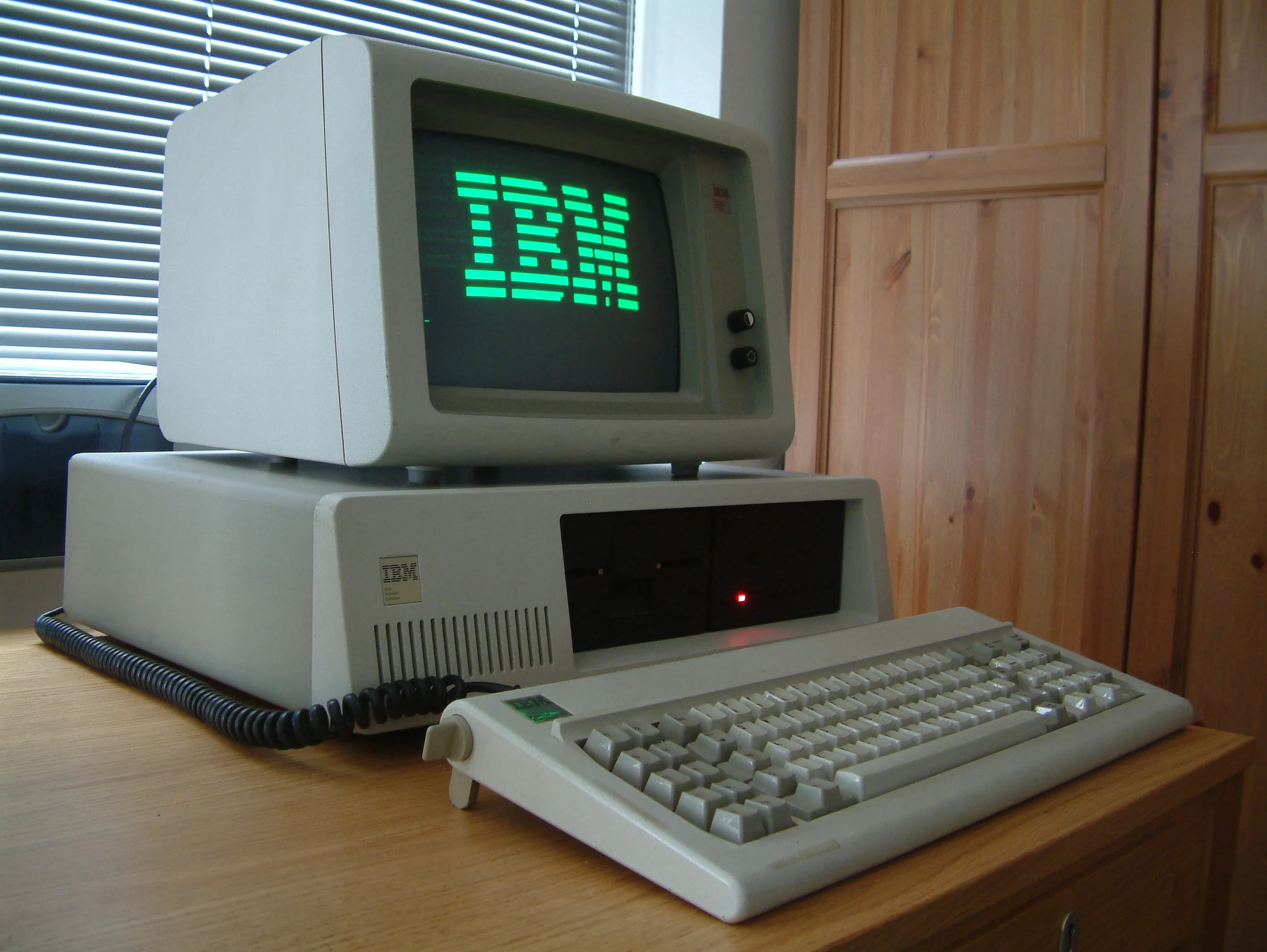
Start with 1898: U.S. sailors lowered the Hawaiian flag at ʻIolani Palace and raised the American one, five weeks after Congress voted annexation. Queen Liliʻuokalani did not attend her own kingdom's transfer; she stayed at Washington Place while Sanford Dole presided, and the islands waited two more years to become an official territory. Worth a longer look: 1990, when a flat tire near Faith, South Dakota sent Sue Hendrickson up a cliff nobody had checked, and she found one of the most complete T. rex skeletons ever recovered. IBM's 5150 debuted the same date in 1981, tap dance and all.
— The Patriot Compass desk
1898Featured · This day in history
The American flag rises over ʻIolani Palace; Hawaii's sovereignty ends in a ceremony
Five weeks after Congress authorized annexation, U.S. troops from the USS Philadelphia came ashore in Honolulu on August 12, 1898, and raised the American flag at ʻIolani Palace, replacing the Hawaiian flag and formally transferring control from the Republic of Hawaii to Washington. Queen Liliʻuokalani, the kingdom's last monarch, did not attend; she remained at her private residence, Washington Place, while Republic of Hawaii president Sanford B. Dole presided over the handover. Hawaii would not become an official U.S. territory for nearly two more years.
Annexation gave the United States its first Pacific territory and a coaling and naval station at Pearl Harbor just as the Spanish-American War made the ocean's strategic map matter. McKinley had failed to get a treaty ratified in 1897; the war supplied the votes. The coaling station at Pearl Harbor became central to American naval planning in the Pacific in the decades that followed.
Did you know
QWho actually ran Hawaii's government on paper in the months before the flag ceremony?
Henry E. Cooper held the title of Minister of Foreign Affairs and Interior in Sanford Dole's final cabinet, the administrative post responsible for handling the mechanics of the handover to Washington. Cooper had also been a figure in the 1893 Committee of Safety that helped depose the monarchy in the first place, so by 1898 he was overseeing the paperwork end of a transition he had helped set in motion five years earlier. His cabinet role meant the Republic of Hawaii's foreign relations and internal governance funneled through him right up until Dole handed the whole apparatus to the United States. Cooper's name rarely appears outside Hawaiian archives, but his signature sat on the machinery of a government about to dissolve itself.
QHow close did the annexation treaty come to failing permanently in the Senate?
McKinley's 1897 annexation treaty needed a two-thirds Senate majority and never got a vote that could clear it, stalled in large part by two Native Hawaiian petitions bearing more than 20,000 signatures, representing over half the Hawaiian population at the time. Rather than fight for those votes, McKinley's administration switched strategies entirely and pushed the Newlands Resolution through as a joint resolution, which required only a simple majority in each chamber. It passed both houses on July 7, 1898.
QWhat became of ʻIolani Palace after the monarchy's government offices moved in?
The palace itself was carved up for territorial administration. The former throne room, where Liliʻuokalani had later stood trial, became the meeting chamber for the territorial house of representatives, while the old state dining room served as the senate floor. The queen's own second-floor bedroom was converted into the governor's office. When Liliʻuokalani died in 1917, territorial governor Lucius E. Pinkham granted her a state funeral held in that same former throne room.
The Daily Record · free by email
Tomorrow's edition in your inbox — one story, one quote, the flag.
1945government
Days after Hiroshima and Nagasaki, Washington tells the public how the bomb was built
Six days after Hiroshima and three after Nagasaki, the government had still not officially explained how the bomb worked. On August 12, 1945, the federal government released the Smyth Report, a public account of the Manhattan Project written by physicist Henry DeWolf Smyth at the request of General Leslie Groves. It explained the physics behind nuclear fission while deliberately leaving out the chemistry, metallurgy, and ordnance details needed to build a bomb. By mid-October it landed on the New York Times bestseller list.
The Smyth Report became the model the government would reuse for decades: publish the science, withhold the engineering. Smyth's own preface argued that self-government required an informed public, even on nuclear secrets. That argument still shapes American debates over declassification today.
Did you know
QWhat did the Smyth Report deliberately leave out of its account of the bomb?
The report was written to explain the physics of nuclear fission while omitting the chemistry, metallurgy, and ordnance details an engineer would need to actually build a weapon. Smyth and the Military Policy Committee designed the document to cover only what was already common knowledge among scientists or easily worked out by a competent physicist. That meant readers got a genuine scientific education on how fission released energy, but nothing resembling a blueprint. The distinction let the government claim honesty without handing over the machinery of mass destruction.
QWhat dual purpose was the Smyth Report designed to serve beyond informing the public?
Beyond being the government's official account for ordinary citizens, the report doubled as a reference tool for scientists themselves, marking exactly which information had been declassified and which remained off-limits. Researchers across the country could consult it to know what they were now legally permitted to discuss or publish without running afoul of the Espionage Act. This second function mattered as much as the public-facing one, giving the scientific community a shared, government-sanctioned boundary line for postwar nuclear research and publication.
QWhat earlier role did Henry Smyth hold on the Manhattan Project before writing the report?
Smyth's involvement stretched back to early 1941, years before he authored the public report, when he joined the National Defense Research Committee's Committee on Uranium. He later moved into a more senior post as associate director of the Metallurgical Laboratory in Chicago, one of the project's key scientific hubs. That long insider vantage point, spanning the earliest theoretical uranium studies through full wartime production, made him the natural choice to write the project's first public account.
1990science
A flat tire sends Sue Hendrickson up a cliff, and she finds a T. rex
The Black Hills Institute crew had spent the summer of 1990 hunting fossils near the Cheyenne River Indian Reservation outside Faith, South Dakota, with little to show for it. On August 12, a flat tire on the group's truck sent everyone back to camp for repairs except Sue Hendrickson, who used the delay to explore a nearby cliff the team hadn't checked. She spotted bone fragments at the base, looked up, and saw vertebrae and larger bones jutting from the rock face above her. It was a Tyrannosaurus rex, and an unusually complete one.
Sue became the anchor specimen of the Field Museum in Chicago and a fixture of American natural history, but the discovery also set off a legal fight over who owns fossils found on tribal trust land, a case that changed how museums negotiate fossil access with private and tribal landowners.
Did you know
QHow many of a T. rex's roughly 360 bones did the team actually recover from the cliff?
About 250 of the roughly 360 bones known to make up a complete Tyrannosaurus rex skeleton were pulled from the site outside Faith. Counted by individual bone rather than overall bulk, that put Sue at 73 percent complete, a different but still record-setting measure alongside the more commonly cited 90 percent by bulk. Paleontologists typically had to fill most of a mounted skeleton with sculpted replacements; Sue needed relatively few. That completeness let researchers study details like healed bone injuries visible on the original material, evidence obscured in more fragmentary specimens.
QWhat triggered the courtroom fight over who actually owned the skeleton?
Maurice Williams, the rancher who owned the surface land, had accepted $5,000 from the Black Hills Institute for the fossil, but he later argued that payment covered something other than the outright sale of the specimen. Because his property was held in trust status connected to the Cheyenne River Sioux Tribe, ownership of anything extracted from it became a federal question rather than a simple private transaction. The dispute ended up in federal court, and the ruling stripped the Institute of the skeleton it had spent years excavating and preparing, handing title back to Williams.
QWho ended up bidding against each other to keep Sue on public display?
When Sotheby's auctioned the skeleton in October 1997, the winning bid came from the Field Museum of Natural History in Chicago, which assembled financial backing from corporate sponsors including McDonald's and Disney to reach the $8.3 million sale price. That figure was the highest ever paid for a fossil at the time. The corporate sponsorship came with a condition: replica casts of Sue were produced and distributed, including sets sent to Disney's Animal Kingdom in Florida for public display and others placed into a traveling tour sponsored by McDonald's, extending the specimen's reach well beyond the museum floor in Chicago.