Reading 3 of 7 free1776 Club · all 7 storiesFriday, August 14
From the desk
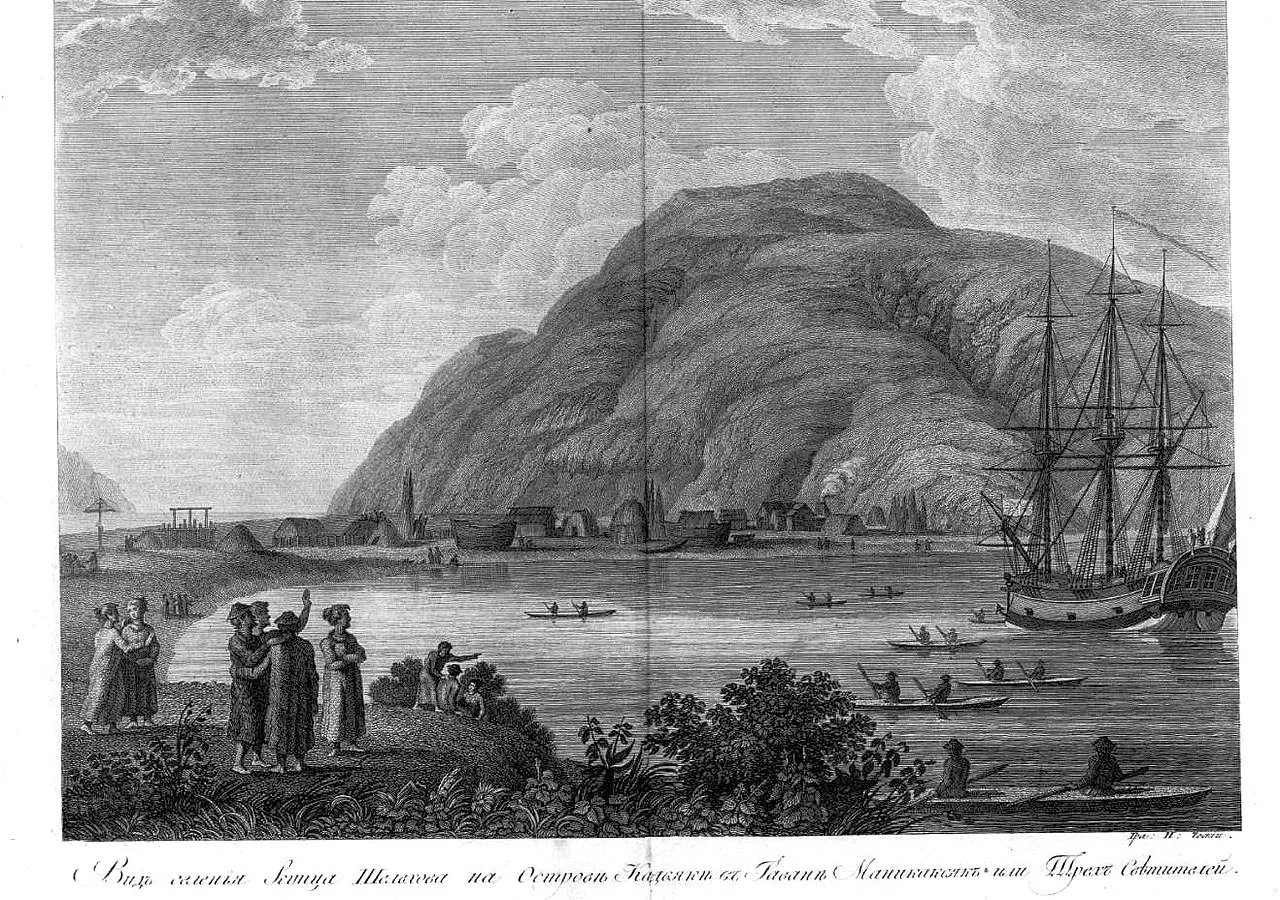
Start with 1935. Six years into the Depression, with millions of older Americans holding no pension and no savings, Roosevelt signed the Social Security Act, and Washington took formal responsibility for the old, the jobless, and single mothers raising children alone, though farmworkers and domestic servants were left out at the start. Worth a longer look: 1784, when Shelikhov's cannons ended twenty-three years of Alutiiq resistance on Kodiak Island in a single, brutal afternoon. The Atlantic Charter of 1941 rounds out a date built on declarations of what governments owe people.
— The Patriot Compass desk
1935Featured · This day in history
Roosevelt signs the Social Security Act; the elderly get a federal pension
Six years into the Great Depression, millions of older Americans had no pension and no savings to fall back on. On August 14, 1935, Franklin D. Roosevelt signed the Social Security Act, establishing a federal old-age pension funded by payroll taxes, alongside unemployment insurance run by the states and aid to families headed by single mothers. It was the first time Washington took formal responsibility for the economic security of Americans who were old, out of work, or raising children alone. Millions of farmworkers, domestic servants, and government employees were excluded from coverage at the start.
Social Security grew into the federal government's largest and longest-running commitment to its citizens, and it is credited with a sharp decline in poverty among the elderly over the following decades. Who it covered, and who it excluded, remained a point of political fights for decades afterward.
Did you know
QWho was Roosevelt's real rival for the pension debate, and what did he want instead?
Physician Francis Townsend built a nationwide movement demanding a flat monthly payment for every American over sixty, funded by a national sales tax, with the requirement that recipients spend the money right away to stimulate the economy. Townsend Clubs sprang up across the country and pressured Congress directly. Roosevelt's Committee on Economic Security, chaired by Frances Perkins, was assembled largely to offer a more fiscally cautious, insurance-based alternative before Townsend's plan gained enough momentum to pass on its own terms.
QWhich workers were left out of Social Security when it first passed?
The 1935 law excluded agricultural laborers, domestic servants, most government employees, and many teachers, nurses, hospital workers, librarians, and social workers. Because so many Black Americans worked in farm labor and domestic service in 1935, the exclusions left about 65 percent of the Black workforce uncovered, compared with 27 percent of white workers. Congress closed most of these gaps through later amendments, but the original law covered only a fraction of American workers.
QWhat was Aid to Dependent Children, and who did it target?
Tucked inside the same 1935 law was a separate program, Aid to Dependent Children, providing federal aid to families headed by single mothers. It ran alongside the old-age pension and the state-administered unemployment insurance system created by the same act. Together, the three programs marked the first time the federal government took on responsibility for old-age support, unemployment, and aid to children in a single law.
The Daily Record · free by email
Tomorrow's edition in your inbox — one story, one quote, the flag.
1842military
Washington declares the Seminole war over; no one signed anything
Seven years of guerrilla fighting in the sawgrass came to a quiet, unofficial close on August 14, 1842. General William J. Worth declared the Second Seminole War over after his troops spent the final campaigns burning villages and crops and killing livestock rather than chasing fighters through the swamp. More than 3,600 Seminoles had already been shipped west to Indian Territory. No treaty was signed. Between 350 and 500 Seminoles simply stayed, and they retreated deeper into the Everglades. Neither side put the truce in writing.
The war cost the U.S. government roughly $40 million, making it the longest and most expensive Indian war the Army ever fought, and it exposed how far Washington would go to enforce the Indian Removal Act of 1830. That Seminoles never formally surrendered, and that their descendants still hold land in Florida today, made this the one Removal-era war the government could not fully close on paper.
Did you know
QWhat happened when Major Dade's column was ambushed in December 1835?
Major Francis Dade led 110 soldiers from Fort Brooke toward Fort King on December 23, 1835, and Seminoles shadowed the column for five days before ambushing and wiping it out on December 28. The action, known as the Dade Massacre, killed nearly the entire command and opened the war, though it does not directly explain the losses among the Sixth Infantry at Lake Okeechobee two years later, which are detailed in the next answer.
QWhat happened to the officers of the Sixth Infantry at the Battle of Lake Okeechobee in 1837?
Colonel Zachary Taylor sent about 800 men, mostly on foot, straight into a sawgrass hammock on Christmas Day 1837 against fewer than 400 Seminole fighters led by Alligator, Sam Jones, and Coacoochee. The Missouri volunteers broke and their commander, Colonel Gentry, was fatally wounded, but the worst losses fell on five companies of the Sixth Infantry, where every officer but one was killed or wounded along with most of their non-commissioned officers. The Army suffered 26 dead and 112 wounded against just 11 Seminole dead and 14 wounded. Taylor still claimed the field, capturing 100 ponies and 600 head of cattle, but no Seminoles were taken prisoner.
QHow did the Seminole Wars follow the tribe even into the Civil War decades later?
In July 1864, Confederate Secretary of War James Seddon received word that a man named A. McBride claimed to have raised a company of sixty-five Seminole volunteers to fight for the South, trading on his own experience fighting in the earlier Seminole wars. McBride never actually fielded the unit. Meanwhile Seminole leaders Halleck Tustenuggee and Sonuk Mikko, known as Billy Bowlegs, refused to sign with the Confederacy and instead withdrew from Florida to join the Union. After the war, Washington voided all prior treaties with Seminoles in Indian Territory over the disloyalty of some who had sided with the South, forcing new treaties that stripped tribal councils of power.
1941government
Churchill and Roosevelt issue a joint charter for the postwar world
Four months before Pearl Harbor, the United States was still officially neutral, but its president was already planning the peace. On August 14, 1941, Franklin Roosevelt and Winston Churchill, meeting aboard warships in Placentia Bay, Newfoundland, issued the Atlantic Charter. The joint declaration renounced territorial conquest, called for self-determination and freedom of the seas, and laid out goals for the postwar world. It became the moral scaffolding for the United Nations.
Roosevelt committed a neutral country's president to postwar principles months before Congress declared war, a bet that public opinion would follow. The charter's language on self-determination and disarmament became the template Washington used to build the UN and, later, NATO, part of America's shift from isolation toward global leadership.
Did you know
QWhat letter did Churchill personally deliver to Roosevelt at the meeting?
Churchill carried a letter from King George VI intended for Roosevelt, hand-delivered rather than sent through normal diplomatic channels. London needed American material support and, eventually, American troops, and a personal royal letter delivered by the Prime Minister himself was part of that urgent campaign. The letter's exact contents were never made public, but its delivery by the Prime Minister himself, rather than an ambassador, was unusual enough that officers present remarked on it.
QWhat did the American military presence do to Newfoundland's economy and social fabric in the months around the Argentia meeting?
National income doubled almost overnight. Under the American Bases Act, which took effect June 11, 1941, thousands of Newfoundlanders drew their first steady paychecks in years building and staffing US bases at Argentia, Gander, Botwood, and Stephenville. Government revenue quadrupled even though tax rates stayed far below British, Canadian, or American levels, and Newfoundland astonished London by turning around and financing loans back to the mother country. American money brought American personnel, and significant intermarriage followed between Newfoundland women and US servicemen, a social shift that lasted decades.
QWhat later document borrowed the Atlantic Charter's name eight decades on?
In 2021, President Joe Biden and Prime Minister Boris Johnson signed a document called the New Atlantic Charter, deliberately invoking the 1941 original. Coming eighty years after Placentia Bay, the new charter was a symbolic renewal of the US-British relationship for a different era, trading on the memory of two wartime leaders meeting in secret aboard warships to draft the earlier one. The choice of name was itself a small acknowledgment of how far the original document's reputation had traveled.