Reading 3 of 6 free1776 Club · all 6 storiesSaturday, August 15
From the desk
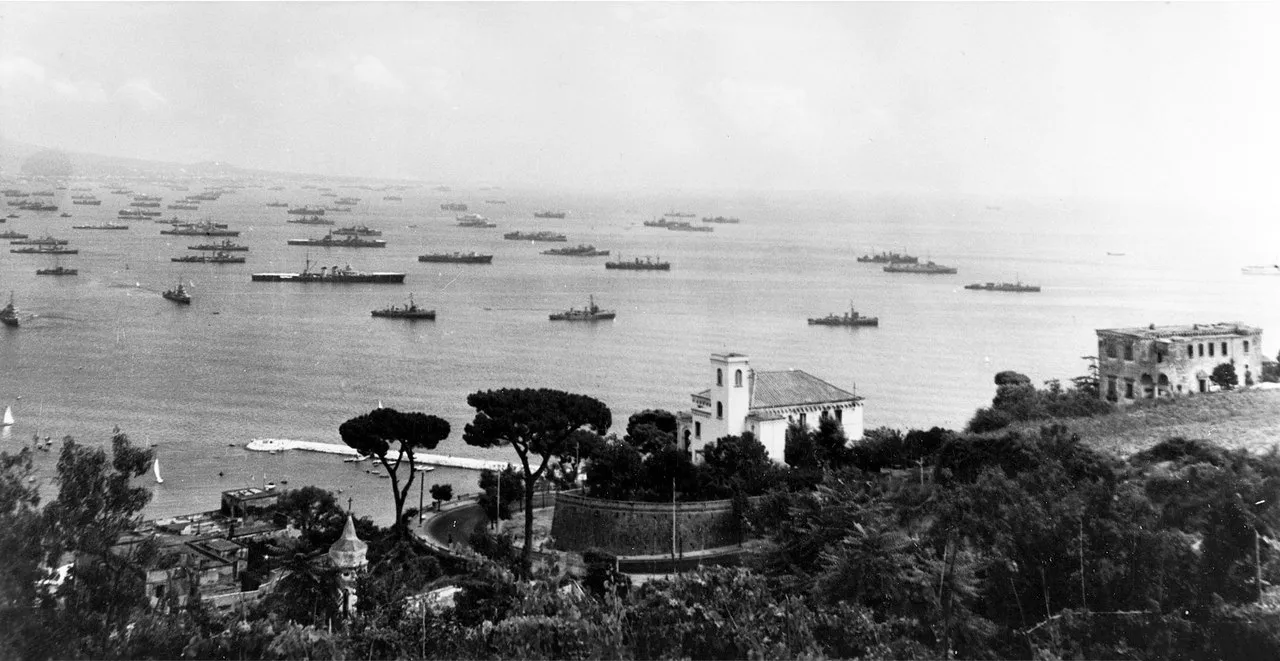
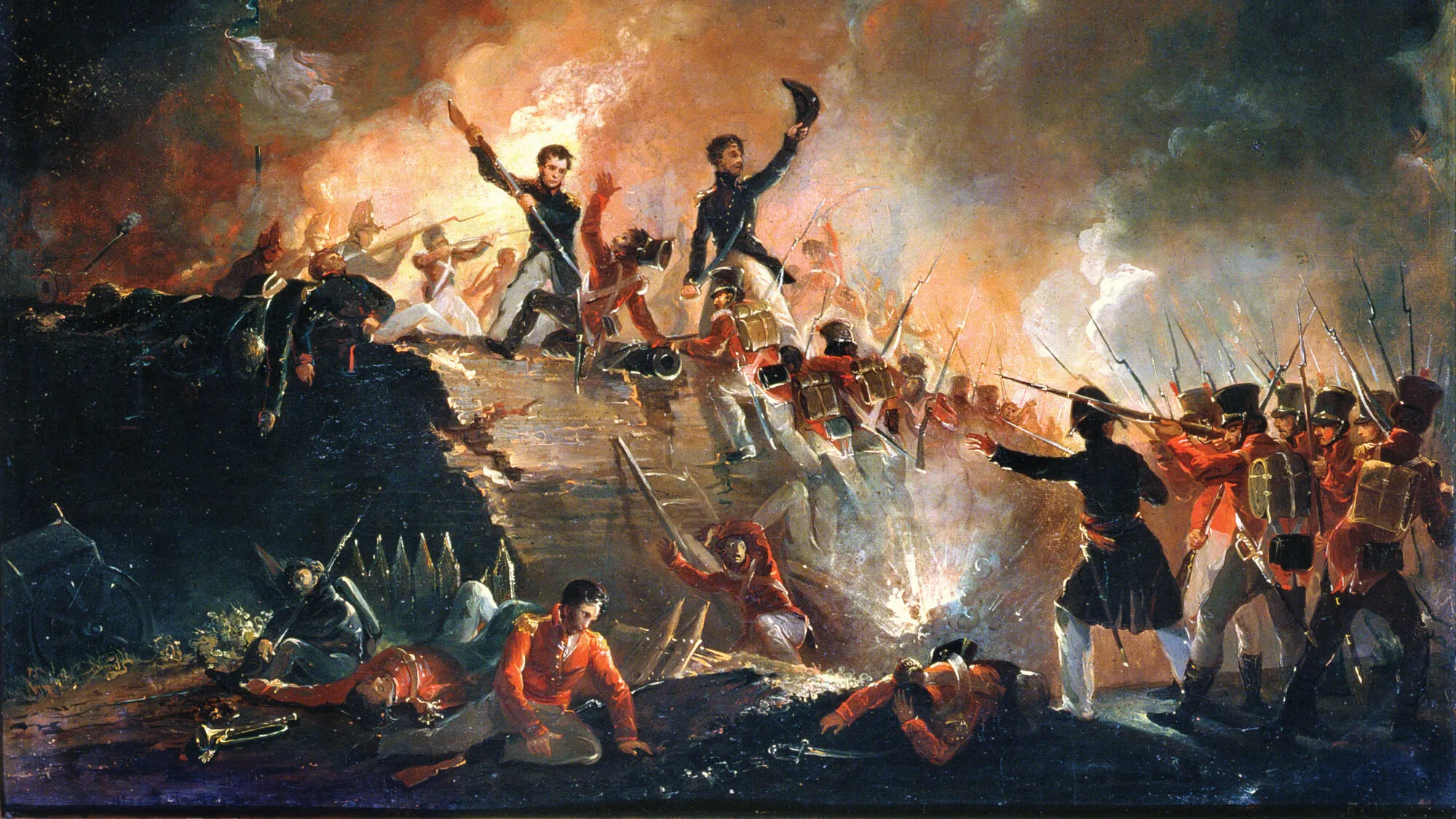
Start with 1824: Lafayette, fifty years after crossing the Atlantic as a twenty-year-old volunteer, sailed back into New York Harbor aboard the Cadmus as a sixty-seven-year-old guest of the nation he'd helped build, his son at his side. Worth a longer look: 1945, when Hirohito's voice, never heard before by ordinary Japanese citizens, crackled over the radio reading words so formal an announcer had to translate them plainly afterward. Fort Erie's magazine explosion is worth a glance too, 250 men gone in one detonation. Return and surrender both landed on this date, a century and a half apart.
— The Patriot Compass desk
1824Featured · This day in history
The last French general of the Revolution steps ashore in New York Harbor
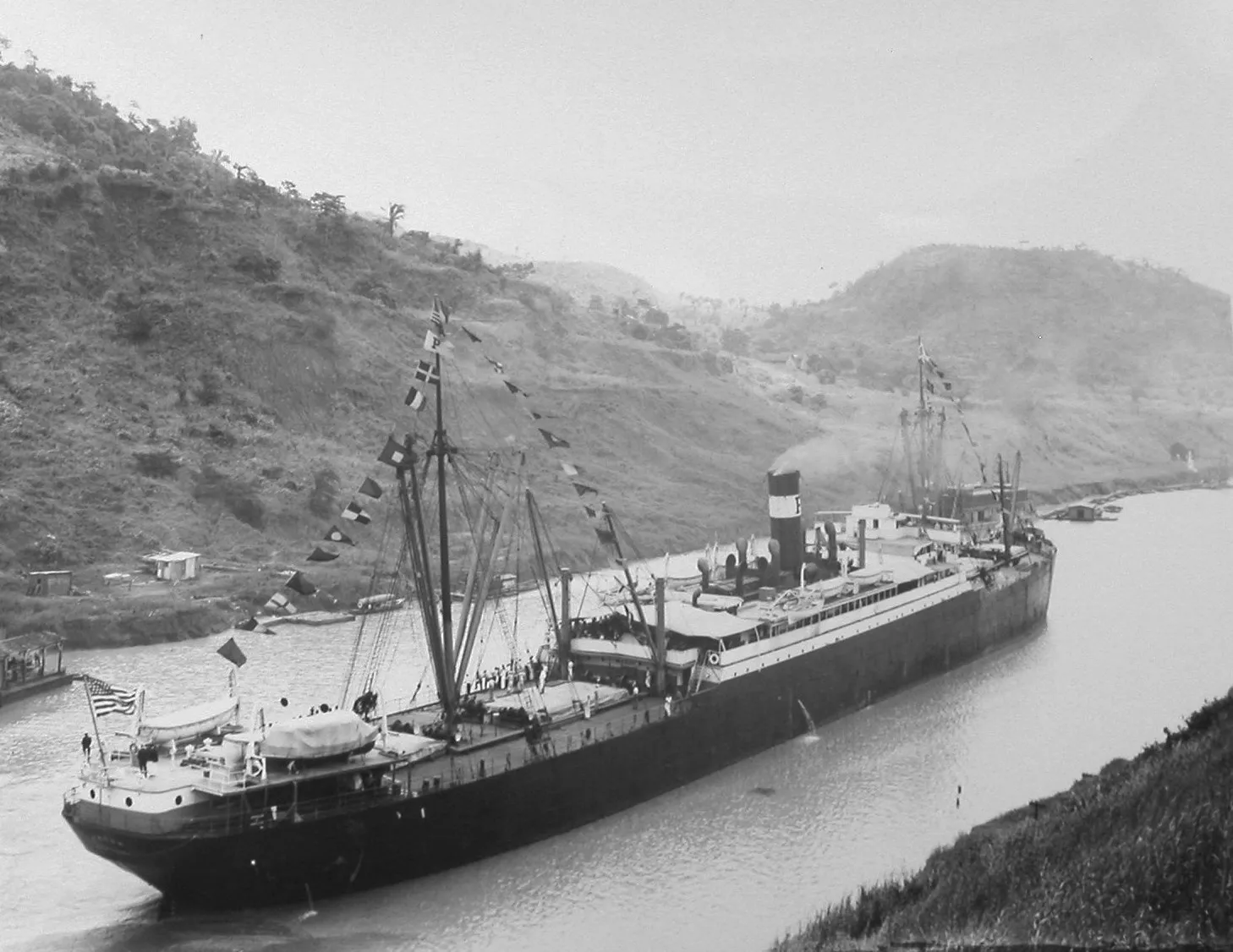
Fifty years after he crossed the Atlantic as a twenty-year-old volunteer, the Marquis de Lafayette made the trip again, this time as an invited guest of a nation he had helped create. On August 15, 1824, he landed at Staten Island aboard the merchant ship Cadmus, with his son Georges Washington de La Fayette at his side. President James Monroe had invited him as the nation approached its fiftieth anniversary. The next day, New York gave him a welcome few living men had ever received.
Monroe's invitation came as the Revolution's generation was dying off, and he wanted a living link to the founding for a new generation to see. Lafayette's tour became the country's first shared national spectacle, drawing crowds across all 24 states before railroads or telegraphs existed to organize such a thing.
Did you know
QWhich future physician gave Lafayette a welcome speech at age eleven?
James McCune Smith, an eleven-year-old pupil at the African Free School No. 2 on Mulberry Street, delivered a short welcome speech to Lafayette during the general's time in New York. Smith would go on to become the first African American to earn a medical degree, studying at the University of Glasgow after being denied admission to American medical schools. Smith would later invoke those same ideals of liberty in his work as a physician and abolitionist.
QWhere did Lafayette sleep on his overnight stops in the Ohio Valley?
In Marietta, Ohio, Lafayette stayed overnight at the private residence of Nahum Ward, a local landowner and one of the town's most prominent citizens. Further downriver in Cincinnati, he lodged at the St. Nicholas Hotel rather than a private home. These stops were part of the grueling logistics of a tour with no railroads or telegraphs to coordinate it; organizers had to rely on whichever homes, taverns, and hotels a given town could offer. The contrast between a private household in Marietta and a commercial hotel in Cincinnati reflected the two towns' different sizes and stages of growth.
QWhat unfinished engineering project did Lafayette inspect in Buffalo?
In Buffalo, New York, Lafayette gave a speech at the Eagle Tavern in what was then named Lafayette Square, then went to inspect a stretch of the Erie Canal while it was still under construction. The canal would not fully open until 1825, the same year Lafayette's tour ended. It would link the Great Lakes to the Hudson River and help make New York the nation's commercial gateway. Lafayette also spent time in Concord, New Hampshire, visiting the smaller towns of Hopkinton and Claremont, part of a schedule that pushed him into rural corners of the country far removed from the grand ceremonies of cities like Yorktown or New York.
The Daily Record · free by email
Tomorrow's edition in your inbox — one story, one quote, the flag.
1962military
GI dodges court martial by walking across a minefield into North Korea
By the summer of 1962, Private James Joseph Dresnok had run out of road. Facing a court martial for forging his sergeant's signature to go AWOL, and with his marriage collapsed, the 1st Cavalry Division soldier ran across the minefield along the Korean Demilitarized Zone into North Korean territory at noon on August 15, while the rest of his unit was eating lunch. North Korean soldiers caught him almost immediately and put him on a train to Pyongyang for interrogation. He never returned to the United States.
Korean Demilitarized Zone near Kijong-dongStory page →
The American Throughline
Dresnok became one of only seven American soldiers to defect across the DMZ after the Korean War, and the story unsettled a Cold War narrative built on the idea that no American would choose communism over home. His later life as a propaganda actor left the Pentagon with an uncomfortable case study in how easily a demoralized soldier could vanish behind the world's most fortified border.
Did you know
QWhat happened to Dresnok's family before he ever put on an Army uniform?
Long before Korea, Dresnok's childhood collapsed. His mother, Margaret, fled with him and his younger brother Joseph Jr., and the three lived out of a car, sleeping wherever they stopped while she tried to earn money through prostitution and drank in bars at night with the boys waiting outside. Relatives eventually tracked them down in Atlanta, and Margaret lost custody. His father shuttled him between an aunt's house and, later, a retirement home under the pretense of visiting a relative, then simply drove away. Dresnok never saw either parent or his brother again. He stole $20 and a bicycle afterward, was nearly sent to juvenile detention, and instead landed in foster care with a Presbyterian minister's family in Virginia.
QWhy did a Romanian art student's brother recognize Dresnok's son on television?
Dresnok's second wife, Doina Bumbea, vanished from Italy where she had been studying art after telling people she'd met a man promising to arrange exhibitions in Asia. She turned up in Pyongyang instead, reportedly abducted by North Korean intelligence to serve as a wife for one of the American defectors, ultimately Dresnok himself. Decades later, after watching the documentary Crossing the Line, her brother said one of her sons bore a startling resemblance to his missing sister. Romania's government formally requested an explanation from Pyongyang in 2007 but received no reply. Bumbea died of lung cancer in 1997, having had two sons with Dresnok, Ted and James, both of whom later appeared as villainous Americans in North Korean propaganda films themselves.
QWhat rank did Dresnok's Korean-raised son eventually hold in the North Korean military?
James Gabriel Dresnok, the younger of Dresnok's two sons with Bumbea, joined the Korean People's Army in 2014 and by 2016 held the rank of taewi, equivalent to a U.S. Army captain. He studied at Pyongyang University of Foreign Studies, the same school where his father once taught English, speaks English with a Korean accent, and identifies as Korean rather than American, reportedly preferring not to marry a Korean woman. Both James and his older brother Ted are now married with children of their own inside North Korea. Dresnok's third wife, identified only as 'Dada,' was the daughter of a North Korean mother and a Togolese diplomat, and bore him a third son, Tony, in 2001.
1945military
Emperor's voice reaches the Japanese people for the first time: Japan surrenders
For six days after Nagasaki, Japan's leadership debated surrender while the country waited for word. At noon on August 15, 1945, radios crackled to life with a voice no ordinary Japanese citizen had ever heard: Emperor Hirohito's, reading a surrender announcement recorded the night before onto a phonograph disc. His formal, archaic Japanese confused many listeners, so an NHK announcer followed with the plain translation: Japan was surrendering. The broadcast ended the Pacific war. Japan's thirty-five-year rule over Korea ended with it.
The broadcast followed weeks of internal Japanese debate that began with the Potsdam Declaration and the atomic strikes, and ended only after the Allies rejected Japan's conditions on the Emperor's authority. It ended the war American planners had been bracing to finish with a costly invasion of the home islands, and it opened the seven-year American occupation, during which Japan adopted the pacifist, democratic constitution it still operates under today.
Did you know
QWhat exact condition did Japan attach to its August 10 surrender offer, and how did the Allies respond?
On August 10, Tokyo told Washington, London, Chungking, and Moscow it would accept the Potsdam terms only on the understanding that surrender did not compromise the prerogatives of the Emperor as Sovereign Ruler. The Allies refused to let that stand unqualified. Their reply insisted that from the moment of surrender, Hirohito's authority would be subject to the Supreme Commander of the Allied Powers. That single sticking point over the throne's status consumed the final days of Japan's internal debate before the broadcast, and it was the compromise Japan's leadership ultimately swallowed to end the war.
QHow far back did Japan's military position actually start collapsing before the atomic bombings forced the final crisis?
The unraveling began three years earlier than the atomic bombings. Starting roughly in mid-1943, Japan suffered nearly two years of defeats across the South West Pacific, India, the Marianas, and the Philippines, grinding down its forces long before Hiroshima. By July 1945, the Imperial Japanese Navy had been reduced to a state where it could no longer mount major operations at all. That slow-motion collapse, not just the atomic strikes, left Japan facing an imminent Allied invasion of the home islands with little left to stop it.
QWhat specific phrase did the Potsdam Declaration use to threaten Japan if it refused to surrender?
The Potsdam Declaration, issued July 26, 1945, warned Japan of "prompt and utter destruction" if it did not accept unconditional surrender. That exact wording sat unanswered by Tokyo for weeks while its leadership debated internally, until Nagasaki and the Soviet declaration of war on August 8 and 9 forced a decision. Marquis Kōichi Kido, Hirohito's closest advisor, was the one who ultimately pushed for the emperor to address the nation directly rather than leave the decision to filter down through military channels.