Reading 3 of 6 free1776 Club · all 6 storiesTuesday, August 18
From the desk
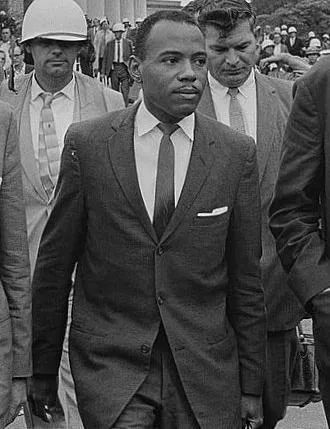
Start with 1920: Tennessee's legislature ratified the 19th Amendment by a single vote, ending a fight that had sat in Congress since 1878 and clearing the way for 26 million women to vote that November. Worth a longer look: 1963, when James Meredith walked across the stage at Ole Miss, the same campus where federal troops had put down riots over his enrollment less than a year earlier. Spare a glance for 1590 too, John White landing on Roanoke to find only an empty settlement and a word carved into a post.
— The Patriot Compass desk
1920Featured · This day in history
Tennessee ratifies; the 19th Amendment clears its final hurdle
For 42 years, a suffrage amendment had languished in Congress since its first introduction in 1878. On August 18, 1920, the Tennessee legislature narrowly approved the Nineteenth Amendment, becoming the 36th state to ratify and meeting the three-fourths threshold required to add it to the Constitution. The amendment barred any denial of the vote "on account of sex." Secretary of State Bainbridge Colby would certify it eight days later, enfranchising 26 million American women in time to vote that November.
Tennessee's ratification was the last step in a fight Susan B. Anthony and Elizabeth Cady Stanton had started decades earlier and Alice Paul had pushed forward with White House pickets. It settled, constitutionally, that sex could not bar a citizen from the ballot. It also exposed the amendment's limits immediately: Black, Asian American, Hispanic American, and Native American women remained shut out by other barriers for decades.
Did you know
QWhat legal argument did suffragists try before the Constitution was amended, and why did it fail?
Before pushing for a standalone amendment, suffragists argued in their "New Departure" strategy that the Fourteenth Amendment's citizenship guarantee combined with the Fifteenth Amendment's protections together already entitled women to vote. Activists like Susan B. Anthony tested this theory directly, but the U.S. Supreme Court rejected it, ruling that citizenship did not automatically confer voting rights and that states could still regulate suffrage by sex. The defeat forced organizers to abandon litigation as a shortcut and instead commit to the slower, state-by-state and congressional route that eventually produced the Nineteenth Amendment. The amendment's language exists in part because the courts had already closed off that easier path.
QWhat did Susan B. Anthony say her real motivation for suffrage was, separate from voting itself?
Anthony once admitted, "I wasn't ready to vote, didn't want to vote, but I did want equal pay for equal work." The line cuts against the image of suffrage as purely a fight over ballots. For Anthony, the vote was a tool aimed at a broader economic grievance: women doing identical labor to men for lower wages, with no political leverage to change it. Her framing shows one strand of the movement saw enfranchisement as instrumental, a means to bargaining power rather than an end in itself. Decades before the Nineteenth Amendment passed, that argument was already circulating as one of the practical cases for why women needed a direct voice in the laws governing their pay and labor.
QHow did activist Nannie Helen Burroughs frame the ballot when asked what women could do with it?
Asked what women could actually accomplish with the vote, Burroughs answered with a question of her own: "What can she do without it?" The line reframed the debate: suffrage wasn't one reform among many, it was the precondition for winning any other. Burroughs, a Black educator and activist, made the case at a moment when the movement's mainstream organizations were not centering women who would still face poll taxes and intimidation after ratification. Her phrasing turned the vote into leverage, the tool required to fight for everything else.
The Daily Record · free by email
Tomorrow's edition in your inbox — one story, one quote, the flag.
1590exploration
White comes home to Roanoke and finds it empty; the houses are taken down
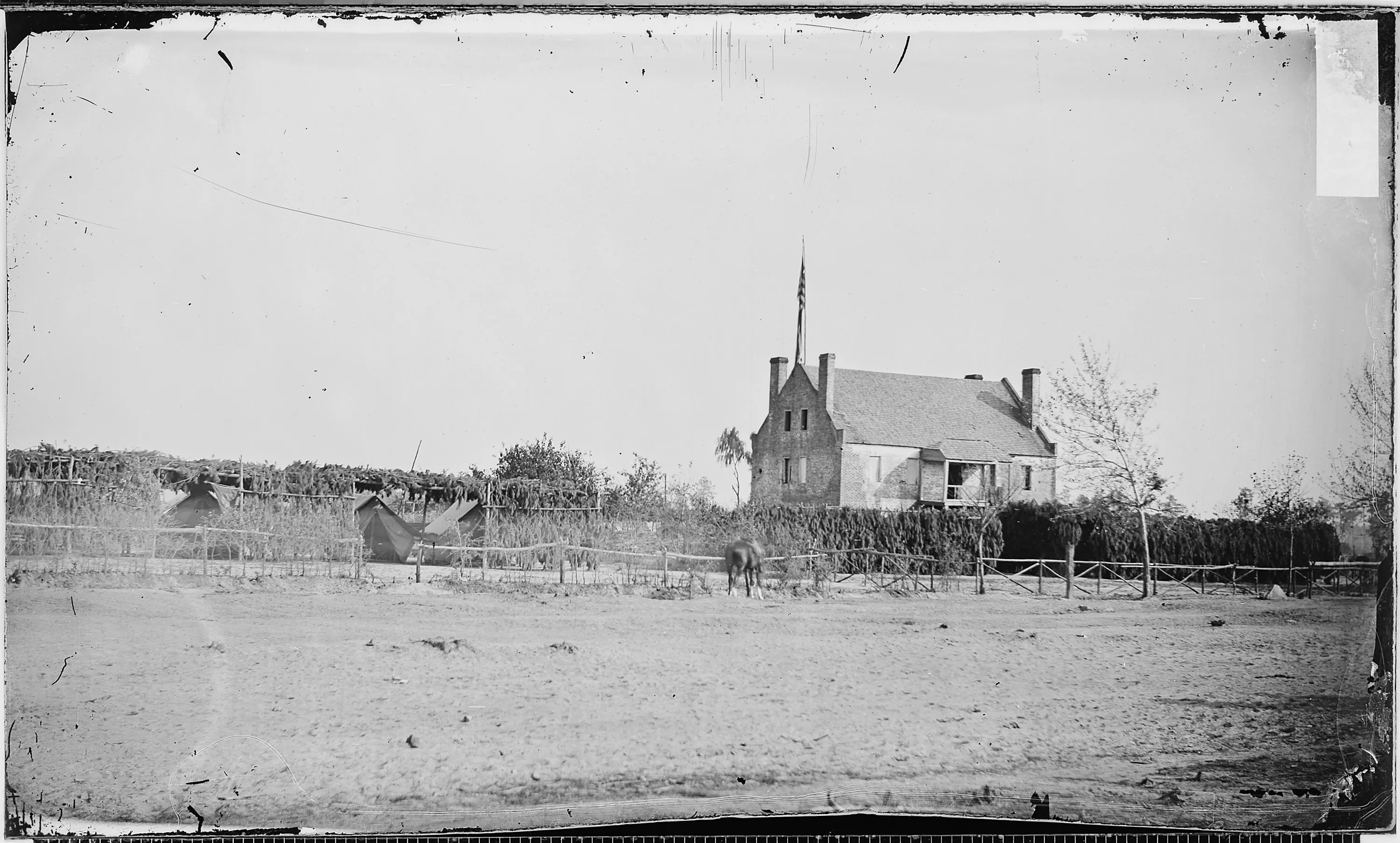
For three years, John White had been trying to get back to the colony he governed on Roanoke Island, delayed first by shortages, then by the Spanish Armada, then by ships that failed him. On August 18, 1590, the anniversary of granddaughter Virginia Dare's birth, he finally landed and found the settlement gone, the houses dismantled, his belongings ruined, rain and rust having done the rest. The only clues were letters carved into a tree and the word CROATOAN cut into a post. Bad weather and the loss of three anchors then forced him to abandon the search.
Roanoke was the first English attempt at a permanent colony in what became the United States, and its disappearance became the country's founding mystery. The unanswered question of what happened to the settlers made Roanoke, not Jamestown or Plymouth, the first story Americans told about colonization's fragility.
Did you know
QWho was the navigator that stranded the Roanoke colonists on the island in the first place?
Simon Fernandes, a Portuguese navigator hired to guide the 1587 expedition, made the call that put the colonists on Roanoke instead of their intended destination. The colony's charter and plans actually pointed toward the Chesapeake Bay, a location the settlers believed offered better land and safer harbor. Fernandes, reportedly eager to get his ships free for a privateering run against Spanish shipping, refused to carry the colonists any farther and forced them ashore at Roanoke instead. That single decision by a hired ship's pilot put John White's daughter, granddaughter, and roughly ninety other settlers on the exact spot where they would later vanish.
QWhat was Virginia Dare's place in Roanoke's short colonial record?
Virginia Dare, born August 18, 1587, holds the distinction of being the first English child born on American soil, arriving just weeks after her parents landed as part of the roughly 115 colonists John White brought to Roanoke that year. Her birth was recorded precisely in the colony's documents, giving historians one of the only firm dates tied to the settlement's brief existence. She was White's granddaughter, meaning White returned in 1590 hoping to find not just a colony but his own family intact. No baptismal, burial, or any other record of her after infancy has ever surfaced in English archives.
QHow large was the 1587 Roanoke expedition that White was trying to get back to?
White's 1587 voyage carried White's 1587 voyage carried a total of roughly ninety colonists, including seventeen women and eleven children among the households, a mixed group intended to form a self-sustaining settlement rather than a military outpost, which is why the food shortage that sent White back to England grew urgent so quickly. Feeding families, not just soldiers, strained supplies faster than Raleigh's backers had planned for. That population, entire households rather than garrisons, is what makes the 1590 discovery of an empty site with no bodies, no wreckage, and no graves so unusual, since a settlement of that size leaving behind no bodies, no wreckage, and no graves has no other clear parallel in the colonial record.
1877science
Hall finds a second Martian moon, tucked in close to the planet
Mars was making its closest approach to Earth in years, and Asaph Hall had spent weeks at the US Naval Observatory searching for moons no one had ever confirmed. On August 18, 1877, working with the observatory's 26-inch refractor, the largest in the world, Hall pinned down the inner moon after nights of clouds and poor visibility, with the confirming observations spanning what contemporary sources record as both August 17 and August 18 under differing date conventions. He recorded it plainly in his notebook: the observations of the 17th and 18th put the discovery "beyond doubt." Admiral Rodgers announced it publicly soon after.
US Naval Observatory, Washington, D.C.Story page →
The discovery happened on American government equipment, at the US Naval Observatory, using the largest refracting telescope on Earth at the time, at a time when European observatories held most of the field's prestige. Hall's find gave the young Naval Observatory international standing, proof that an American telescope could out-discover Europe's.
Did you know
QWhy do two different dates, August 17 and August 18, both show up for the same discovery?
Astronomers of Hall's era didn't start the calendar day at midnight. Until 1925, the professional convention began the astronomical day at noon, so a discovery made in the small hours of what civilians called August 18 was logged as occurring on August 17. Under that old system, contemporary sources timestamp the find precisely: 16:06 Washington mean time on August 17. Hall's own notebook entry, written in ordinary civil dates, says the confirming observations spanned the 17th and 18th. Both dates describe the same observation, recorded under two different clock conventions, one of which astronomy abandoned in 1925.
QWhat did Hall tell his assistant before he was sure of what he'd found?
On August 16, two days before confirming Phobos, Hall pulled aside his assistant George Anderson and told him he thought he might be onto something, but he asked Anderson to keep it quiet. Hall wasn't ready to stake his reputation on a smudge of light that bad weather might yet explain away. It's a small detail in an otherwise technical notebook: Hall confided in one colleague before he was ready to tell anyone else.
QHow long did Hall wait to tell anyone besides his wife what he suspected?
Hall had Deimos in hand on August 12, but he did not show his measurements to another astronomer until August 17, five days later, when he brought them to Professor Newcomb specifically to prove the object was tracking with Mars rather than sitting still as a fixed star. That gap between discovery and outside confirmation meant Hall spent nearly a week verifying his own numbers alone at the eyepiece before seeking a second opinion. Only after Newcomb reviewed the measures, and further observations on the 17th and 18th removed any doubt, did Admiral Rodgers step in to make the find public.