Reading 3 of 7 free1776 Club · all 7 storiesThursday, August 20
From the desk
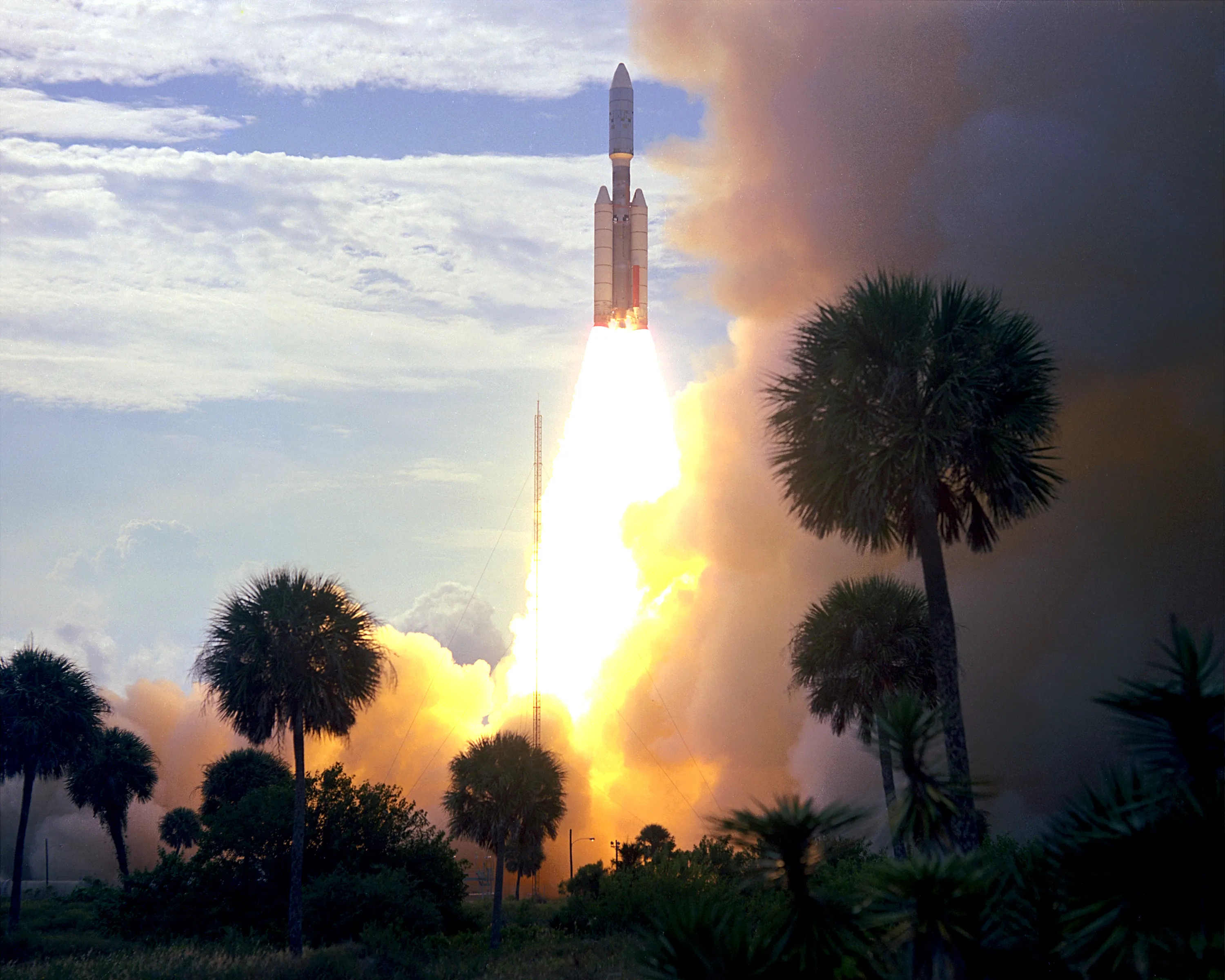
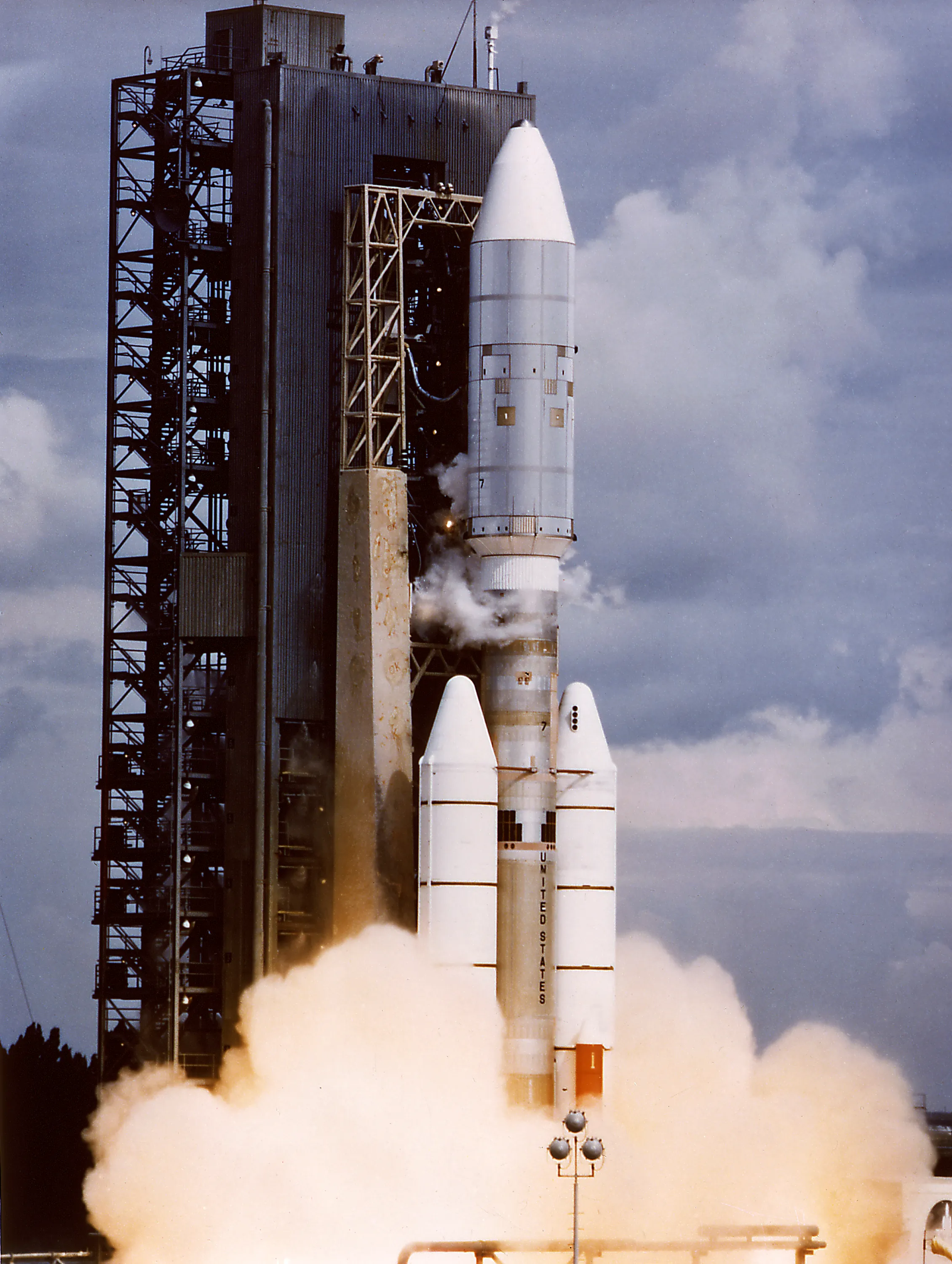
Start with 1948: a schoolteacher's jump from a New York consulate window turned into a diplomatic gunfight, and by August 20 Washington threw out Soviet Consul Jacob Lomakin himself, with Truman's personal sign-off. Moscow answered by closing two consulates. Worth a longer look: 1998, when American cruise missiles leveled the Al-Shifa plant in Khartoum on intelligence about nerve gas, destroying a factory that also made the country's antibiotics. Space buffs get a bonus this date: both Viking 1 and Voyager 2 left Earth on August 20, six years apart, aimed at Mars and the outer planets.
— The Patriot Compass desk
1948Featured · This day in history
Washington expels the Soviet consul who wouldn't produce Oksana Kasenkina
By August 1948, a Soviet schoolteacher's leap from a New York consulate window had become a front-page standoff between Washington and Moscow. On August 20, the State Department declared Consul General Jacob M. Lomakin persona non grata. President Harry Truman approved the move himself. Moscow answered within days by shuttering its consulates in New York and San Francisco.
Truman's decision to expel Lomakin over a State Department objection, rather than let quiet diplomacy handle it, showed an administration willing to spend real leverage on a moral stand at the height of the Berlin crisis. The cost was steep and specifically American: Moscow broke off Berlin Blockade talks, and analyst Ellis Zacharias estimated the resulting airlift delay cost the United States millions of dollars. Consular relations with the USSR would not resume until 1972.
Did you know
QWhat exactly did Kasenkina write in the note that started the whole crisis?
Her smuggled letter to Lomakin, handed over on August 6, 1948, was described by those who read it as muddled and disjointed, the words of someone unraveling. She wrote, "I implore you, I implore you, don't let me perish here. I have lost my will-power." Lomakin used the letter at his press conference days later as proof Kasenkina wanted to return to Soviet custody, not evidence she was in danger. Its ambiguous, desperate tone let both sides read it the way they needed to, which is part of why the case exploded into a diplomatic standoff instead of resolving quietly.
QWho physically tried to stop Lomakin from driving away with Kasenkina, and how did that go?
When Lomakin arrived at Reed Farm on August 7, 1948, to collect Kasenkina, a group of men at the Tolstoy Foundation property tried to physically block his car from leaving. It was Countess Alexandra Tolstoy, the estate's owner, who intervened and called them off, telling the men Kasenkina had decided to leave with the Consul on her own free will. Her intervention meant Kasenkina departed without a public tug-of-war at the farm itself. The real fight over whether that departure was voluntary would erupt five days later, in far starker terms, when Kasenkina went out a third-floor window instead of walking out a consulate door.
QWhy did a New York state judge, not a federal one, order Lomakin to produce Kasenkina?
The order came from New York State Supreme Court Justice Samuel Dickstein, who on August 12, 1948, approved a habeas corpus writ compelling Lomakin to bring Kasenkina before the court. Dickstein was an unusual choice for the moment: he had spent years in Congress chairing hearings on un-American activities before joining the bench, making him a pointed choice to test Soviet compliance with American law. Lomakin refused the writ outright, telling authorities Kasenkina was too sick to appear. Hours later that same day, she fell from the consulate's third-floor window.
The Daily Record · free by email
Tomorrow's edition in your inbox — one story, one quote, the flag.
2020government
Biden accepts the nomination alone in a Delaware ballroom, no crowd, no roar
For four nights, the Democratic National Convention had run scattered across the country instead of packed into one arena. On August 20, 2020, Joe Biden delivered his acceptance speech from the Chase Center on the Riverfront in Wilmington, Delaware, two nights after delegates had formally nominated him. Kamala Harris joined him there as his running mate. There was no hall to fill, no balloon drop, just a nominee talking into a camera during a pandemic that had already forced the convention out of its arena.
Chase Center on the Riverfront, Wilmington, DelawareStory page →
The American Throughline
The empty-room acceptance speech became a model both parties later drew on when running events during the pandemic. Biden's Wilmington address, rather than a stadium speech, set the template both parties would study for pandemic-era campaigning.
Did you know
QWho actually directed the roll call and produced the broadcast that viewers watched?
The production itself was run by a small named team working out of the Wisconsin Center: Ricky Kirshner produced the convention and Glenn Weiss directed it, while Bennie Thompson served as the convention's permanent chair overseeing proceedings. Jason Rae, secretary of both the convention and the Democratic National Committee, helped anchor the roll call from that Milwaukee hub even though almost no delegates were physically present. The entire broadcast was run like a television production, with a skeleton crew standing in for what would normally be thousands of credentialed staff and press.
QWhat was the original venue supposed to be before the pandemic forced a downgrade?
Democrats had originally booked the Fiserv Forum, Milwaukee's NBA arena and home of the Bucks, for a full-scale convention scheduled July 13 to 16, 2020. That plan assumed a normal arena convention with delegates filling the seats and a traditional roll call on the floor. The pandemic pushed the entire event back by more than a month, to August 17 through 20, and shifted the physical hub down to the much smaller Wisconsin Center, a convention center rather than a sports arena, before the footprint shrank again to almost nothing.
QWhat official security classification did this scaled-down convention still carry?
Despite the dramatic downsizing, the convention retained its designation as a National Special Security Event, the same category used for events like presidential inaugurations and the Super Bowl, which normally triggers Secret Service coordination and a massive security perimeter. Because the physical gathering had shrunk so far, from an expected influx of thousands to a hub capped at 250 people, the actual security footprint on the ground bore almost no resemblance to what that designation typically demands. It was a federal classification built for a crowd that never showed up.
1998military
Thirteen Tomahawks hit a Khartoum medicine factory; Washington says it made nerve gas
Thirteen days after truck bombs killed 224 people at U.S. embassies in Nairobi and Dar es Salaam, American warships fired. On the evening of August 20, 1998, the USS Briscoe and USS Hayler fired thirteen Tomahawk missiles from the Red Sea at the Al-Shifa pharmaceutical plant in Khartoum North, Sudan. President Clinton ordered the strike on intelligence linking the factory to VX nerve agent precursors and to Osama bin Laden. One worker died and eleven were wounded; the four-building complex made antibiotics and antimalarial drugs for the country. It was destroyed.
Al-Shifa became the go-to example of a unilateral strike ordered on a single, unverified piece of intelligence. The single soil sample behind the VX claim was never independently verified, as the U.S. blocked outside laboratory analysis of it, and the episode became a touchstone for critics who later challenged the Iraq weapons intelligence in 2002 and 2003.
Did you know
QWhose old address did the Al-Shifa plant's general manager happen to live at?
The factory's general manager, Osman Sylayman, lived in a house that had previously belonged to Osama bin Laden. Bin Laden had spent years in Sudan running businesses before Khartoum expelled him in 1996 under U.S. and Saudi pressure. American analysts pointed to this kind of overlapping ownership and personnel as part of the circumstantial web tying Al-Shifa to bin Laden's network. Critics countered that bin Laden had once been a prominent, legal investor in Sudan's economy, so brushing against his old properties or associates was common and proved nothing on its own. The coincidence never appeared in any released U.S. intelligence report as direct evidence; reporters later surfaced it while questioning the case for the strike.
QWhat business deal linked the bombed factory to Saddam Hussein's Iraq?
Al-Shifa held a $199,000 contract to supply veterinary medicine to Iraq, arranged through the United Nations' Oil-for-Food Programme. The program let Iraq sell oil under UN supervision to buy humanitarian goods like medicine and food despite sanctions imposed after the Gulf War. U.S. officials cited alleged contacts between the factory and Iraqi chemical weapons experts as part of their case against the plant, and the Oil-for-Food contract fit that narrative of foreign entanglement. But a veterinary medicine order of under $200,000, routed through a UN-monitored humanitarian channel, was a modest and heavily documented transaction.
QWhich British government policy quietly punished Sudan after the strike?
Britain publicly backed the U.S. missile strike, but its own aid agencies then refused to resupply chloroquine, the standard malaria drug, to Sudan on an emergency basis. Officials said Sudan needed to rebuild its own pharmaceutical production first before Britain would step in with relief shipments. Al-Shifa had been the country's principal domestic source of both anti-malaria and veterinary drugs, so the gap between destroying that supply and withholding emergency replacement fell hardest on Sudanese patients. The policy drew little attention compared to the missile strike itself, but it extended the medicine shortage in a country where malaria was already a leading killer.