Reading 3 of 8 free1776 Club · all 8 storiesFriday, August 21
From the desk
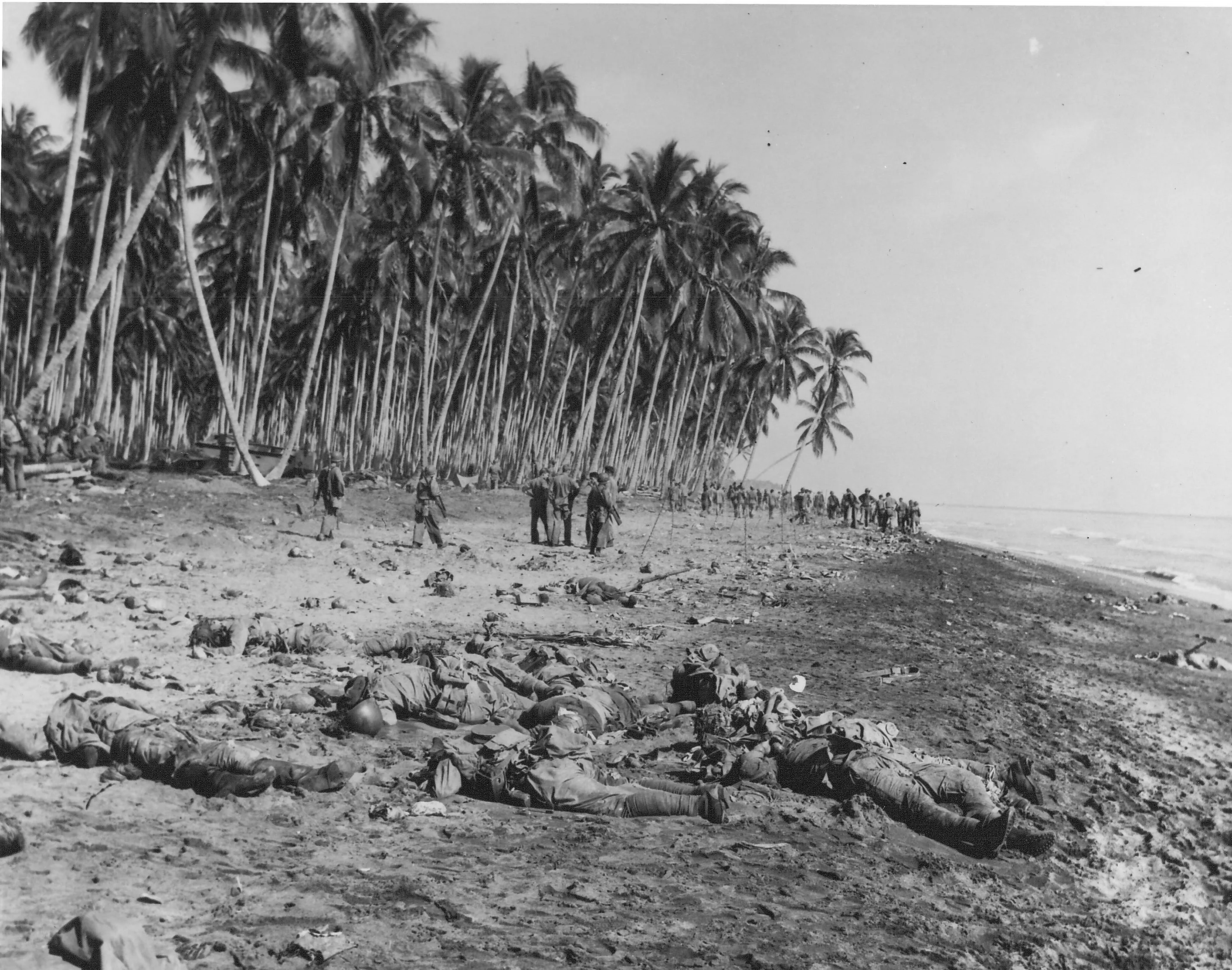
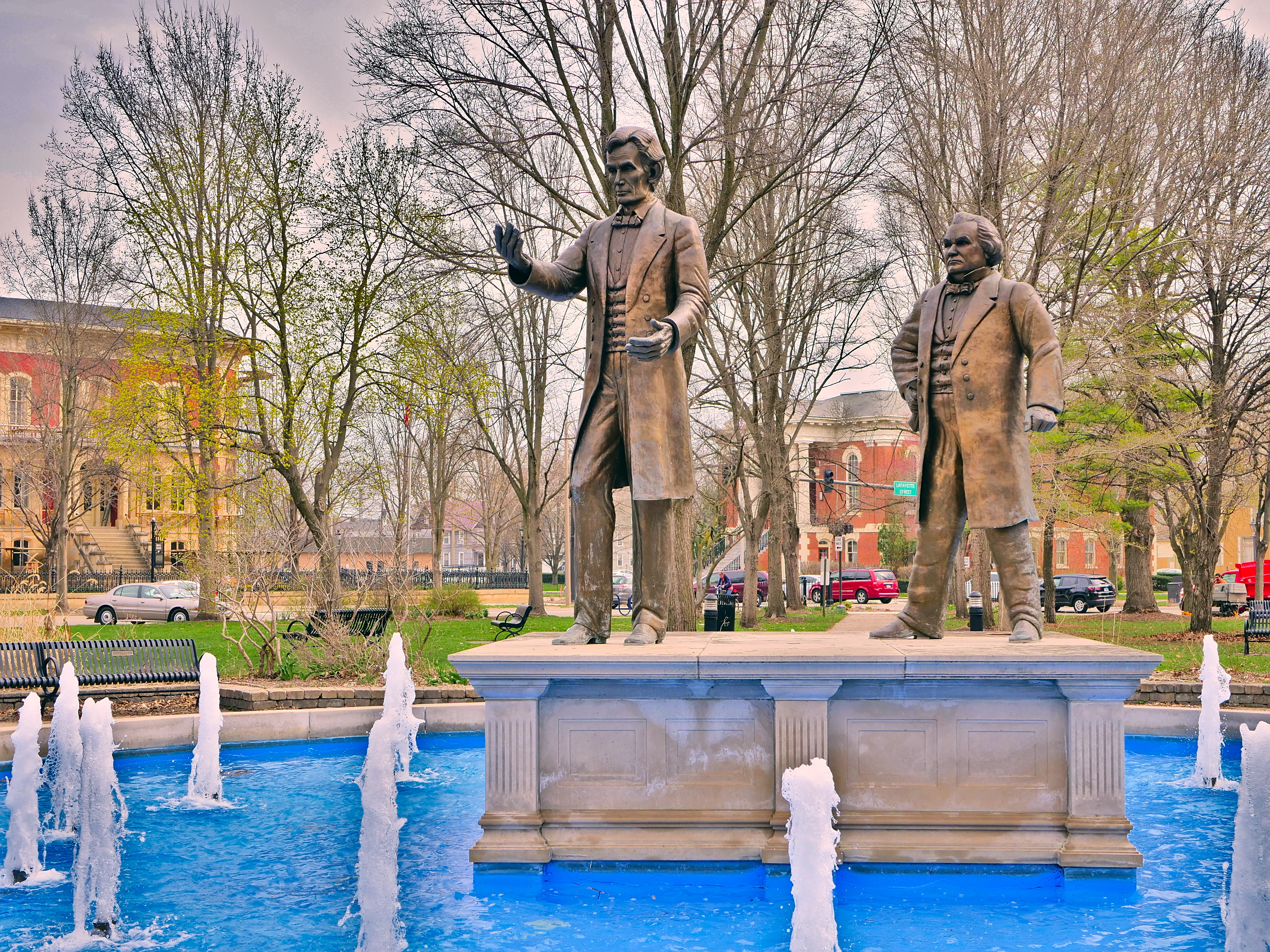
Start with 1959: after forty years of stalled bills and a ballot question, Hawaii's voters answered "yes" at 94 percent, and Eisenhower's signature on August 21 made it the 50th state. Worth a longer look: 1858 in Ottawa, Illinois, where 12,000 people stood in the heat for the first Lincoln-Douglas debate, and runners carried the stenographers' notes straight to the trains so the country could read it by nightfall. Also worth a glance: Guadalcanal, 1942, where Ichiki's regiment charged a sandbar expecting an easy win and lost 800 of 917 men by dark.
— The Patriot Compass desk
1959Featured · This day in history
Eisenhower signs the proclamation: Hawaii is now the 50th state
Forty years after Prince Jonah Kūhiō Kalanianaʻole first introduced a statehood bill in Congress, the question finally reached Hawaii's own voters. They answered the ballot question, "Shall Hawaii immediately be admitted into the Union as a state?", with 94 percent in favor. On August 21, 1959, President Dwight D. Eisenhower signed the proclamation making it official. The islands became the 50th state, and the anniversary is now marked each year as Statehood Day.
Hawaii's admission forced the flag itself to change, adding a 50th star to a field that had held 49 for less than a year. It also settled, after four decades of stalled bills, whether a Pacific territory annexed in 1898 belonged inside the Union rather than outside it. The vote (94 percent yes) remains one of the most lopsided statehood referendums in American history.
Did you know
QHow many times did Hawaii statehood bills die in Congress before one finally passed?
Congress saw Hawaii statehood bills come and go for four decades before the Hawaii Admission Act cleared in 1959. Prince Jonah Kūhiō Kalanianaʻole introduced the first one in 1919, and it stalled. Lawmakers tried again in 1935, again in 1947, and again in 1950, and each attempt failed to reach the finish line. It took roughly forty years and four failed legislative pushes before the fifth attempt, the 1959 Admission Act, finally succeeded. Few states have had to wait through that many failed bills before Congress said yes.
QWho introduced the very first Hawaii statehood bill, and what was his role?
The first push came from Prince Jonah Kūhiō Kalanianaʻole, a member of the Hawaiian royal line who served as the territory's delegate to the U.S. Congress. In 1919, decades before statehood was seriously considered by most of Washington, he introduced the first bill proposing Hawaii join the Union. He would not live to see it succeed, since admission did not arrive until 1959, four decades and several failed bills later. His name is still attached to the holiday Hawaii observes each March, Prince Kūhiō Day, distinct from the August Statehood Day that marks Eisenhower's proclamation.
QWhat changed on the American flag within a year of Hawaii joining the Union?
The flag gained a 50th star, but that star sat on a field that had only just been redesigned for Alaska's admission seven months earlier. Alaska became the 49th state in January 1959, forcing a new 49-star flag, which then had to be redrawn again by August for Hawaii's addition, an unusually rapid double revision in the flag's history. The back-to-back changes meant the 49-star flag holds the record for the shortest-lived official U.S. flag design, in official use for less than a year before the 50-star version replaced it and has remained unchanged ever since.
The Daily Record · free by email
Tomorrow's edition in your inbox — one story, one quote, the flag.
1968military
Marine Corps' first Black Medal of Honor recipient is honored in Washington
By the summer of 1968, the war in Vietnam had already produced its share of Medal of Honor citations, but none yet for a Black Marine. On August 21, 1968, at Marine Barracks Washington, Secretary of the Navy Paul R. Ignatius presented the Medal of Honor to the parents of Private First Class James Anderson Jr., killed the previous year in Quang Tri Province. Anderson had covered a live grenade with his body to shield the men beside him. The ceremony made him the first African American Marine to receive the nation's highest military honor.
Anderson's medal arrived as the Marine Corps, and the country, were still working out what integration meant in practice rather than policy. President Johnson had signed the citation himself, and its 1968 presentation, amid a year of civil rights upheaval at home, made Anderson's sacrifice a marker the Corps pointed to for a generation of Black recruits who followed him.
Did you know
QHow much combat time had Anderson actually logged before the ambush that killed him?
Anderson arrived in Vietnam in December 1966 and was killed February 28, 1967, meaning his entire combat tour lasted barely two and a half months. He landed as a rifleman with Company F, 2nd Battalion, 3rd Marines, 3rd Marine Division, and was thrown almost immediately into Operation Prairie II, a sweep through Quang Tri Province meant to root out North Vietnamese forces near the Cam Lo Combat Base. There was no long buildup, no seasoning period. A man who had been sitting in junior college classes in Los Angeles less than a year earlier was in a firefight within weeks of stepping off the transport. The compressed timeline underscores how little separated his civilian life from the moment that ended it.
QWhat specific unit hierarchy did Anderson belong to within the Marine Corps' Vietnam deployment?
Anderson's chain of command ran through Company F, 2nd Battalion, 3rd Marines, itself part of the larger 3rd Marine Division, one of the primary Marine formations operating in the northern reaches of South Vietnam near the demilitarized zone. That division carried much of the Corps' fighting load in Quang Tri Province throughout 1966 and 1967, an area thick with North Vietnamese regulars moving south. Company F was a rifle company, meaning Anderson's daily work was direct ground combat rather than support or logistics. The layered designation, company within battalion within division, was standard Marine organization, but it places Anderson's single act squarely within one of the war's most heavily contested provinces.
QHow old was Anderson relative to typical Marine enlistees when he signed up in 1966?
Anderson enlisted on February 17, 1966, at nineteen years old, having been born January 22, 1947, and after already completing a year and a half of coursework at Los Angeles Harbor Junior College. That put him slightly older than the average boot camp recruit, many of whom enlisted straight out of high school at seventeen or eighteen. He was also weighing a different path entirely, preparing for ministry at Belmont Baptist Church, before choosing the Corps instead. The decision meant setting aside coursework and a pulpit track for San Diego recruit training. One of seven siblings in his family, he was the one who traded a classroom seat for a rifle.
1944government
Delegates gather at a Georgetown estate to sketch the peace that follows the war
World War II still had a year to run, but Washington was already planning what came after it. On August 21, 1944, American, British, and Soviet delegates convened at the Dumbarton Oaks estate in Georgetown, where Secretary of State Cordell Hull delivered the opening address. Under-Secretary Edward Stettinius Jr. chaired the sessions, tasked with turning the Allies' 1943 promise of a postwar organization into an actual structure. China would join a separate phase later, since Moscow refused to sit across the table from Chinese representatives.
Dumbarton Oaks, Washington, District of ColumbiaStory page →
The United States wasn't hosting a foreign conference, it was authoring the postwar order on its own soil. Stettinius's proposals became the skeleton of the UN Charter finalized the next year in San Francisco, and Rockefeller's back-channel insistence on a self-defense clause later became the legal footing for NATO, a debt John Foster Dulles admitted to him personally.
Did you know
QWhat did American intelligence officers actually think of their own secret surveillance work at Dumbarton Oaks?
A U.S. military intelligence report on the conference noted with satisfaction that "pressure of work has at last abated and the 24-hour day has shortened," adding that "the feeling in the Branch is that the success of the Conference may owe a great deal to its contribution." That contribution was round-the-clock monitoring of cable traffic between foreign delegations and their home governments, paired with FBI agents tracking where delegates went and whom they met. The report reads almost like an internal performance review, officers congratulating themselves on a surveillance operation the visiting British and Soviet diplomats never knew was running under their hotel rooms and embassy lines the entire six weeks.
QHow did Stettinius entertain foreign delegates when the negotiating sessions ended for the day?
Stettinius personally escorted British and Soviet negotiators to the Diamond Horseshoe nightclub and arranged cocktails with Nelson Rockefeller, while free Hollywood movies screened daily for the delegations. At his own residence, Horseshoe, he hosted parties with a buffet supper and entertainment by a Black quartet singing spirituals. The socializing was not incidental; it ran parallel to six weeks of hard bargaining over Security Council structure and served as the informal channel where American hosts could read foreign counterparts outside the conference room. Diplomacy by day, nightclub tables and screening rooms by night, with the chair of the entire conference personally arranging both.
QWhy did the five permanent Security Council seats nearly exclude France and include Brazil instead?
The final lineup of permanent seats, the US, USSR, UK, France, and China, was not a foregone conclusion. The Soviet delegation initially opposed French membership on the council before dropping its objection, while a separate American push to seat Brazil as a sixth permanent member was rejected outright by the other delegations. Brazil had entered the war on the Allied side and Washington apparently saw a case for elevating it, but no other power agreed. The council that emerged from Dumbarton Oaks and San Francisco was smaller and more Eurocentric than at least one American proposal on the table.