Reading 3 of 6 free1776 Club · all 6 storiesSaturday, August 22
From the desk
Start with 1777, at Fort Stanwix. St. Leger had ringed the fort for three weeks, threatening massacre, then broke camp on August 22 and fled, spooked by a rumor of 3,000 men under Benedict Arnold; he left his tents standing and arrived too late to save Burgoyne at Saratoga. Worth a longer look: 1963, when Joe Walker rode the X-15 to 354,200 feet, weightless for minutes before gliding home, a mark no spaceplane matched until Columbia. Also here: Henry Ford's failed factory, rebuilt that same week in 1902 into Cadillac.
— The Patriot Compass desk
1777Featured · This day in history
St. Leger's camp breaks and runs; Fort Stanwix's siege is over
For three weeks (August 2–22, 1777), British Brigadier General Barry St. Leger's mixed force of regulars, Loyalists, and Indigenous warriors had ringed Fort Stanwix in the Mohawk Valley, demanding Colonel Peter Gansevoort surrender or face massacre. On August 22, 1777, St. Leger broke camp and withdrew instead, convinced by a planted rumor that Major General Benedict Arnold was closing in with 3,000 men. He left behind tents and supplies as his Indigenous allies deserted. St. Leger retreated toward Oswego, arriving too late to help John Burgoyne, whose army surrendered at Saratoga that October.
Fort Stanwix's stubborn defense, and Arnold's bluff that broke the siege, denied Burgoyne the reinforcements he needed at Saratoga, and that defeat helped convince France to back the American cause. Historians have long debated how differently the war might have gone without that alliance. A rumor spread by a prisoner in the Mohawk Valley helped bring a European power into an American revolution.
Did you know
QWhat was Fort Stanwix's role in Burgoyne's larger campaign before the siege even began?
St. Leger's operation was never meant to stand alone. It was one prong of John Burgoyne's plan to seize control of the Hudson River Valley and cut New England off from the rest of the rebelling colonies, with St. Leger's column sweeping east through the Mohawk Valley to link up with Burgoyne's main force moving south from Canada. The Fort Stanwix siege was designed as a diversion and a supply route, not a decisive battle in itself. St. Leger's mixed command of British regulars, Loyalists, and Indigenous warriors was expected to clear the valley quickly. Instead it stalled for three weeks against a garrison it was supposed to brush aside on the way to a rendezvous that never happened.
QWhat actually happened to Hon Yost Schuyler after he spread Arnold's rumor and slipped free?
Hon Yost Schuyler was not the only prisoner who mattered that week. He was one of several men captured or deserting from St. Leger's camp around the same time, and his release under Arnold's bargain was part of a broader collapse of discipline inside the British lines. Some of St. Leger's men chose to desert on their own, others were captured outright by Gansevoort's garrison, adding to the sense among St. Leger's remaining troops that the siege was falling apart from the inside before the rumor of Arnold's 3,000 men ever forced the final decision to withdraw. Schuyler walked out a free man, and St. Leger's army began falling apart within days.
QHow much equipment did St. Leger actually leave behind when he broke camp on August 22?
St. Leger's retreat was fast enough that his men could not organize an orderly withdrawal. He left behind a sizable quantity of tents, supplies, and equipment his troops simply had no time to pack once the order came to move. Combined with the losses his Indigenous and Loyalist allies had already suffered when Gansevoort's garrison raided their camps after Oriskany, the abandoned material left St. Leger's force stripped of much of what it needed to operate effectively in the field. By the time he reached Oswego, he had far less equipment and far fewer willing troops than when the siege began.
The Daily Record · free by email
Tomorrow's edition in your inbox — one story, one quote, the flag.
1902innovation
Ford's abandoned factory gets a new name: Cadillac
Five months earlier, Henry Ford had walked out on the company that bore his name, leaving investors William Murphy and Lemuel Bowen with an empty factory on Cass Street. They called in engineer Henry M. Leland to appraise the plant for liquidation. On August 22, 1902, Murphy and Bowen instead reorganized the firm as the Cadillac Automobile Company, betting on Leland's single-cylinder engine design rather than closing the doors. The first cars rolled out of the same building two months later.
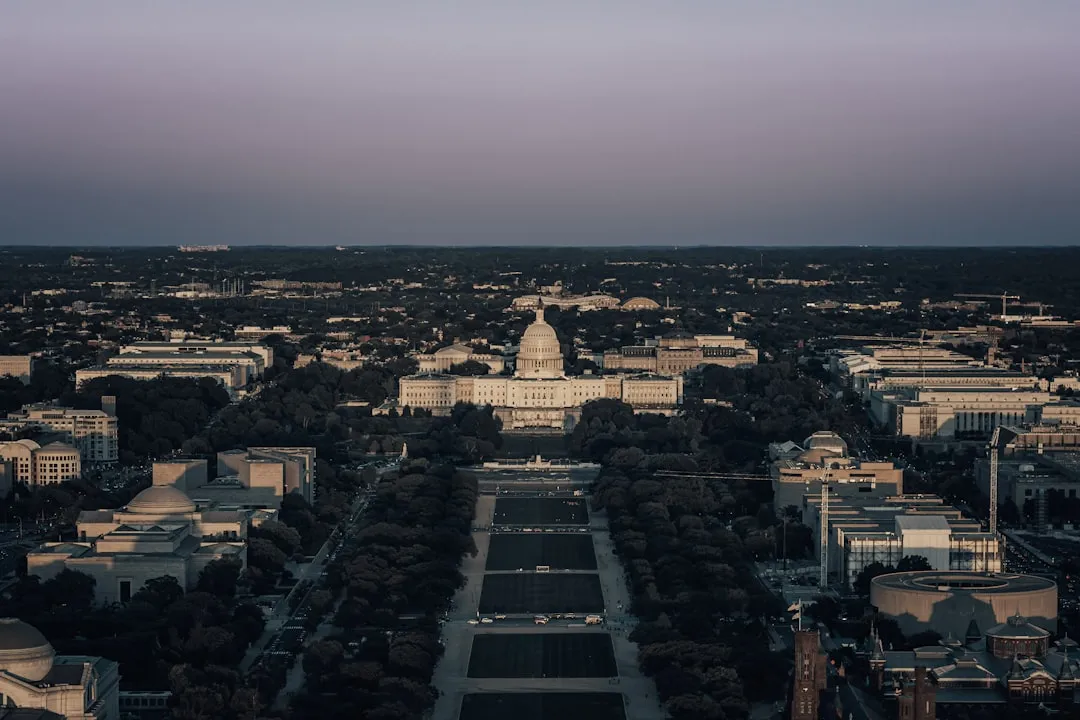
Cass Street and Amsterdam Avenue, Detroit, MichiganStory page →
The American Throughline
Cadillac's founding set the template for Detroit's rise as the American automotive capital: a failed venture salvaged not by new capital but by an engineer's insistence on precision manufacturing. That obsession with interchangeable parts became Cadillac's reputation, and Cadillac's 1909 absorption into General Motors made it the anchor of GM's luxury line for the next century of American car culture.
Did you know
QWhat British award did Cadillac win by literally taking its cars apart in front of judges?
In 1908, Cadillac entered a reliability test staged by the Royal Automobile Club of the United Kingdom in which three Cadillacs were disassembled, their parts shuffled together, and then reassembled using only random components pulled from the pile. The cars ran afterward as if nothing had happened, proving Leland's interchangeable-parts manufacturing actually worked at scale. The feat won Cadillac the Dewar Trophy, the first American car to receive it, and gave the company the slogan it would use for decades afterward: Standard of the World. Cadillac won the Dewar Trophy a second time in 1912 for building electric starting and lighting into a production automobile, a first in the industry.
QWhy did Cadillac's sales drop 84 percent between 1928 and 1933?
The Great Depression crushed the luxury car market harder than the industry overall, and Cadillac's annual sales fell from tens of thousands of cars to just 6,736 vehicles by 1933. Compounding the collapse was a company policy discouraging sales to African American customers. Nick Dreystadt, the mechanic who headed Cadillac's national service operation, argued to a committee weighing whether to shut the brand down entirely that ending the policy could save it. The committee agreed, sales jumped 70 percent in 1934 alone, and Dreystadt was promoted to run the whole Cadillac Division. By 1940 sales had risen tenfold over the 1934 mark.
QWhat screw design did a Cadillac partnership help make standard on assembly lines nationwide?
In 1934, inventor Henry F. Phillips brought his new cross-head screw and screwdriver design to General Motors, and Cadillac's engineers were the ones he convinced. Cadillac became the first automaker to adopt Phillips-head hardware in 1937, betting that the self-centering screw would speed up assembly line work and cut labor costs. The bet paid off: by 1940 the Phillips screw had spread across the American automotive industry and well beyond it. A small fastener detail from a Detroit luxury car plant ended up reshaping how nearly every manufactured product on earth gets bolted together.
1963exploration
Walker rides the X-15 to 354,200 feet, becoming the first person to reach space twice
A month after becoming the first American to fly a winged craft above the Kármán line, Joseph A. Walker climbed back into the same X-15, plane number three, for one more try. On August 22, 1963, a B-52 dropped him over Smith Ranch Dry Lake, Nevada, and his rocket engine burned for 85 seconds, pushing him to 354,200 feet at 3,794 miles per hour. He spent up to five minutes weightless before gliding down to Rogers Dry Lake at Edwards Air Force Base, twelve minutes after launch. It was the highest any crewed spaceplane would fly until Columbia in 1981, and Walker's last flight in the program.
This was a joint NASA, Air Force, and Navy research program flying out of Edwards Air Force Base, and Walker's two trips above 100 kilometers made him the first human to reach space twice, on American hardware, without a rocket capsule or a Cape Canaveral launch pad. The altitude record he set stood as an American benchmark for spaceplane flight for eighteen years, until Columbia broke it in 1981.
Did you know
QWho actually flew the B-52 that carried Walker aloft that day?
The mothership was NB-52A serial number 003, piloted by Russell Bement with a crewman named Lewis aboard, and it dropped Walker over Smith Ranch Dry Lake at 17:09 UTC. Four chase pilots trailed the mission to track and photograph the flight: Wood, Dana, Gordon, and Rogers. Walker landed at 18:56 UTC, meaning the whole affair, from B-52 takeoff to X-15 touchdown, spanned roughly an hour and forty-seven minutes even though Walker's own time in the rocket plane was only about twelve minutes. The X-15 itself, ship number three with serial 56-6672, was making its 22nd flight of the program on this outing.
QHow much fuel did the X-15 burn between takeoff and landing?
The rocket plane weighed 15,195 kilograms fully fueled at launch but only 6,577 kilograms at burnout, meaning it consumed nearly 8,620 kilograms of propellant in just 85.8 seconds of engine burn. By the time it settled onto Rogers Dry Lake it weighed 6,260 kilograms, having shed a small amount more weight during the glide down. Over that same brief burn Walker's speed climbed to Mach 5.58, and the aircraft covered a total range of 543.4 kilometers from drop point to landing site. The math means the X-15 was burning fuel at a rate of roughly 100 kilograms per second during its powered climb.
QWhat newspapers were covering Black American life the same week Walker set his altitude record?
On August 29, 1963, exactly one week after Walker's flight, The Gary American in Gary, Indiana, published an edition covering news for its Black readership, with further issues following on September 13 and September 20. That same publishing cycle overlapped with the historic March on Washington, held August 28, 1963. Small regional papers like Connecticut's Newington Town Crier and the East Hartford Gazette were also running their own local coverage that autumn, a reminder that a single week in 1963 held both a rocket plane flying above the atmosphere and a nation working through civil rights on the ground below it.