Reading 3 of 7 free1776 Club · all 7 storiesWednesday, August 26
From the desk
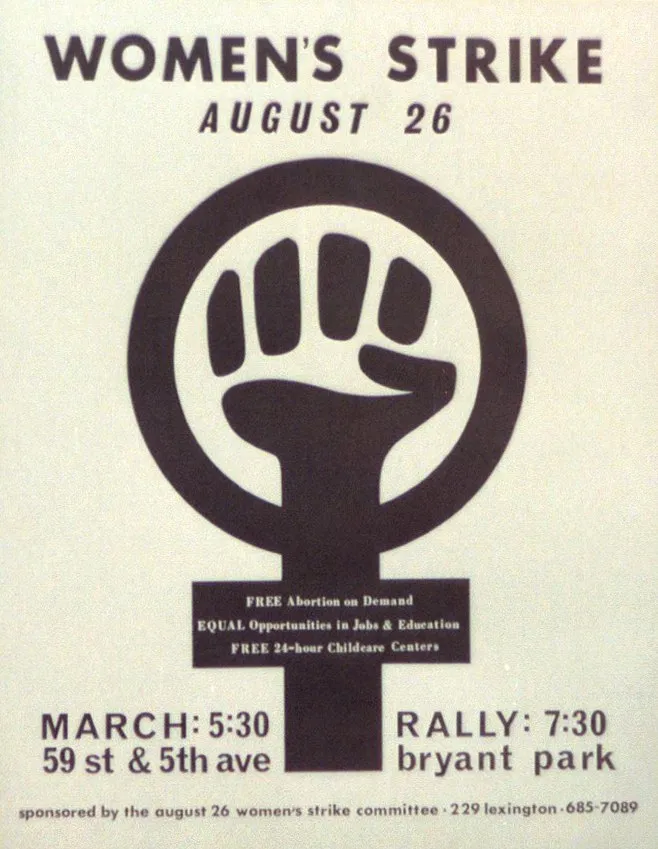
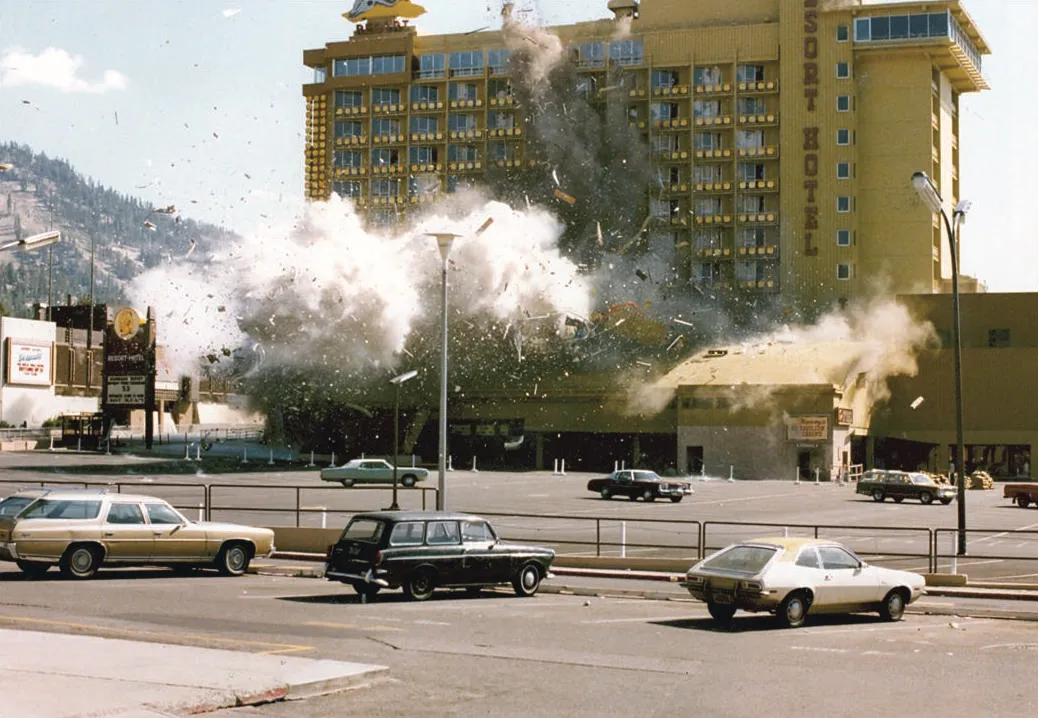
Start with 1920. The Nineteenth Amendment was already certain after Tennessee's ratification, but it was Bainbridge Colby's signature that morning, alone at his Washington residence, that made 26 million women voters before that November's election. Worth a longer look: 1970, when women marked the fiftieth anniversary by filling Fifth Avenue ten to twenty thousand strong, far more than police had planned for. For contrast, 1980's Harvey's Casino bomb makes a strange bookend, a device so complex the FBI said even its builder couldn't disarm it.
— The Patriot Compass desk
1920Featured · This day in history
Colby signs the paper: women's suffrage is now the law of the land
Eight days after Tennessee's ratification made the outcome certain, the Nineteenth Amendment still needed Colby's certification to become binding law. On the morning of August 26, 1920, Secretary of State Bainbridge Colby signed the certification at his Washington residence, Secretary of State Bainbridge Colby signed the certification at his Washington residence. The signature made the amendment part of the Constitution. The proclamation gave roughly 26 million American women the constitutional right to vote, just in time for that November's presidential election.
Colby's signature ended a fight that had run since Seneca Falls in 1848. It did not end the fight over who could actually cast a ballot. Black, Asian American, Hispanic American, and Native American women still faced state literacy tests and poll taxes for decades after 1920, and many were simply excluded outright. The amendment's promise and its limits both shaped the twentieth-century civil rights movement.
Did you know
QWhich state gave women the vote more than fifty years before the Nineteenth Amendment?
Wyoming Territory granted women full voting rights in 1869, five decades before the Nineteenth Amendment reached Colby's desk. Utah followed in 1870, though Congress revoked that right in 1887 as part of an anti-polygamy crackdown before Utah restored it in 1896. Colorado took a partial step in 1893, letting women vote in school board elections, while Idaho enfranchised women outright that same year, 1893. By the time federal suffrage arrived, Washington, California, Oregon, Arizona, Kansas, the Alaska Territory, Montana, and Nevada had already granted women the ballot on their own, making the West the proving ground for a right the rest of the country took two more generations to accept nationally.
QHow large had the mainstream suffrage movement grown by the middle of World War I?
By 1915 the National American Woman Suffrage Association had built 44 state chapters and counted more than two million members, a membership base larger than many state party organizations of the era. That membership base gave Carrie Chapman Catt the ground troops for her 'Winning Plan,' a coordinated push to secure ratification state by state while lobbying Congress simultaneously. The sheer size of the roster meant NAWSA could mobilize local pressure on individual legislators in dozens of states at once, rather than relying solely on national marches or Washington lobbying. That membership also supplied campaign volunteers, letter writers, and precinct organizers for the ratification fight in its final years.
QWhat phrase did suffragists use for the women who picketed the White House gates for years?
Alice Paul's National Woman's Party called their White House picketers the 'Silent Sentinels,' a name meant to emphasize disciplined, wordless protest rather than shouted demands. The Sentinels held banners at the gates for months, supplementing marches and demonstrations with hunger strikes when arrested picketers were jailed. Nannie Helen Burroughs, arguing for the vote's practical value, put the stakes bluntly by asking 'What can she do without it?' The question captured why organizers treated silent, sustained presence outside the president's residence as a legitimate weapon: visibility without confrontation, sustained long enough that Wilson could not simply wait out the protest.
The Daily Record · free by email
Tomorrow's edition in your inbox — one story, one quote, the flag.
1791innovation
Fitch gets his patent, but so does everyone else claiming the steamboat
By 1791, John Fitch had already put a working steamboat on the Delaware River and run a paying passenger route to Burlington, New Jersey, but he still had no legal claim to the idea. On August 26, 1791, the newly formed federal Patent Commission granted Fitch a United States patent for his steamboat design. The same commission issued patents to three other men, including his bitter rival James Rumsey, on that same day. The paper gave Fitch no monopoly, and no real advantage.
This was the young Patent Act of 1790 tested for the first time by rival inventors chasing the same idea, and the commission dodged the fight by rewarding everyone. The unresolved question of who actually owned steam navigation was not settled by patents at all. Robert Fulton found the investors that Fitch never could, about two decades later.
Did you know
QHow long had Fitch been chasing this idea before he got his patent?
Fitch had been sketching and building steamboat designs since at least 1785, six full years before the government finally granted him a patent in 1791. During that stretch he built a working vessel, demonstrated it publicly, and even ran a real commercial passenger route, all without any legal protection for the idea he was pouring his life into. The patent, when it finally came, arrived after most of the hard engineering work was already behind him, not at the start of it.
Instead of a paddlewheel or screw propeller, Fitch's engine drove a bank of stern-mounted oars that stroked through the water in imitation of a swimming duck's feet. The mechanism resembled a duck's feet stroking through the water and predated the paddlewheel design that later became standard. The mechanism worked well enough to move 30 passengers reliably, but it never became the industry template that later steamboat builders adopted.
QWhy didn't the shared 1791 patent settle the Fitch-Rumsey dispute?
The Patent Commission's decision to hand out patents to four competing inventors, Fitch, Rumsey, Nathan Read, and John Stevens, on the same day meant none of them held exclusive rights to steamboat technology. Without a monopoly to offer, Fitch could not convince investors his venture was worth backing over anyone else's. The 1790 Patent Act, only a year old at the time, had no clear mechanism for ranking competing claims to the same invention, and this case showed that gap.
1968civil-rights
Democrats open in Chicago; protesters scale a Civil War statue in Grant Park
Chicago had spent weeks preparing for trouble: 23,000 police and National Guardsmen on alert, nearly every protest permit denied. On August 26, 1968, the Democratic National Convention opened at the International Amphitheatre while, across town in Grant Park, demonstrators climbed onto the General John Logan Memorial statue. Police pulled a young man down and broke his arm making the arrest, and protesters answered with chants of "kill the pigs." It was the first of four days that ended in tear gas outside the Conrad Hilton.
The party that opened in Chicago that night would nominate Hubert Humphrey and lose the White House to Richard Nixon that fall, and its television image had already been fixed by police clubs in Grant Park. The convention's aftermath pushed the party to scrap boss-controlled delegate selection for the primary system still used today.
Did you know
QHow many National Guardsmen faced off against protesters in the Battle of Michigan Avenue?
On August 28, two days after the Logan statue clash, roughly 5,000 demonstrators confronted about 800 National Guardsmen along Michigan Avenue near the Conrad Hilton. Outnumbered more than six to one, the Guard relied on tear gas and improvised barricades to hold the line, while Chicago police reportedly commandeered dump trucks to use as makeshift tanks against the crowd. The lopsided numbers did not translate into an easy dispersal; the standoff became one of the convention's most photographed confrontations, and it split screens between the amphitheatre podium and the chaos outside the hotel. The mismatch in troop strength versus crowd size showed how badly the city's planning had underestimated the crowds that would show up.
QWhat did police say to reporters and demonstrators as tensions escalated on camera?
CBS correspondent Dan Rather captured officers barking terse warnings mid-scuffle: "Don't push me" and "take your hands off me unless you plan to arrest me." These lines, delivered live on national television, became small but telling artifacts of how confrontational the rank-and-file tone had turned even before the worst clashes outside the Hilton. Reporters and photographers were not bystanders either; several were clubbed and beaten while covering the unrest, turning journalists into part of the story they were sent to document. The friction between press and police that August fed directly into public skepticism about official accounts of what had happened in the streets.
QWho was Dean Johnson and why did his death precede the convention's opening?
Dean Johnson was a seventeen-year-old shot and killed by Chicago police on August 22, 1968, four days before the convention gaveled in at the International Amphitheatre. His death circulated quickly among the activists already arriving in the city, hardening the mood before a single delegate had voted. Unlike the theatrical provocations planned for weeks in advance, Johnson's killing was an unplanned, lethal event that gave the gathering crowds a death to point to, not an abstraction. It sat in the background of the Logan statue confrontation four days later, part of the tension that had built long before anyone climbed the monument.