Reading 3 of 6 free1776 Club · all 6 storiesSaturday, August 29
From the desk
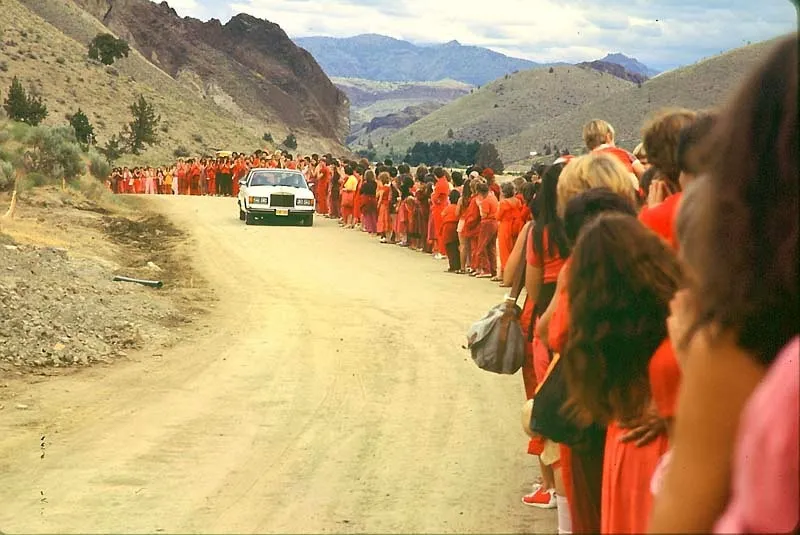
Start with 1786: armed farmers marching into Northampton to shut down a courthouse sounds like folklore, but it happened, and it happened because sheriffs were seizing cattle and land over debts a distant legislature refused to ease. The court simply didn't sit that day, a quiet ending to a story usually remembered for Shays's name, though his role was likely smaller than legend has it. Worth a longer look: the 1984 Rajneeshee poisoning of two Oregon commissioners, a dry run for a mass attack still weeks away. Katrina's landfall anchors the day in grimmer, more recent memory.
— The Patriot Compass desk
1786Featured · This day in history
Farmers under arms close the Northampton court before it can sit
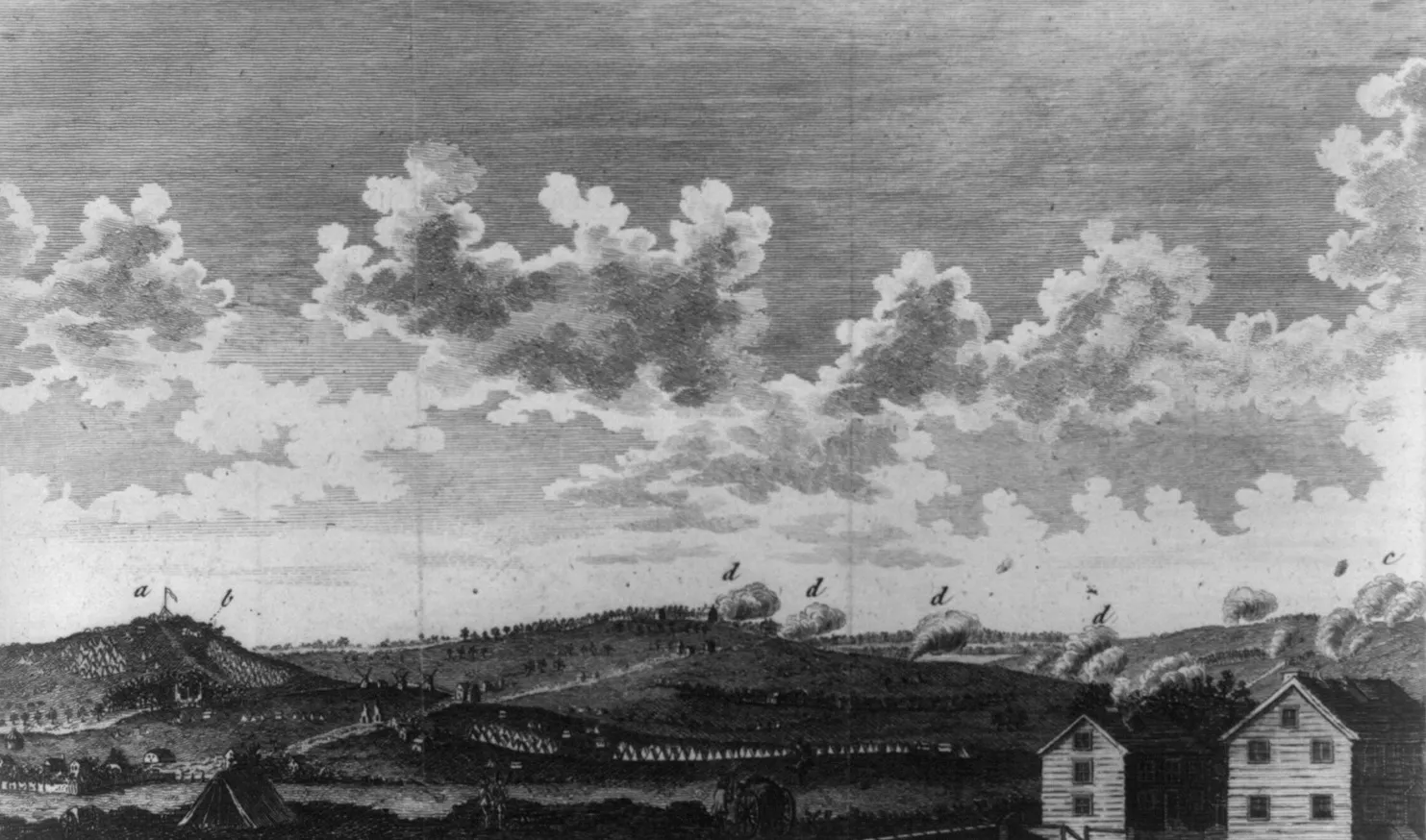
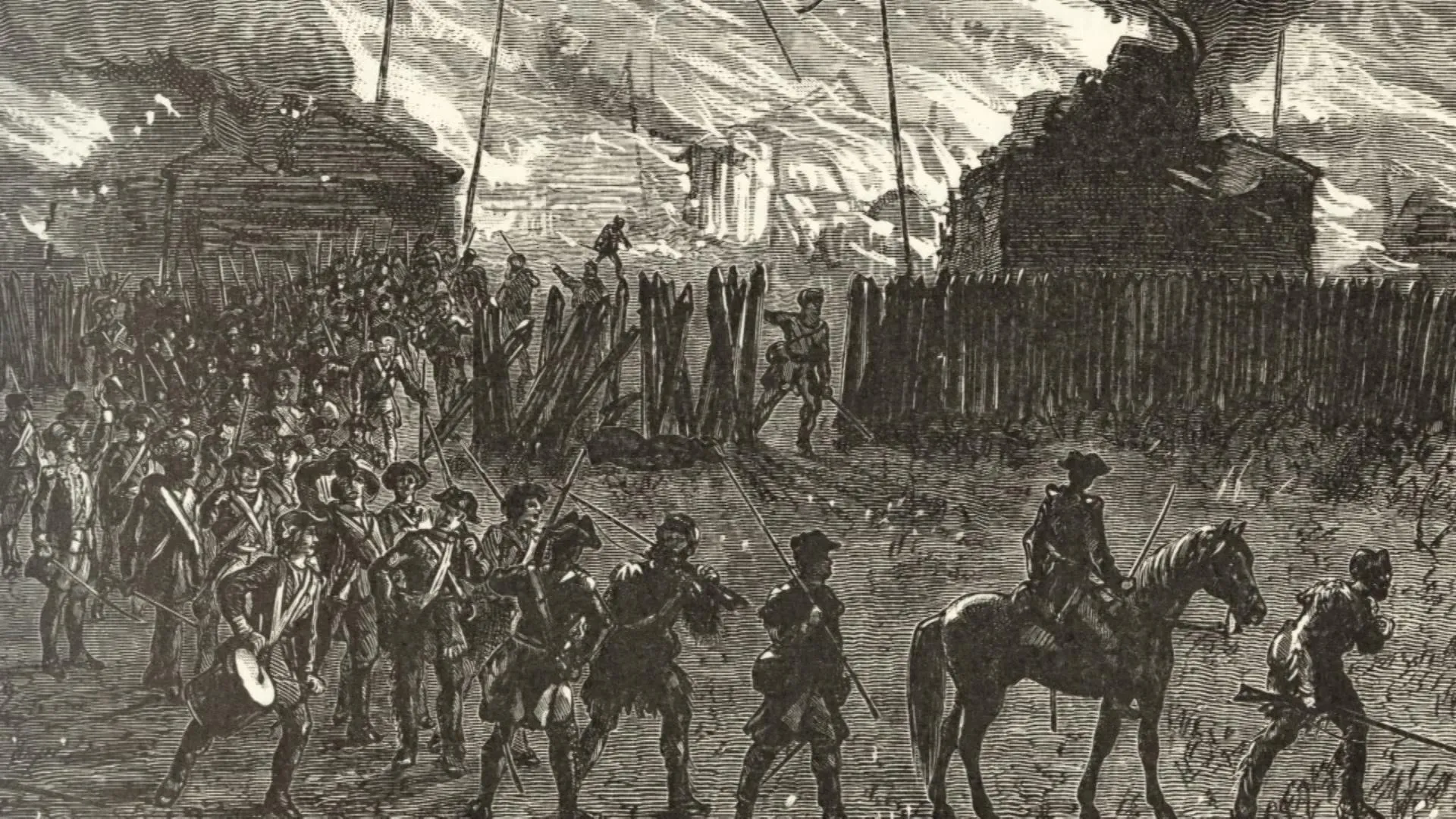
Western Massachusetts had spent two years watching sheriffs seize farms and cattle over unpaid debts while the legislature in Boston, stocked with merchants, refused to issue relief currency. On August 29, 1786, a well-organized armed force that included Revolutionary War veteran Daniel Shays marched into Northampton and blocked the county court from opening its session, though scholars note Shays's leadership role in this action was likely exaggerated. The protestors called themselves Regulators, echoing a North Carolina movement from the 1760s, and said they wanted only relief from judicial processes stripping them of land and property. The court did not sit that day.
This was armed resistance to civil courts inside the United States, five years after Yorktown, and it kept the Northampton court from sitting. The unrest's spread to other courthouses convinced men like Washington and Madison that the Articles of Confederation could not guarantee order, a fear that pushed reluctant states toward the Philadelphia convention less than a year later.
Did you know
QWho were the only two Shaysites actually put to death for the rebellion?
John Bly and Charles Rose were hanged on December 6, 1787, despite eighteen men, including Daniel Shays, being convicted and sentenced to death. Most of the eighteen had their convictions overturned on appeal, were pardoned outright, or had their sentences commuted. Shays himself was pardoned in 1788 and returned to Massachusetts from hiding in the Vermont woods, though the Boston press continued to vilify him as a radical long after he came home. Roughly four thousand people had signed confessions admitting participation in exchange for amnesty, and only a few hundred of those were ever indicted at all.
QWhat did Daniel Shays do with the ceremonial sword the Marquis de Lafayette gave him?
In 1780, Lafayette presented Shays with an ornamental sword to honor his military service, an honor shared with several other officers. Shays sold it for cash to help pay off debts, arguing there was nothing wrong with the sale since he already owned another sword. His fellow officers frowned on the decision anyway, seeing it as an insult to the honor. He had gone unpaid for his Continental Army service, and within a few years he was hauled into court over debts he had no way to cover, the same predicament facing thousands of Massachusetts veterans and farmers.
QWhy was Daniel Shays personally chosen to guard a British spy on the eve of his execution?
After British officer John André was captured while conspiring with Benedict Arnold to surrender West Point, George Washington personally selected Shays as one of the captains assigned to guard him during imprisonment. Shays was present at André's execution on October 2, 1780, and was likely the officer who escorted him to the gallows. He resigned from the army just twelve days later, on October 14, 1780, having never been paid in full for his service. That unpaid service is what landed him in court over debts within months of coming home, the uprising that would carry his name broke out six years later.
The Daily Record · free by email
Tomorrow's edition in your inbox — one story, one quote, the flag.
1958military
1,145 cadets trade Lowry's barracks for a half-built campus in Colorado Springs
For three years, the Air Force's newest service academy had been making do with temporary barracks at Lowry Air Force Base in Denver. On August 29, 1958, that changed: the cadet wing, about 1,145 strong, moved into the permanent campus built into the foothills outside Colorado Springs. Construction crews were still finishing several buildings when the cadets arrived. The cadets now had a permanent campus of their own.
United States Air Force Academy, Colorado Springs, ColoradoStory page →
The American Throughline
The move gave the Air Force, barely a decade removed from its 1947 split with the Army, a physical campus to match West Point and Annapolis in permanence and prestige. Eisenhower had signed the Academy into existence in 1954 specifically to build that institutional standing, and the Colorado Springs campus made the case that airpower deserved its own officer tradition, cast in steel and glass rather than borrowed limestone.
Did you know
QWhy did a Hollywood director design the Academy's cadet uniform?
The Air Force turned to Cecil B. DeMille, the famed director of epics like The Ten Commandments, to design the cadet parade uniform. DeMille brought a filmmaker's eye for spectacle to the assignment, crafting a look distinct from the wool and brass of West Point and Annapolis. The choice fit an institution trying to build instant visual identity from scratch rather than borrowing tradition. It also signaled how deliberately the new service approached image-making in its earliest years, recruiting a Hollywood director to help define what an Air Force officer should look like on parade. The uniform debuted years before the permanent campus was even finished.
QWho trained the first cadets if there were no upperclassmen yet?
With no senior class to enforce discipline or run drills, the Air Force appointed a cadre of Air Training Officers, or ATOs, to stand in as surrogate upperclassmen. Many of these ATOs were graduates of West Point, Annapolis, or other military academies, brought in specifically because the new institution had no alumni of its own yet. They shaped the first cadets at Lowry Air Force Base starting in 1955, drilling them in customs borrowed from older service traditions until the Academy could produce its own upperclass cadre. The arrangement lasted only a few years by design, ending once the Academy had upperclassmen of its own to take over.
QWhat does the inscription on the Academy's Eagle and Fledglings statue say?
The statue, donated in 1958 by personnel of the Air Training Command, carries a line from Austin Dusty Miller: "Man's flight through life is sustained by the power of his knowledge." The sculpture depicts an eagle guiding its young, a deliberate echo of the falcon later adopted as the Academy's mascot and of the instructional role the ATOs themselves were playing that same year. It arrived on campus the same year the cadet wing made its move from Denver, making it one of the earliest permanent art installations tied to the new grounds, one that still stands on campus today.
2005tragedy
Katrina comes ashore at Buras; hours later, New Orleans is drowning
An estimated 100,000 to 150,000 people remained in New Orleans despite mandatory evacuation orders. Hurricane Katrina made landfall near Buras-Triumph, Louisiana, as a Category 3 storm with 125 mph winds, then struck again near the Louisiana-Mississippi border hours later. Storm surge caused 53 breaches in the region's flood protection system, and 80 percent of New Orleans was submerged. Katrina stayed a hurricane more than 150 miles inland, weakening near Meridian, Mississippi.
Investigators later found the U.S. Army Corps of Engineers, tasked under the Flood Control Act of 1965 with building New Orleans' hurricane defenses, responsible for the failed floodwalls that caused most of the deaths. A federal appeals court ruled the Corps could not be held liable, thanks to a 1928 law. The disaster became a defining test of the federal government's disaster response.
Did you know
QWhy did New Orleans' evacuation buses sit flooded and empty instead of carrying people out of the city?
Louisiana's own emergency plan called for using school and public buses to move residents who had no cars, but the buses never rolled. Not enough licensed drivers were available, and Governor Kathleen Blanco did not sign the emergency waiver that would have let any licensed driver get behind the wheel. Private caregiving facilities made the same mistake on a smaller scale, waiting too long to call the bus companies and ambulance services they depended on. The vehicles that could have carried thousands to safety instead sat in low-lying lots, where the same floodwaters later submerged them.
QHow many people sheltered inside the Superdome as Katrina came ashore?
About 26,000 people crowded into the Louisiana Superdome, which the city had designated a 'refuge of last resort' rather than a full-service shelter. Officials supplied food and water for several days while the storm raged outside, but the building was never equipped or stocked for a population that size. The Superdome sat alongside other last-resort refuges the city opened for residents who could not leave, a fallback plan for the people that Mayor Ray Nagin's mandatory evacuation order, issued that same morning, was supposed to have already moved out of the city.
QWhy did Katrina's brush with Cuba only rate as a footnote compared to what hit Louisiana?
Katrina brushed western Cuba on August 28 while still building toward its Gulf peak, dropping more than 8 inches of rain and knocking out phone and power lines in Pinar del Rio Province, where authorities evacuated roughly 8,000 people. Cuban television reported the coastal town of Surgidero de Batabano was 90 percent underwater. Days earlier, the storm had crossed the Bahamas as a tropical storm and produced nothing worse than 'fresh breezes' on the islands. The same system that barely troubled the Bahamas had already produced, in miniature, the flooding it would soon inflict on an American city many times Batabano's size.