Reading 3 of 6 free1776 Club · all 6 storiesTuesday, September 1
From the desk
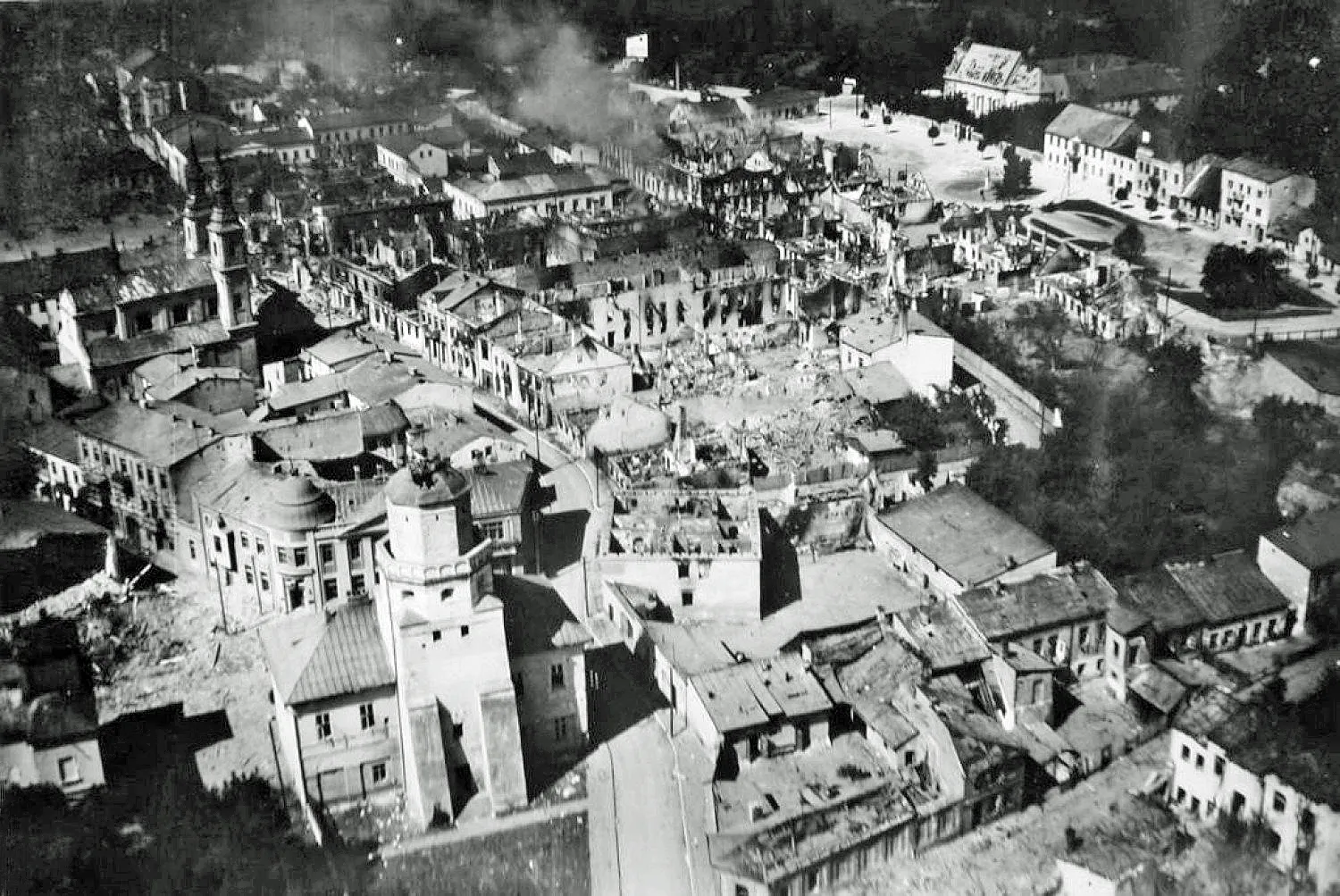
Start with 1983: KAL 007 drifted off course into Soviet airspace over Sakhalin, and a Su-15 pilot fired missiles into a 747 carrying 269 people, including a sitting U.S. Congressman. Moscow spent days denying it before admitting the kill. Worth a longer look, if you have access, is 1939: Germany's dawn assault on Poland began with an undefended town bombed for nine hours before any declaration of war, opening a conflict that would dwarf everything else on this date. The 1974 Blackbird crossing gets a mention too: New York to London in under two hours, a record still unbeaten.
— The Patriot Compass desk
1983Featured · This day in history
Soviet jet destroys Korean Air 007 off Sakhalin; 269 dead, a US congressman among them
Korean Air Lines Flight 007 left Anchorage bound for Seoul on August 31, 1983, and drifted hundreds of miles off its planned route into Soviet airspace over the Kamchatka Peninsula and Sakhalin Island. Just after midnight local time on September 1, a Soviet Su-15 interceptor fired warning shots, then loosed air-to-air missiles that brought the 747 down into the Sea of Japan near Moneron Island. All 269 people aboard died, including 246 passengers and 23 crew, among them Georgia Congressman Lawrence McDonald. Moscow denied involvement for days before admitting the kill.
A sitting American congressman died in the wreckage, and Washington's fury over Soviet stonewalling, the withheld flight recorders, and the obstructed search hardened Reagan-era Cold War rhetoric for years. The disaster also pushed Reagan to order GPS opened to civilian aircraft once ready, a decision that eventually shaped civilian GPS use in aviation, shipping, and smartphones.
Did you know
QWhy did the Soviets claim Richard Nixon was supposed to be on KAL 007?
Soviet media outlets, including the New York Post citing TASS reporting, claimed former president Richard Nixon had been booked to sit next to Congressman Larry McDonald on the doomed flight but was warned off by the CIA. Nixon aide Franklin R. Gannon gave a more mundane account: Nixon had received an invitation to travel but simply decided on his own not to go. The claim fed into the Kremlin's broader narrative that the flight was tied to American intelligence rather than a routine airliner that had wandered off course. No evidence ever surfaced that the CIA played any role in Nixon's travel plans that week.
QHow many empty seats did KAL 007 have in economy class that night?
The Boeing 747 was far from full. While business class was nearly booked solid with almost all 24 seats taken, economy class flew with roughly 80 empty seats. Twelve passengers occupied the upper deck in first class, and 22 children under age 12 were aboard. The flight also carried an unusually high number of deadheading crew, six in total, riding along rather than working, and 130 passengers were simply connecting onward to cities like Tokyo, Hong Kong, and Taipei rather than ending their trip in Seoul.
QWhat warning system failure gave the Soviets a two-hour blind spot before the shootdown?
Ten days before the shootdown, Arctic gales knocked out a key Soviet warning radar on the Kamchatka Peninsula, according to Soviet Air Force Captain Aleksandr Zuyev, who defected to the West in 1989. Local officials responsible for the repair lied to Moscow, falsely reporting the radar was fixed. Had it actually been working, Zuyev said, Soviet forces could have intercepted and identified KAL 007 as a civilian jet roughly two hours earlier, long before it reached the airspace where it was eventually destroyed. Zuyev later summarized the cover-up bluntly on 60 Minutes: officials were simply lying to Moscow to save themselves.
The Daily Record · free by email
Tomorrow's edition in your inbox — one story, one quote, the flag.
1974military
An SR-71 crosses the Atlantic in under two hours flat
On September 1, 1974, an SR-71 crossed the Atlantic faster than any aircraft before it. On September 1, 1974, Maj. James Sullivan and reconnaissance systems officer Maj. Noel Widdifield flew an SR-71A Blackbird from New York to London in 1 hour, 54 minutes, and 56.4 seconds, covering 3,461.53 miles at an average speed of roughly 1,807 mph. The jet refueled in midair to make the crossing. Commercial airliners of the day took seven hours or more; No aircraft has beaten that time since.
London Heathrow area, England (finish line of the record flight)Story page →
The American Throughline
A U.S. Air Force crew, in a Lockheed-built jet designed and manufactured in Burbank, California, turned a secret Cold War reconnaissance program into a public demonstration of what the aircraft could do. The same titanium airframe and Mach 3 speed built to outrun Soviet defenses now set a record over the Atlantic that the United States still holds decades later.
Did you know
QWhy did engineers give the Blackbird a name that made no aerodynamic sense — chines that looked purely decorative?
The chines running along the SR-71's nose were not part of the original A-3 concept at all. CIA-affiliated researcher Frank Rodgers found that a sphere's cross-section scattered radar poorly, and Lockheed stretched that idea into flattened fuselage edges to shrink the plane's radar signature. Wind-tunnel work then revealed a bonus nobody designed for: the chines threw off vortices that generated extra lift, letting engineers reduce the wings' angle of incidence, cut drag, and even raise the aircraft's fuel-carrying weight. The same vortices made the plane resist stalling at landing speed. A feature meant only to hide the jet from radar ended up reshaping how it flew, letting designers scrap the canard foreplanes they had originally planned to add.
QHow much titanium got thrown out before Lockheed could even start building the Blackbird's skin?
At one point 80 percent of the titanium delivered to Skunk Works was rejected for metallurgical contamination. Lockheed also learned the hard way that ordinary tap water would corrode welded titanium because of its chlorine content, so crews had to wash parts with distilled water, and cadmium-plated tools were banned outright because they caused the same corrosion. To keep costs down, engineers used a more workable titanium alloy that softened at lower temperatures, which meant inventing new fabrication methods from scratch. Fuselage panels were built to fit only loosely on the ground, since the airframe would expand several inches once heated in flight. Those improvised techniques later spread into manufacturing for other aircraft entirely.
QWhat happened inside the cockpit when an engine inlet suddenly lost its shock wave in flight?
Air Force crews called it an 'unstart.' If the terminal shock wave inside an engine inlet snapped forward past the cowl, the afterburner would often blow out and the sudden mismatched thrust between the two engines could yaw the jet violently sideways. The whiplash sometimes slammed pilots' helmets into the canopy and triggered loud banging as the opposite engine suffered a 'sympathetic stall.' Early on, crews had to manually unstart both inlets and restart them together to regain control. NASA's Dryden center eventually traced part of the problem to nose-chine vortices disrupting airflow into the engines, and by 1980 a new digital system, DAFICS, replaced the analog controls and largely eliminated the violent unstarts.
1774military
Redcoats empty the Charlestown powder house before dawn
By the summer of 1774, Massachusetts was under military rule, its port shut and its assembly dissolved under Governor Thomas Gage. Before sunrise on September 1, Gage sent British regulars to a colonial magazine in what is now Somerville and hauled away the gunpowder stored there for the province's militias. Exaggerated word of bloodshed spread through the countryside within hours, and thousands of armed colonists began marching toward Cambridge before anyone could confirm what had actually happened. The militia dispersed once the rumors cooled, but the speed of the mobilization showed how fast the colonies could raise an army.
Powder House Hill, Somerville, MassachusettsStory page →
The Powder Alarm showed colonial militias could raise thousands of armed men on a rumor within a day, and it taught Patriot leaders exactly how fast that alarm system worked. Seven months later, British troops moved on Concord's real munitions, and the same network responded.
Did you know
QWhy did George Washington later turn publicly against a man he once fought beside?
Thomas Gage and George Washington served together in 1755 at the disastrous Battle of the Monongahela, where Gage briefly took command of the shattered 44th Regiment after Braddock fell mortally wounded and Washington organized the retreat. The two men kept up a cordial relationship for several years afterward, but the two men drifted apart as the crisis deepened. By 1770, Washington was openly condemning Gage's methods of enforcing British authority in Massachusetts. By 1775 Gage was the Crown's enforcer in Massachusetts and Washington was commanding the army raised against him. Their shared battlefield experience never translated into political sympathy once Gage took up the governorship.
QWhat earlier controversy already had Gage second-guessing his own judgment before 1774?
In 1759, General Amherst ordered Gage to seize Fort La Galette on Lake Ontario and push on toward Montreal if possible. Gage arrived at Oswego, weighed the unknown French strength near the fort and at Montreal, and decided against attacking at all, sending Amherst a letter explaining his reasoning. Amherst was furious at the inaction, and though no formal censure followed, Gage's troops were pointedly placed in the rear during the 1760 Montreal campaign. The episode showed a pattern of caution under uncertainty, the same caution Gage displayed toward provincial arms caches after the Powder Alarm rattled him fifteen years later.
QHow did Gage try to buy loyalty inside the Patriot movement itself before 1774 turned violent?
Gage attempted to purchase the cooperation of Massachusetts political leaders directly, targeting both Samuel Adams and Benjamin Church. Adams refused every overture and remained an implacable opponent. Church, however, took the money and secretly fed Gage intelligence on rebel activities while posing as a trusted Patriot insider. The arrangement gave Gage a covert channel into the opposition's planning long before shots were fired at Lexington. Church's double game was exposed later in the war, but in the tense months of 1774 it gave the governor a rare edge: real information from inside a movement that otherwise gave him almost nothing but rumor and defiance.