Reading 3 of 6 free1776 Club · all 6 storiesSunday, September 20
From the desk
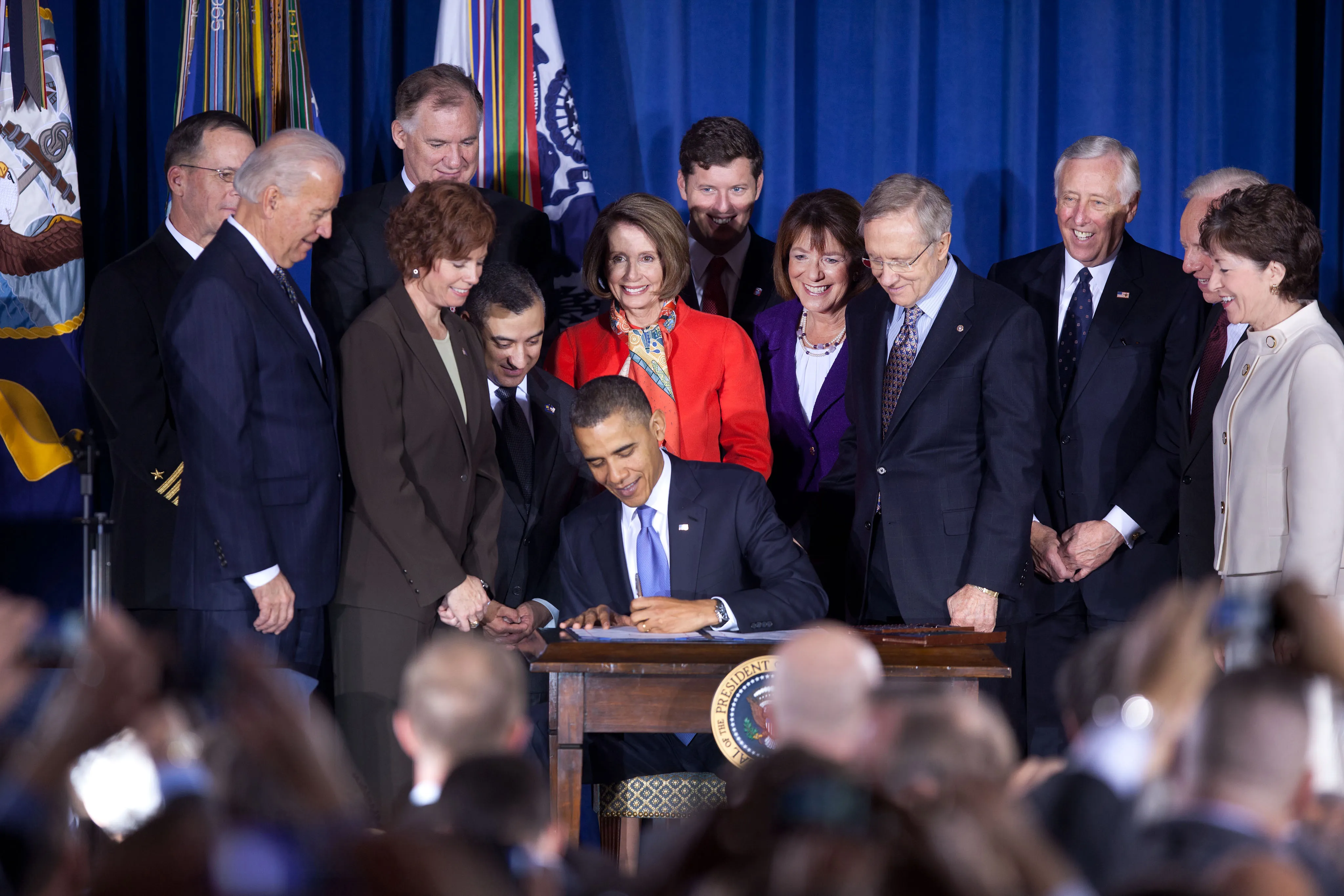
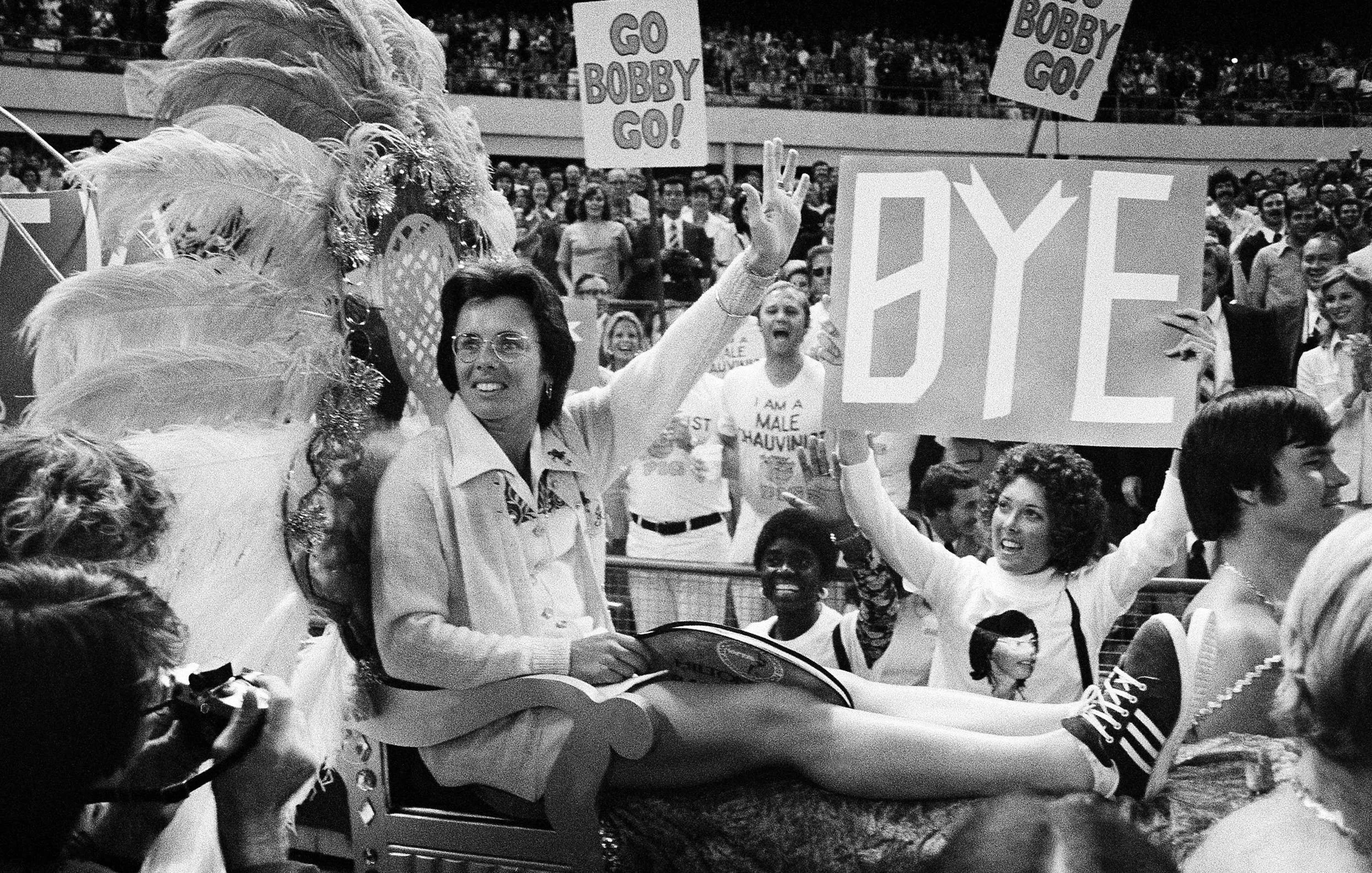
Start with 2001: nine days after the attacks, Bush stood before Congress and named "the war on terror," a phrase that would set American policy for the next two decades. Worth a longer look: 1973, when Billie Jean King beat Bobby Riggs in straight sets at the Astrodome and took his claim of male superiority down with him in front of 30,000 people. Don't skip 2011, when a law seventeen years in the making finally let service members stop hiding who they were.
— The Patriot Compass desk
2001Featured · This day in history
Bush tells Congress: this is a war on terror, and it starts with al Qaeda
Nine days after hijackers killed 2,977 people in New York, Arlington, and a Pennsylvania field, President George W. Bush walked into a joint session of Congress on September 20, 2001, and named the moment. He told the chamber and a nationwide television audience that "our war on terror begins with al Qaeda, but it does not end there." The Taliban regime in Afghanistan, which had sheltered the group, became the immediate target. The phrase outlasted the speech; it defined American policy for the next two decades.
Bush's sentence became the operating charter for American foreign policy: it justified Operation Enduring Freedom about two and a half weeks later, the PATRIOT Act signed in late October, and a doctrine that stretched from Kabul to Baghdad. Congress had already voted the President broad authority to use force on September 14; this speech told the country what that authority was for. The sentence reorganized parts of American government and daily life, from new war powers to new domestic surveillance law.
The Daily Record · free by email
Tomorrow's edition in your inbox — one story, one quote, the flag.
1984tragedy
A van bomb tears into the US embassy annex at Aukar, killing 23
Two months earlier, the US had moved its embassy out of West Beirut to Aukar, a Christian suburb across the city, betting that geography and militia lines would keep the bombers out. On September 20, 1984, a van packed with 3,000 pounds of explosives sped toward the six-story annex; a bodyguard for the British ambassador and Lebanese guards opened fire, and the driver lost control before reaching the entrance. The van struck a parked vehicle and exploded at 11:44 a.m. The blast shredded glass, bent steel, and killed 23 people, most of them Lebanese employees or visa applicants. Two Americans, Kenneth Welch and Michael Wagner, died; ambassadors Reginald Bartholomew and David Miers were both hurt but survived.
This was the third Hezbollah car bombing against American targets in Lebanon in eighteen months, and it hardened Washington's understanding that Iran was arming and directing the campaign. The bombing pushed US embassy security into a new era of blast walls and standoff distance. Decades later it also became a legal cornerstone: American courts used it to pierce Iran's sovereign immunity and award billions in damages.
Did you know
QHow much money did a single security guard win in his lawsuit against Iran?
Richard Brewer, a security guard at the embassy annex, sued Tehran under the amended Foreign Sovereign Immunities Act and in 2009 a federal judge awarded him and his family $310 million in damages. The ruling in Brewer v. Islamic Republic of Iran found that Hezbollah had received substantial funding and support from Iran's Ministry of Information and Security and the Revolutionary Guard Corps, and that Iran had supplied Hezbollah with material support and resources. The Brewer case predated the larger 2013 judgment covering both the 1983 and 1984 bombings, and it set an early legal template for individual victims to pursue Iranian state assets in American courts. The award remains a striking figure for one man's case.
QWho were the only two Americans killed, and what were their jobs in Beirut?
Chief Warrant Officer Kenneth V. Welch of the US Army and Petty Officer 1st Class Michael Ray Wagner of the US Navy were both assigned to the US Defense Attache Office in Beirut, the military intelligence liaison operating out of the embassy annex. Their roles put them inside the building rather than in the diplomatic corps proper, showing the annex housed defense personnel alongside State Department staff. Every other American present that morning survived, along with the wounded British ambassador, David Miers. Welch and Wagner's deaths marked the military's direct losses in what was otherwise, in raw numbers, an attack that fell hardest on Lebanese civilians and local staff.
QHow many people total were covered by the 2013 court judgment against Iran for the embassy attacks?
In Estate of Doe, et al. v Republic of Iran, et al., a federal judge in 2013 ruled on behalf of 58 foreign national employees and one American employee who were killed or injured across both the 1983 embassy bombing and the 1984 annex bombing, awarding a combined $8.4 billion. The judge's opinion stated plainly that the attacks were carried out by Islamic Jihad, identified as Hezbollah, operating with Iranian support and encouragement. Bundling both bombings into a single case let the court treat them as one continuous campaign rather than isolated incidents.
1881government
Arthur takes the oath before dawn, in his own parlor
For eleven weeks Americans had watched Garfield lie dying and wondered who would replace him. James A. Garfield, shot by Charles Guiteau on July 2, finally succumbed to his wounds on the night of September 19, 1881. Just after 2 a.m., Chester A. Arthur took the oath of office in his New York City home, administered by a state supreme court justice. He left for Washington later that day to repeat the oath before the Chief Justice, becoming the 21st president, a member of a party faction many Americans distrusted on sight.
Arthur was the Stalwart machine politician nobody wanted as a heartbeat from the presidency, a former Customs House boss removed by his own party's president as part of a broader patronage reform effort. He answered that suspicion by signing the Pendleton Civil Service Reform Act in 1883, dismantling the patronage system that had built his own career. Few successions did more to reshape how Washington hires.
Did you know
QWho actually administered Arthur's first oath of office, and why not a federal judge?
John R. Brady, a justice of the New York State Supreme Court, administered Arthur's first oath in his own Manhattan parlor in the early hours of September 20, 1881. There was no constitutional requirement that a federal officer perform the ceremony, and no time to summon one from Washington in the middle of the night. Arthur repeated the oath before Chief Justice Morrison Waite in Washington the same day, giving him two sworn inaugurations within about twelve hours, no other president has done that.
QWhat turned Charles Guiteau, Garfield's assassin, against the president in the first place?
Guiteau was a disappointed office-seeker who believed he was owed a diplomatic post, either the consulship in Paris or Vienna, as reward for a pamphlet he claimed helped elect Garfield. After being repeatedly turned away by administration officials, he decided Garfield's death would unite the fractured Republican Party and stalked him for weeks before shooting him at a Washington train station. The episode became a favorite talking point for civil-service reformers arguing patronage politics had turned deadly.
QHow long did Garfield actually survive after being shot, and what killed him?
Garfield lingered for eleven weeks after Guiteau shot him on July 2, 1881, dying on September 19. He did not die of the bullet wound itself but of infections, likely from his doctors' repeated unsterilized probing for the bullet, worsened by summer heat so severe that engineers built a crude air-conditioning system to cool his sickroom. Guiteau's own defense argued, with some justification, that the doctors had killed Garfield, not him.